CM Dhami Backs Modi's Fast Track Courts for Paper Leak Cases
Synopsis
Uttarakhand Chief Minister Pushkar Singh Dhami has welcomed Prime Minister Narendra Modi's decision to establish fast track courts for paper leak cases, saying it reflects the central government's firm commitment to protecting the future of lakhs of students and will ensure swift, stringent punishment for the guilty.
Key Takeaways
Uttarakhand CM Pushkar Singh Dhami publicly endorsed PM Narendra Modi 's decision to set up fast track courts for paper leak cases on 23 July 2026 .
Dhami called the move a reflection of the central government's 'firm commitment' to safeguarding the hard work and future of lakhs of students .
Fast track courts are an established Indian judicial model designed for time-bound disposal of sensitive cases.
The Public Examinations (Prevention of Unfair Means) Act, 2024 already criminalises paper leaks in public recruitment exams at the central level.
The initiative primarily benefits crores of competitive exam aspirants whose careers are derailed by examination fraud.
Dhami expressed confidence the courts would act as an effective deterrent against future paper leak offences.
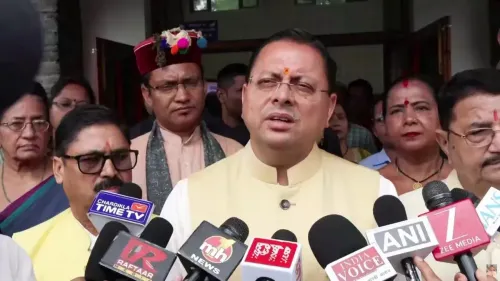
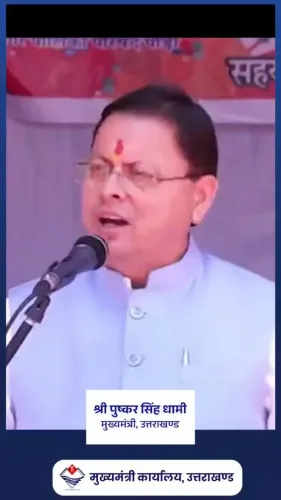
Uttarakhand Chief Minister Pushkar Singh Dhami on Thursday, 23 July 2026, welcomed Prime Minister Narendra Modi's decision to establish fast track courts to ensure swift and stringent action against those guilty in paper leak cases, describing it as a significant step toward protecting the interests of the country's youth.
Context
The Chief Minister's Office of Uttarakhand shared Dhami's statement in which he said the Prime Minister's decision reflects 'प्रधानमंत्री जी और केंद्र सरकार की दृढ़ प्रतिबद्धता' — 'the firm commitment of the Prime Minister and the central government' — toward safeguarding the hard work, talent, and future of lakhs of students. Dhami expressed confidence that the fast track courts would lead to speedy resolution of paper leak cases, time-bound and strict punishment for the guilty, and an effective deterrent against such crimes in the future.
The statement comes against the backdrop of repeated examination malpractice incidents that have disrupted national and state-level competitive tests, generating widespread public concern about the integrity of India's public recruitment and examination systems.
Policy Backdrop
Parliament enacted the Public Examinations (Prevention of Unfair Means) Act, 2024, specifically to criminalise paper leaks and other unfair practices in public recruitment examinations — a legislative response to a series of high-profile malpractice incidents that affected exams including NEET and multiple state-level recruitment tests. The Act signalled a shift toward treating examination fraud as a serious criminal offence rather than an administrative lapse.
Fast track courts are an established judicial mechanism in India, designed to ensure time-bound disposal of cases in designated sensitive categories. Their proposed application to paper leak prosecutions would extend a model previously used for cases involving crimes against women and other priority matters.
Stakeholders and Impact
The primary beneficiaries of this initiative are competitive exam aspirants — a constituency numbering in the crores — who invest years of preparation for public sector recruitment tests. Paper leaks have repeatedly invalidated examinations mid-cycle, forcing cancellations and re-tests that delay career prospects for millions of young people.
State education departments and central examination bodies such as the National Testing Agency (NTA) are also directly affected, as swift judicial action is expected to reinforce procedural reforms already under way in how examinations are conducted, monitored, and secured.
What's Next
Attention will now turn to the rollout of fast track courts across multiple states and the early disposal rates of paper leak prosecutions once the mechanism is operational. Dhami's endorsement signals that state governments aligned with the BJP are likely to cooperate actively with the central initiative, potentially accelerating the establishment of such courts at the state level in Uttarakhand as well. Broader examination process reforms — including digital safeguards and tighter supply-chain security for question papers — are expected to accompany the judicial measures as part of a comprehensive response.
Point of View
And the fast track court announcement allows the ruling establishment to demonstrate executive decisiveness ahead of any electoral cycle. The move also reinforces the legislative architecture already built by the 2024 Act, suggesting a deliberate layering of legislative, judicial, and administrative tools. Whether the courts deliver measurably faster convictions will be the real test of this policy's credibility with aspirants.
NationPress
21 Oct 2026
Frequently Asked Questions
What did CM Dhami say about fast track courts for paper leak cases?
Uttarakhand Chief Minister Pushkar Singh Dhami welcomed PM Modi's decision to establish fast track courts for paper leak cases, calling it a significant step to protect the interests of India's youth and a sign of the central government's firm commitment to securing the future of lakhs of students.
What are fast track courts and how will they help in paper leak cases?
Fast track courts are specialised judicial bodies in India designed to ensure time-bound disposal of cases in sensitive categories. In the context of paper leaks, they are intended to speed up trials, deliver swift and stringent punishment to the guilty, and act as a deterrent against future examination fraud.
What law exists in India against paper leaks?
Parliament enacted the Public Examinations (Prevention of Unfair Means) Act in 2024, which criminalises paper leaks and other unfair practices in public recruitment examinations, making them punishable offences under Indian law.
Which exams have been affected by paper leaks in India?
Several high-profile examinations have been disrupted by paper leak incidents in recent years, including NEET and various state-level recruitment tests, leading to exam cancellations and re-tests that delayed the career prospects of millions of aspirants.
Why is Uttarakhand CM commenting on a central government decision?
State chief ministers routinely respond to and endorse central government policy announcements, particularly on issues of national importance such as examination integrity. Dhami's statement reflects coordination between the Uttarakhand state government and the central government on judicial and education reforms.