CM Fadnavis Attends 11th NITI Aayog Governing Council Meet
Synopsis
Maharashtra CM Devendra Fadnavis attended the 11th NITI Aayog Governing Council meeting chaired by PM Modi on 11 June 2026. He highlighted NITI Aayog's role as a catalyst for cooperative federalism and reaffirmed India's march towards the Viksit Bharat 2047 vision.
Key Takeaways
Devendra Fadnavis attended the 11th Governing Council meeting of NITI Aayog on 11 June 2026 .
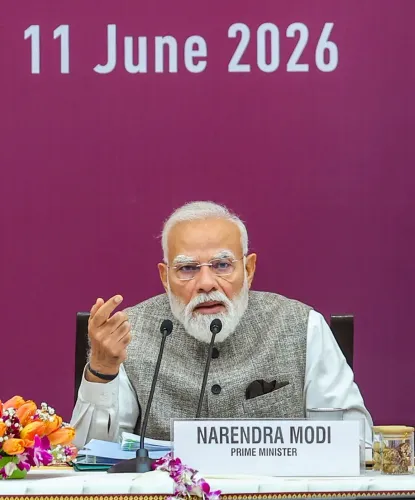
The meeting was chaired by Prime Minister Narendra Modi , who heads the Governing Council.
NITI Aayog was established on 1 January 2015 to replace the Planning Commission and promote cooperative federalism.
The Viksit Bharat 2047 vision — making India a developed nation by its independence centenary — served as the overarching framework for the meeting.
Maharashtra , as one of India's largest state economies, plays a significant role in shaping national policy priorities at such forums.
Follow-up state-level implementation of Governing Council recommendations is expected in the weeks ahead.
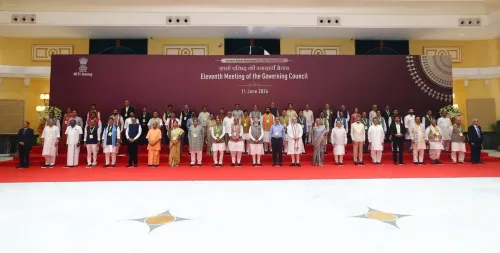
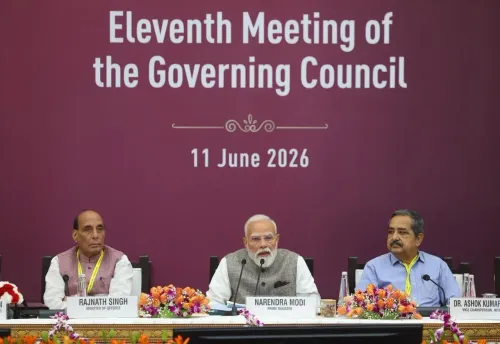
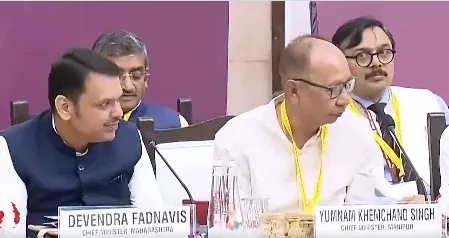
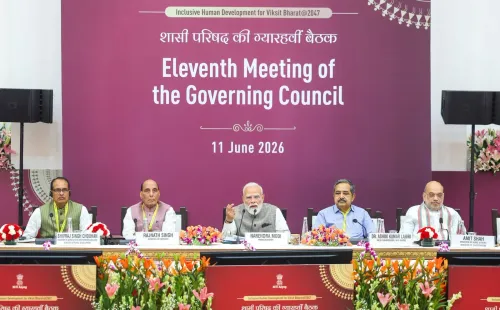
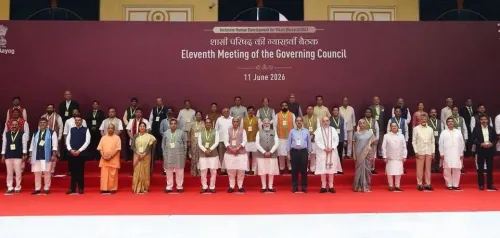
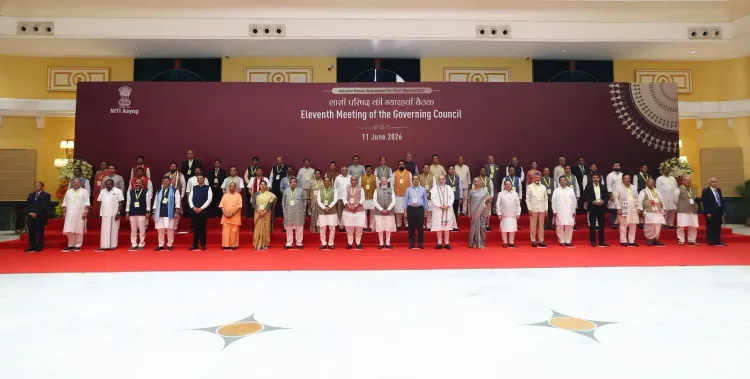
Maharashtra Chief Minister Devendra Fadnavis attended the 11th Meeting of the Governing Council of NITI Aayog on Thursday, 11 June 2026, chaired by Prime Minister Narendra Modi. The meeting brought together chief ministers and senior government representatives to deliberate on national development priorities under the Viksit Bharat 2047 framework.
Context
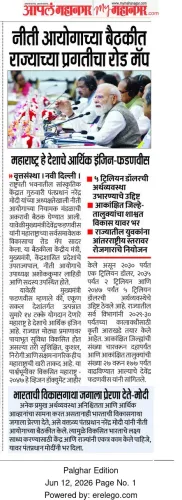
Fadnavis took to social media to share his participation, describing NITI Aayog as 'a catalyst for transformational governance, aligning national aspirations with state-led progress and fostering a spirit of cooperative federalism.' He added that 'India rises with unprecedented confidence and ambition while marching firmly towards the vision of Viksit Bharat @ 2047.' The post was accompanied by four images from the meeting.
The Governing Council is the apex body of NITI Aayog and is chaired by the Prime Minister. It serves as the primary institutional platform for structured dialogue between the Union government and state governments on long-term policy priorities.
Policy Backdrop
NITI Aayog was constituted on 1 January 2015, replacing the erstwhile Planning Commission to move away from a top-down resource-allocation model towards cooperative federalism. The first Governing Council meeting was held in February 2015, and successive meetings have been used to align Centre and state priorities on themes ranging from agriculture and infrastructure to health and education.
The Viksit Bharat 2047 vision — India becoming a fully developed nation by the centenary of its independence — has been a recurring anchor for these deliberations since Prime Minister Modi began articulating it publicly from 2022 onwards. Governing Council meetings have increasingly been structured around sectoral goals that feed into this long-term roadmap.
Stakeholders and Impact
For Maharashtra, participation in the Governing Council carries direct policy weight. As one of India's largest economies by state GDP, Maharashtra's inputs on infrastructure, urban development, and industrial policy can shape national priorities. Chief ministers attending these sessions are expected to present state-specific data and flag implementation bottlenecks to the Centre.
More broadly, the Governing Council mechanism is designed to ensure that states are not passive recipients of central directives but active co-architects of national policy. The emphasis on cooperative federalism is particularly significant in a federal polity where implementation of most flagship schemes depends on state machinery.
What's Next
Attention will now turn to any follow-up directives or sector-specific working groups that emerge from the 11th Governing Council meeting. State governments, including Maharashtra, are expected to align their budgetary and administrative priorities with recommendations discussed at the meeting. Progress on Viksit Bharat 2047 milestones — particularly in infrastructure, manufacturing, and social indicators — will be the benchmark against which outcomes of this session are eventually measured.
Point of View
Visible participation in such forums reinforces both national alignment and state-level political capital. The repeated invocation of Viksit Bharat 2047 signals that the vision is now a standard rhetorical and policy anchor for BJP-governed states. How Maharashtra translates Governing Council deliberations into concrete implementation will be a test of whether the cooperative federalism model delivers measurable outcomes.
NationPress
26 Oct 2026
Frequently Asked Questions
What is the NITI Aayog Governing Council?
The NITI Aayog Governing Council is the apex body of NITI Aayog, chaired by the Prime Minister and comprising all chief ministers and lieutenant governors. It serves as the primary platform for Centre-state policy coordination and was first convened in February 2015.
What is Viksit Bharat 2047?
Viksit Bharat 2047 is India's national vision to become a fully developed country by 2047, the centenary of independence. Prime Minister Narendra Modi began articulating this goal publicly from 2022, and it now anchors major national policy deliberations including NITI Aayog meetings.
Why did Devendra Fadnavis attend the NITI Aayog meeting?
As Maharashtra Chief Minister, Devendra Fadnavis is a member of the NITI Aayog Governing Council. Chief ministers attend these meetings to provide state-specific inputs, flag implementation challenges, and align state priorities with national development goals.
What replaced the Planning Commission in India?
NITI Aayog replaced the Planning Commission on 1 January 2015. Unlike the Planning Commission's top-down resource-allocation model, NITI Aayog is designed to promote cooperative federalism by giving states a more active role in shaping national policy.
How many Governing Council meetings has NITI Aayog held?
The 11th meeting of the NITI Aayog Governing Council was held on 11 June 2026, chaired by Prime Minister Narendra Modi. The first such meeting was convened in February 2015, shortly after NITI Aayog was established.