CM Fadnavis launches Bharat Taxi in Mumbai metro region
Synopsis
Chief Minister Devendra Fadnavis flagged off the Bharat Taxi cooperative cab service at Navi Mumbai International Airport on 23 July 2026. The driver-owned platform offers transparent fares with no surge pricing and is projected to create 3,000-4,000 jobs for locals around the new airport.
Key Takeaways
Bharat Taxi was launched in the Mumbai metropolitan region on 23 July 2026 by CM Devendra Fadnavis at Navi Mumbai International Airport .
The service follows earlier rollouts in Delhi and Gujarat , making Maharashtra the third state to adopt the cooperative taxi model.
Drivers are co-owners and shareholders of the cooperative, giving them a direct share in profits rather than a commission-based arrangement.
The platform promises no surge pricing and no hidden charges , with a transparent fare structure for passengers.
An MoU with the Late D.B.
Patil Sahakari Vahatuk Sangh will facilitate bank-linked vehicle loans, targeting 3,000 to 4,000 jobs for residents near the new airport.
The initiative is framed under the national cooperative push led by PM Modi and guided by Union Minister Amit Shah .
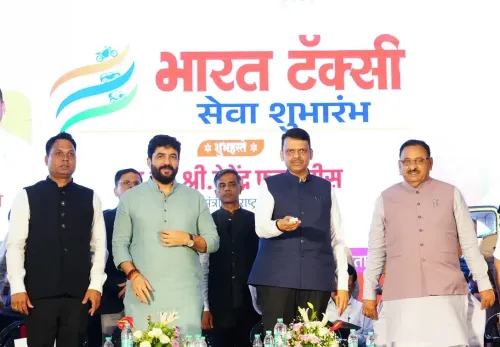
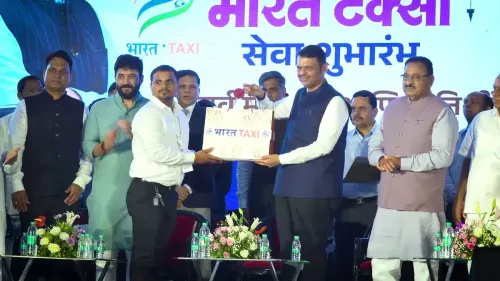
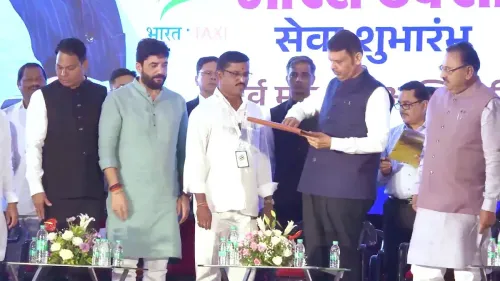
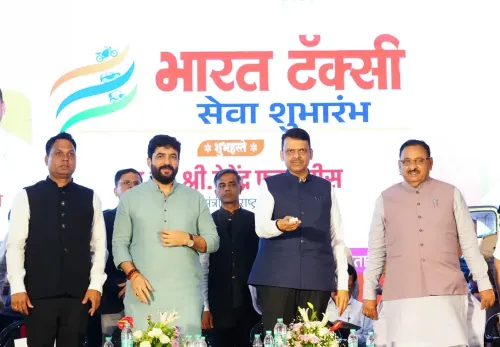
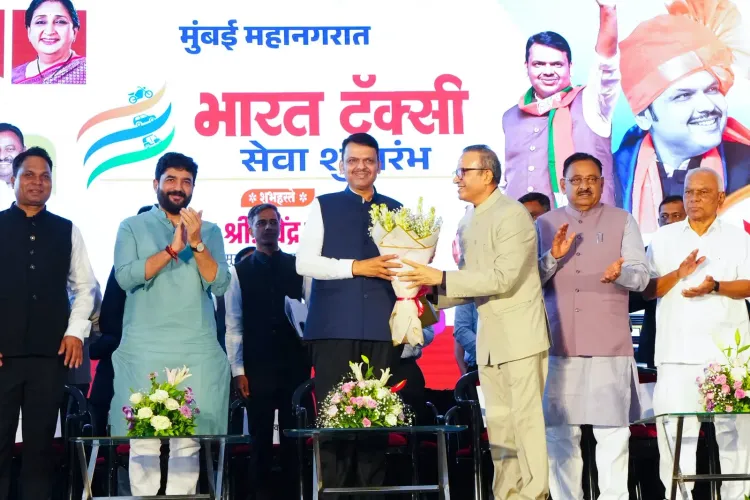
The Chief Minister's Office of Maharashtra announced on Thursday, 23 July 2026 that Chief Minister Devendra Fadnavis flagged off the Bharat Taxi cooperative cab service at Navi Mumbai International Airport, extending the driver-owned mobility platform to the Mumbai metropolitan region after earlier rollouts in Delhi and Gujarat.
What is Bharat Taxi?
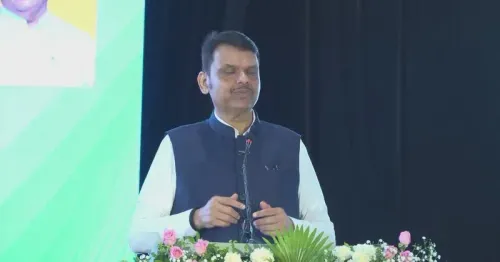
Bharat Taxi is a cooperative, app-based taxi service in which drivers are not merely operators but co-owners and shareholders of the cooperative society. Speaking at the launch, CM Fadnavis described the service as embodying the principle of 'sahakaaratun rojgar, rojgaratun samruddhi' ('employment through cooperation, prosperity through employment'). Unlike conventional ride-hailing platforms, the service promises no surge pricing, no hidden charges, and a transparent fare structure — ensuring, in Fadnavis's words, that both passengers receive affordable, trustworthy rides and drivers receive fair compensation for their labour.
Context
The launch builds on a nationwide push to modernise India's cooperative sector. Prime Minister Narendra Modi created a dedicated Ministry of Cooperation in 2021 to strengthen cooperative institutions across sectors. Union Home and Cooperation Minister Amit Shah has guided the rollout of cooperative taxi pilots, with Delhi and Gujarat serving as the first two states to adopt the Bharat Taxi model before Maharashtra.
CM Fadnavis credited the initiative directly to PM Modi's leadership and Shah's guidance, calling the Maharashtra launch 'an important milestone in the new revolution unfolding in the cooperative sector across the country.'
Policy Backdrop
The cooperative taxi model is designed as a structural alternative to private aggregator platforms, which have drawn sustained complaints over surge pricing and opaque fee structures. By embedding app-based technology within a cooperative ownership framework, Bharat Taxi aims to redirect platform profits back to drivers rather than to private intermediaries.
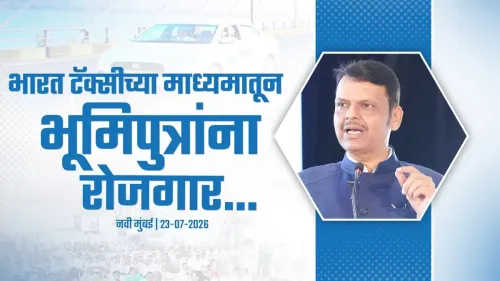
A memorandum of understanding with the Late D.B. Patil Sahakari Vahatuk Sangh (the D.B. Patil Cooperative Transport Union) underpins the Maharashtra rollout. Under the arrangement, residents of areas around the Navi Mumbai International Airport — described by the Chief Minister as 'sons of the soil' (bhumputra) — will be able to access bank-linked vehicle loans to purchase taxis and join the cooperative, with the programme projected to generate 3,000 to 4,000 jobs in the region.
Stakeholders and Impact
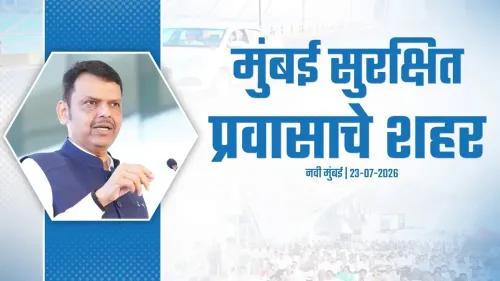
For Mumbai commuters, the service is positioned as a reliable, safety-focused option. CM Fadnavis specifically highlighted enhanced safety for women travellers and promised that every passenger arriving in Mumbai would experience 'trust, safety, and transparency.' The city, he noted, already ranks among the world's better-served urban transport systems, and a technology-backed cooperative taxi layer would further strengthen that standing.
For taxi drivers, cooperative membership offers a direct share in business profits — a departure from the commission-based model of existing aggregators. Union Minister of State Murlidhar Mohol, Minister Babasaheb Patil, MLA Manda Mhatre, MLA Mahesh Baldi, and MLA Prashant Thakur were present at the launch ceremony.
What's Next
The Maharashtra government is expected to oversee further phased expansion of Bharat Taxi beyond the Navi Mumbai airport corridor to other districts across the state. Budget allocations and potential state-level policy support for cooperative taxi fleets will be closely watched as the model scales. The success of the driver-ownership structure in Mumbai's competitive urban mobility market could influence similar cooperative mobility experiments in other Indian cities.
Point of View
With CM Fadnavis explicitly crediting PM Modi and Amit Shah. By targeting the Navi Mumbai airport corridor — an area already charged with land-acquisition sensitivities — and promising local jobs through bank-linked loans, the initiative attempts to convert infrastructure disruption into an economic opportunity narrative. The cooperative ownership model is a direct ideological counter to private aggregator platforms, signalling that the government sees cooperative economics as an electoral and policy asset in urban Maharashtra. Whether the model sustains driver welfare and passenger trust at scale will determine if it becomes a replicable template or remains a launch-day headline.
NationPress
22 Oct 2026
Frequently Asked Questions
What is Bharat Taxi and how is it different from Ola or Uber?
Bharat Taxi is a cooperative app-based taxi service where drivers are co-owners and shareholders, not just operators. Unlike private aggregators, it has no surge pricing and no hidden charges, and profits are shared directly with drivers.
Where was Bharat Taxi launched in Maharashtra?
Bharat Taxi was launched at Navi Mumbai International Airport by Chief Minister Devendra Fadnavis on 23 July 2026.
Which states already have Bharat Taxi before Maharashtra?
Bharat Taxi was first rolled out in Delhi and then in Gujarat before being extended to Maharashtra.
How many jobs will Bharat Taxi create in Mumbai?
CM Fadnavis stated the initiative aims to create 3,000 to 4,000 jobs for residents near the Navi Mumbai International Airport through bank-linked vehicle loans under an MoU with the D.B. Patil Sahakari Vahatuk Sangh.
Is Bharat Taxi safe for women passengers?
CM Fadnavis specifically highlighted enhanced safety for women travellers as a key feature of the Bharat Taxi service, alongside its transparent fare structure and no hidden charges.