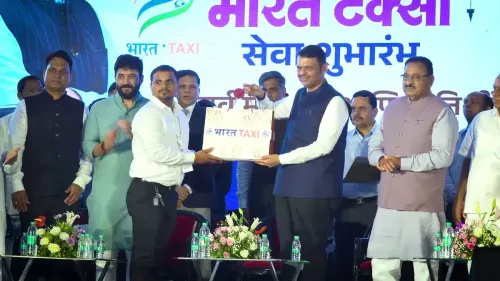
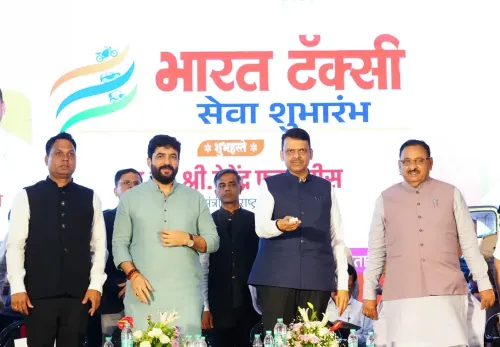
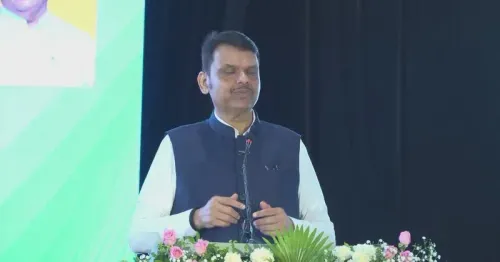
CM Fadnavis launches Bharat Taxi app service in Navi Mumbai
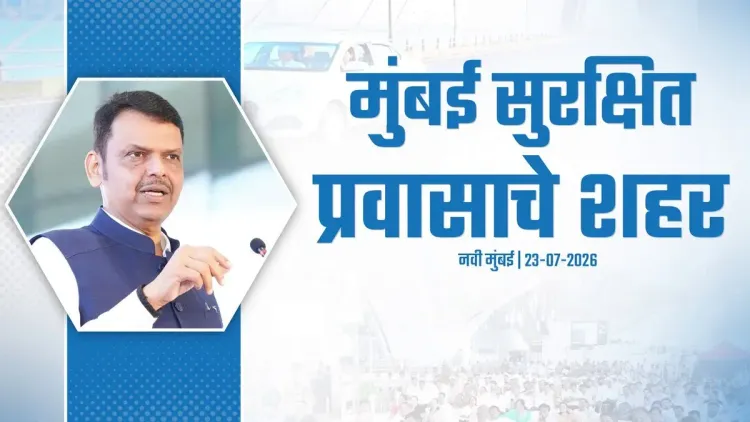
Synopsis
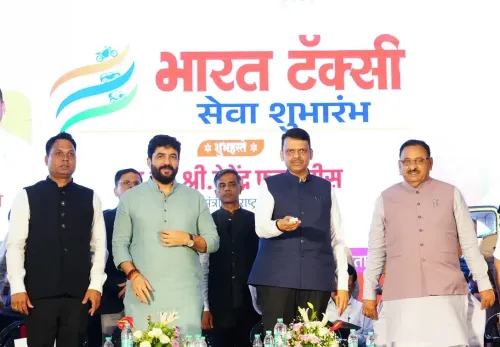
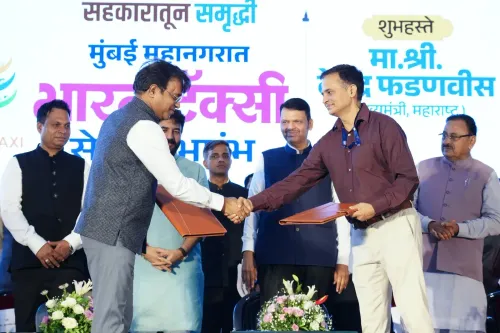
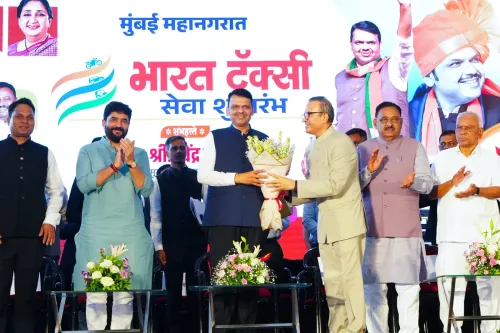
Maharashtra CM Devendra Fadnavis launched Bharat Taxi, an app-based cooperative taxi service, in Navi Mumbai on 23 July 2026. The initiative aims to deliver high-quality, organised urban transport and fits Maharashtra's broader push to fill last-mile mobility gaps in the Mumbai Metropolitan Region through cooperative participation.
Key Takeaways
Bharat Taxi was officially launched on 23 July 2026 in Navi Mumbai by CM Devendra Fadnavis .
The service is app-based and operated through a cooperative model , as indicated by the handle @coopbharattaxi .
The launch targets improved, quality-assured urban transport for commuters in the Mumbai Metropolitan Region .
Maharashtra has regulated app-based aggregators since 2015–2016 , and Bharat Taxi extends that policy lineage with a cooperative structure.
Potential expansion beyond Navi Mumbai and formal state aggregator-licensing notifications are the key developments to watch.
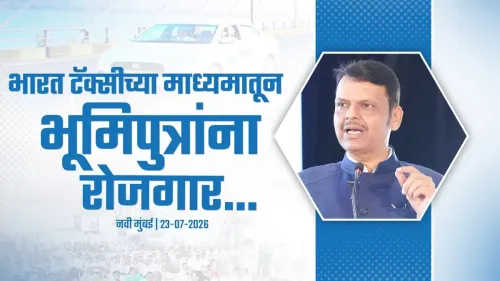
Maharashtra Chief Minister Devendra Fadnavis on Thursday, 23 July 2026 launched Bharat Taxi, an app-based taxi service, in Navi Mumbai, marking the state government's latest push to provide organised, quality urban transport through a cooperative channel.
Announcing the launch on X, Fadnavis wrote in Marathi and Hindi: 'ॲप-आधारित उत्तम दर्जाची वाहतुकीची व्यवस्था देण्याकरता भारत टॅक्सी सेवेचा शुभारंभ' — ('Launch of Bharat Taxi service to provide app-based, high-quality transport'). The post tagged @coopbharattaxi, signalling the service's cooperative ownership model.
Context
Navi Mumbai, a planned satellite city in the Mumbai Metropolitan Region, was developed from the 1970s onward to ease congestion in Mumbai and improve regional connectivity. Despite its planned layout, last-mile and intra-city mobility gaps have persisted, making it a natural test-bed for structured mobility solutions. The Bharat Taxi launch directly addresses commuter demand for reliable, app-enabled rides within the city.
Policy Backdrop
Maharashtra has engaged with app-based mobility regulation since 2015–2016, when the state framed aggregator rules following the rapid entry of private cab platforms into the market. Those rules sought to balance service quality, driver welfare, and consumer protection. The Bharat Taxi initiative extends that regulatory lineage by introducing a cooperative model — one that keeps local participation and earnings within community structures rather than corporate aggregators.
Indian states have increasingly promoted cooperative or state-backed mobility platforms alongside private ones, aiming to fill last-mile connectivity gaps in large metropolitan regions. Maharashtra's move fits a broader national pattern of leveraging app technology for inclusive urban transport.
Stakeholders and Impact
Urban commuters in Navi Mumbai stand to gain a new, quality-assured taxi option accessible through a smartphone app. Taxi operators and cooperative society members are the primary beneficiaries on the supply side, potentially gaining a structured platform that offers fairer revenue-sharing than conventional aggregator arrangements. The cooperative tag — visible in the @coopbharattaxi handle — suggests driver-members may have a stake in governance and earnings.
The launch also carries significance for Smart City and urban mobility planning in the Mumbai Metropolitan Region, where integrated transport solutions are a recurring policy priority.
What's Next
Attention will now turn to whether the Bharat Taxi service expands beyond Navi Mumbai to other cities in Maharashtra, and whether the state issues formal policy notifications on aggregator licensing or fare structures to support the cooperative model. The scale of driver enrolment and app adoption among commuters will be early indicators of the initiative's viability. A statewide rollout, if pursued, could reshape the competitive landscape for urban mobility across Maharashtra's major cities.
Point of View
A high-density commuter hub, allows the BJP-led administration to claim a tangible urban-governance win for middle-class and working-class riders alike. The cooperative framing also differentiates Bharat Taxi from incumbent private platforms, potentially drawing support from taxi unions that have historically resisted aggregator dominance. How quickly the service scales and whether it receives regulatory preference will determine whether this is a durable policy shift or a symbolic launch.
NationPress
21 Oct 2026
Frequently Asked Questions
What is Bharat Taxi and who launched it?
Bharat Taxi is an app-based taxi service operating on a cooperative model, launched by Maharashtra Chief Minister Devendra Fadnavis in Navi Mumbai on 23 July 2026 to provide high-quality, organised urban transport.
Where is Bharat Taxi available?
Bharat Taxi was launched in Navi Mumbai, a planned satellite city in the Mumbai Metropolitan Region. Whether it will expand to other Maharashtra cities has not yet been officially announced.
How is Bharat Taxi different from Ola and Uber?
Bharat Taxi operates through a cooperative structure, meaning driver-members may share in the platform's governance and earnings, unlike the corporate aggregator model used by private platforms.
What is Maharashtra's history with app-based taxi regulation?
Maharashtra introduced aggregator rules in 2015–2016 to regulate app-based cab services after private platforms entered the state market, setting standards for service quality, fares, and driver welfare.
What should commuters in Navi Mumbai expect from Bharat Taxi?
Commuters can expect an app-based booking experience with a focus on service quality, as the cooperative model is designed to offer reliable, organised transport within Navi Mumbai.