CM Fadnavis Launches Bharat Taxi, a Cooperative Cab Service

Synopsis
Chief Minister Devendra Fadnavis inaugurated Bharat Taxi on 23 July 2026, a cooperative-sector ride service in Maharashtra. The initiative aims to create new employment opportunities and provide commuters with a safer, more accessible alternative to private gig-economy cab platforms.
Key Takeaways
Bharat Taxi was inaugurated by Chief Minister Devendra Fadnavis on 23 July 2026 .
The service operates under Maharashtra 's cooperative-sector framework, distinguishing it from private aggregator platforms.
The initiative targets two goals: new employment generation for driver-members and safer, reliable transport for urban commuters.
The launch aligns with the Ministry of Cooperation 's post-2021 national push to modernise cooperative structures for new economic activities.
Maharashtra has one of India's oldest cooperative movements, historically strong in sugar, dairy and credit sectors.
District-wise rollout timelines and driver onboarding targets are yet to be announced publicly.
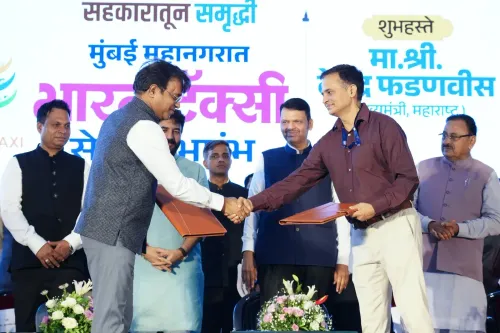
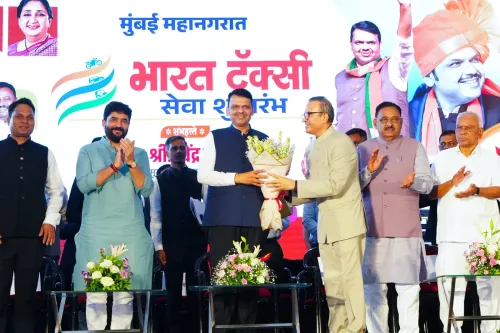
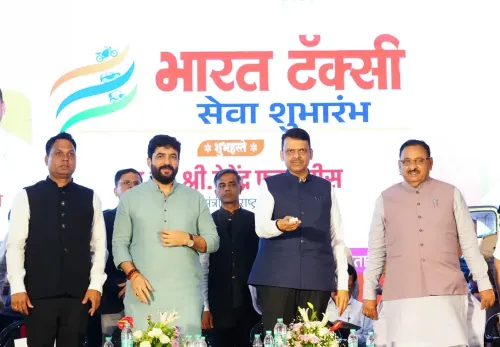
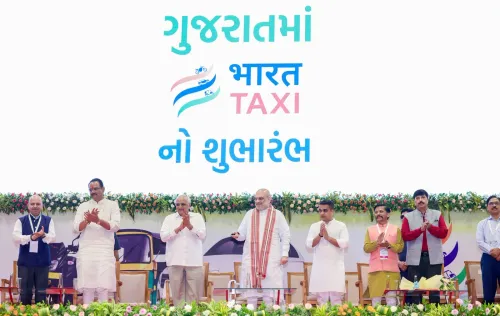
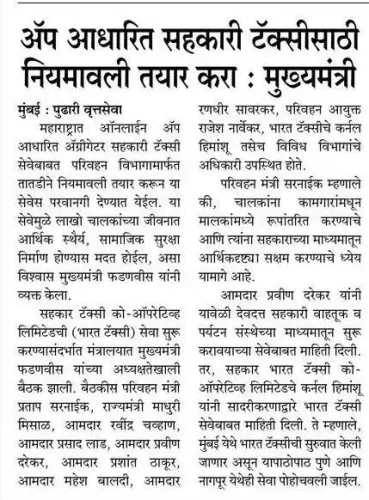
The Chief Minister's Office of Maharashtra announced on Thursday, 23 July 2026, that Chief Minister Devendra Fadnavis inaugurated Bharat Taxi, a cooperative-sector cab service designed to generate employment and provide safer, more reliable urban transport across the state.
The official post stated that Bharat Taxi will 'रोजगाराच्या नव्या संधी निर्माण करत' ('create new employment opportunities') while offering commuters a service described as 'more secure, accessible and trustworthy.' The announcement tagged Prime Minister Narendra Modi and Union Home Minister Amit Shah, signalling the initiative's alignment with the central government's cooperative-sector priorities.
Context
Bharat Taxi is positioned as an innovative initiative within Maharashtra's cooperative framework, distinct from purely private gig-economy platforms. The cooperative model means drivers and associated workers are members of a society rather than independent contractors for a private aggregator, giving them a stake in the enterprise's governance and earnings. The launch builds on a longstanding tradition: Maharashtra has one of the oldest and most robust cooperative movements in India, historically concentrated in sugar, dairy and credit sectors. Extending that model to urban mobility marks a deliberate expansion of cooperative activity into new economic domains.Policy Backdrop
The central government established the Ministry of Cooperation in July 2021 to provide dedicated policy focus and institutional support to India's cooperative sector. Since then, several state governments have explored cooperative frameworks for app-based transport and last-mile connectivity as a counterweight to large private platforms. Maharashtra's Bharat Taxi launch fits this national pattern. By routing a taxi service through the cooperative structure, the state government aims to address two simultaneous concerns: the need for regulated, passenger-safe urban transport and the demand for stable, formal employment in the mobility sector.Stakeholders and Impact
The primary beneficiaries identified in the announcement are urban commuters, who stand to gain a regulated alternative to existing ride-hailing options, and job seekers, particularly those who can enrol as driver-members of the cooperative. Cooperative societies involved in the scheme gain a new revenue stream and a presence in the urban services economy. Passenger safety and service reliability were explicitly highlighted in the CMO's post as distinguishing features of the service, suggesting that driver verification and grievance mechanisms will be central to the operational model.What's Next
Details on district-wise rollout timelines, vehicle onboarding targets and driver enrolment numbers are yet to be made public. Observers will watch whether Maharashtra introduces dedicated legislation or regulatory guidelines to govern cooperative taxi operations, and how the service integrates with existing digital mobility infrastructure in cities such as Mumbai, Pune and Nagpur. The involvement of senior central government figures in the announcement suggests the model could eventually be replicated in other states under the Ministry of Cooperation's broader agenda.Point of View
Threading the needle between employment generation and passenger-safety regulation. By tagging the Prime Minister and Home Minister in the announcement, the CMO is clearly framing this as part of the central government's cooperative-sector revival rather than a standalone state initiative. The cooperative taxi model offers a political dividend that private aggregators cannot: worker-members become stakeholders, not gig workers, which resonates with both labour-welfare messaging and the ruling coalition's rural-cooperative voter base. If the rollout succeeds in major cities, it could serve as a template that the Ministry of Cooperation promotes nationally, elevating Maharashtra's profile in the cooperative modernisation agenda.
NationPress
21 Oct 2026
Frequently Asked Questions
What is Bharat Taxi in Maharashtra?
Bharat Taxi is a cooperative-sector cab service launched in Maharashtra on 23 July 2026 by Chief Minister Devendra Fadnavis. Unlike private aggregators, it operates through a cooperative model where drivers are members of a society, giving them a stake in governance and earnings.
Who launched Bharat Taxi?
Chief Minister Devendra Fadnavis inaugurated Bharat Taxi, as announced by the Chief Minister's Office of Maharashtra on 23 July 2026.
What is the purpose of Bharat Taxi?
Bharat Taxi aims to create new employment opportunities for driver-members while providing urban commuters with a safer, more accessible and trustworthy ride service compared to existing private platforms.
How is Bharat Taxi different from Ola or Uber?
Bharat Taxi functions under the cooperative framework rather than a private aggregator model, meaning drivers participate as cooperative members rather than as independent gig contractors, aligning with India's broader cooperative-sector policy push since 2021.
Which cities will Bharat Taxi operate in?
The CMO's announcement did not specify individual cities. Observers expect a phased rollout across major Maharashtra cities such as Mumbai, Pune and Nagpur, but official district-wise timelines have not yet been released.