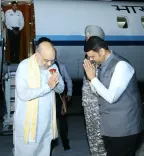
CM Sai Backs PM-KISAN Extension, ₹3.15 Lakh Cr Outlay
Synopsis
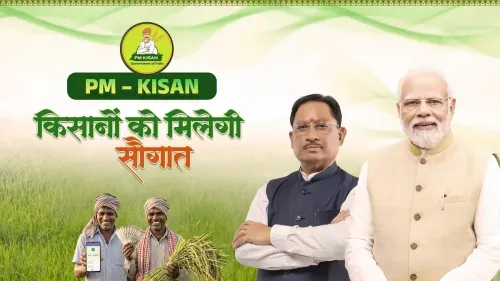
The Union Cabinet has approved PM-KISAN's continuation from 2026-27 to 2030-31 with a ₹3.15 lakh crore outlay. Chhattisgarh CM Vishnu Deo Sai welcomed the decision, saying it will strengthen the economic foundation of the state's farming families and advance the 'Viksit Bharat' vision.
Key Takeaways
The Union Cabinet approved PM-KISAN's extension from 2026-27 to 2030-31 under PM Narendra Modi .
The approved financial outlay stands at ₹3.15 lakh crore over the five-year period.
PM-KISAN provides ₹6,000 per year in direct bank transfers to eligible landholding farmer families.
Chhattisgarh CM Vishnu Deo Sai welcomed the decision, noting lakhs of the state's farming families are active beneficiaries.
The scheme was originally launched in February 2019 as a direct income-support mechanism for small and marginal farmers.
The extension aligns with the government's broader 'Samriddh Kisan–Viksit Bharat' rural welfare framework.
Millions of farming families across India just got a five-year guarantee — and Chhattisgarh Chief Minister Vishnu Deo Sai wants every farmer in his agriculture-dominant state to know it. The Union Cabinet, chaired by Prime Minister Narendra Modi, has approved the continuation of the Pradhan Mantri Kisan Samman Nidhi (PM-KISAN) scheme from 2026-27 through 2030-31, backed by a financial outlay of ₹3.15 lakh crore — one of the largest committed tranches of direct farm-income support in the country's history.
What the Cabinet cleared — and what it means for farmers
PM-KISAN, launched in February 2019, delivers ₹6,000 per year in three equal instalments directly into the bank accounts of eligible landholding farmer families — no middlemen, no leakage. The cabinet's decision to extend and fund the scheme through 2030-31 locks in that income floor for crores of households across five more agricultural cycles. CM Sai, welcoming the move on Friday, 31 July 2026, called it 'an important decision in the direction of economic empowerment of crores of farmer families' — annadaataon ki samriddhi se sashakt hoga Viksit Bharat ka sankalp (the resolve of a Developed India will be strengthened by the prosperity of those who feed the nation).
Chhattisgarh's farmers and the PM-KISAN pipeline
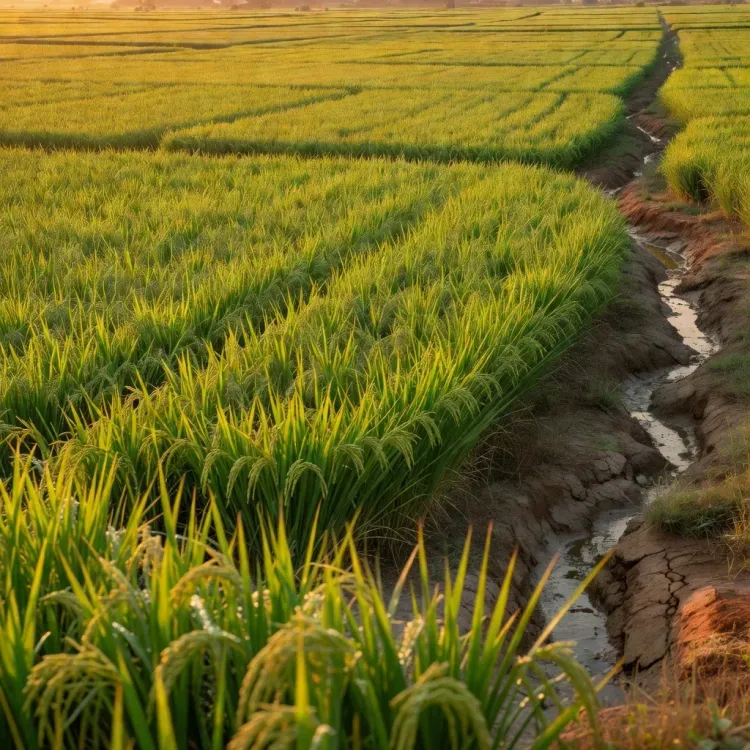
Chhattisgarh is one of India's most agriculture-reliant states — rice cultivation dominates its plains, and lakhs of small and marginal families depend on seasonal crop income. CM Sai noted that the state's farming households have been 'continuously benefiting' from PM-KISAN, and the extension ensures that pipeline stays open well into the next decade. The scheme's direct-benefit-transfer architecture means funds reach accounts without state-level diversion — a structural feature that has made it one of the central government's most replicable rural welfare instruments since 2014.
'Samriddh Kisan, Viksit Bharat' — the political arithmetic behind the pledge
The approval fits a recognisable pattern: the Modi government has periodically renewed and expanded direct-benefit schemes for farmers alongside complementary measures — crop insurance under PM Fasal Bima Yojana, minimum support price revisions, and soil health cards — building an interlocking floor of rural income support. The ₹3.15 lakh crore outlay signals that the political economy of farm welfare remains central to the ruling coalition's agenda heading into the next electoral cycle. CM Sai's public gratitude to PM Modi — hriday se aabhaar (heartfelt thanks) — underscores how state BJP leadership is framing the decision: not as a routine renewal, but as a reaffirmation of the 'Samriddh Kisan–Viksit Bharat' (Prosperous Farmer–Developed India) compact.
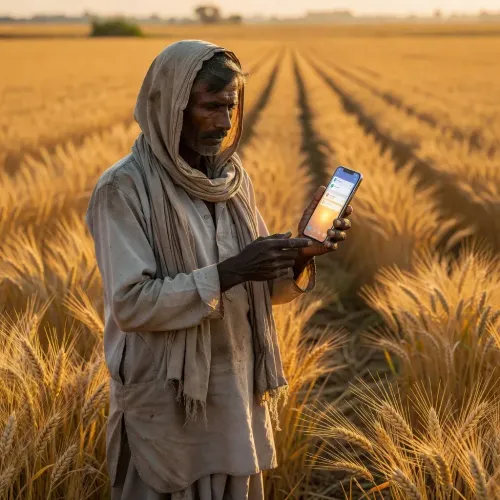
For the farmer standing at the edge of a paddy field in Raipur or Bilaspur, the math is simple: six thousand rupees a year, guaranteed until 2031. That certainty, multiplied across crores of households, is the real headline.
Point of View
Publicly amplifying such decisions is as much about consolidating the party's agrarian base in states like Chhattisgarh as it is about policy communication. The 'Viksit Bharat' framing layers the welfare announcement into a larger national-development narrative, positioning farm support not as a subsidy but as a building block of India's 2047 ambitions. Whether the extension translates into measurable income gains will depend heavily on timely fund releases and ground-level enrollment accuracy — the scheme's persistent administrative challenge.
NationPress
1 Aug 2026
Frequently Asked Questions
What is PM-KISAN and how much money do farmers get?
PM-KISAN (Pradhan Mantri Kisan Samman Nidhi) is a central government scheme that provides ₹6,000 per year in three equal instalments of ₹2,000 directly into the bank accounts of eligible landholding farmer families across India.
Has PM-KISAN been extended beyond 2025-26?
Yes. The Union Cabinet, chaired by Prime Minister Narendra Modi, approved the continuation of PM-KISAN from 2026-27 to 2030-31 with a financial outlay of ₹3.15 lakh crore, according to CM Vishnu Deo Sai's post on 31 July 2026.
How does PM-KISAN benefit Chhattisgarh farmers?
Chhattisgarh is an agriculture-dominant state, and lakhs of its small and marginal farming families are enrolled in PM-KISAN. The scheme's direct bank transfer mechanism ensures funds reach beneficiaries without intermediaries.
When was PM-KISAN launched?
PM-KISAN was launched in February 2019 through Union Budget 2019-20, initially to support small and marginal farmers with direct income transfers.
What did Chhattisgarh CM Vishnu Deo Sai say about the PM-KISAN extension?
CM Sai called the cabinet's decision an 'important step in the economic empowerment of crores of farmer families,' noted that Chhattisgarh's farmers are continuous beneficiaries, and expressed gratitude to PM Modi for prioritising farmer welfare.