CM Sai Celebrates Chhattisgarh's Kosa and Bastar Silk on Handloom Day
Synopsis
On National Handloom Day 2026, Chhattisgarh CM Vishnu Deo Sai celebrated the state's famed Kosa sarees from Janjgir-Champa and Bastar silk, calling handloom the art form that unites India's civilisation, culture, and heritage into a single thread.
Key Takeaways
National Handloom Day is observed on 7 August each year, marking the 1905 Swadeshi Movement launch; the Government of India instituted it in 2015 .
Chhattisgarh CM Vishnu Deo Sai highlighted two state products: Kosa sarees from Janjgir-Champa and Bastar silk , calling them globally recognised.
Janjgir-Champa district is the established hub of Kosa silk weaving in Chhattisgarh, prized for its natural texture and sheen.
Bastar's silk-weaving tradition is rooted in the region's indigenous tribal communities and carries distinct cultural motifs.
CM Sai's post aligns with broader state and central government efforts to link traditional textile clusters to markets and cultural tourism.
Every thread tells a story — and on National Handloom Day, 7 August 2026, Chhattisgarh Chief Minister Vishnu Deo Sai put two of his state's most celebrated weaves at the centre of India's conversation about craft, culture, and commerce.
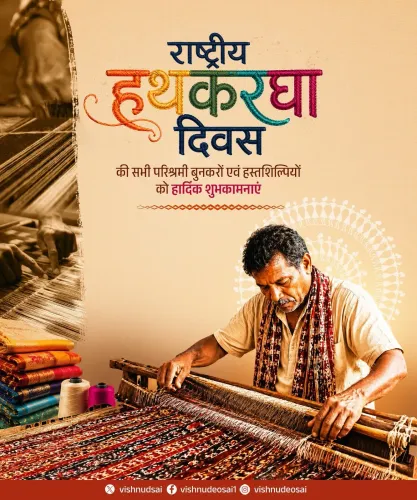
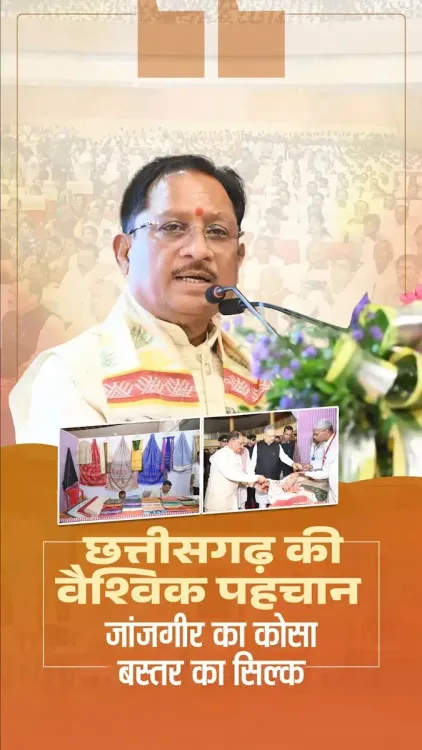
In a post marking the occasion, CM Sai described the handloom as the art form that binds the nation's civilisation, culture, and heritage into a single thread — 'एक सूत्र में पिरोने वाली विधा' ['the art that strings everything into one thread']. He spotlighted two specific products: the Kosa saree of Janjgir-Champa and the silk of Bastar, both of which, he said, resonate across India and the world.
Kosa from Janjgir-Champa, Silk from Bastar — Chhattisgarh's Twin Textile Identities
Janjgir-Champa district has long been the heartland of Kosa silk weaving in Chhattisgarh. Kosa, spun from the cocoons of the Antheraea mylitta silkworm that feeds on sal and arjun trees, produces a fabric prized for its natural sheen and durability. Bastar, the sprawling tribal region in southern Chhattisgarh, carries its own distinct silk-weaving tradition, woven into the cultural fabric of its indigenous communities for generations.
Together, these two products have become calling cards for the state — showcased at national textile expos and increasingly sought in export markets. CM Sai's public endorsement on a nationally observed day amplifies that positioning, linking local artisan livelihoods to a broader story of Indian craft pride.
Why 7 August — The Swadeshi Root of National Handloom Day
The date is not arbitrary. 7 August marks the launch of the Swadeshi Movement in 1905, when leaders at the Calcutta Town Hall called on Indians to shun British goods and embrace indigenous production — with handloom cloth as the movement's most potent symbol. The Government of India instituted National Handloom Day in 2015 to honour that legacy and to direct fresh policy attention to a sector that employs millions of rural and semi-urban weavers.
For Chhattisgarh, the day is an annual moment to assert that its weavers are not merely custodians of tradition — they are producers of goods with real market reach. The state has consistently positioned Kosa and Bastar silk within both domestic tourism circuits and export promotion frameworks.
The loom, in this telling, is not a relic. It is a live wire connecting history to economy — and Chhattisgarh intends to keep the current flowing.
Point of View
He anchors the message in economic geography — signalling to weavers, traders, and tourism planners simultaneously. This fits a broader BJP-led pattern of linking Swadeshi symbolism to contemporary 'vocal for local' market narratives. The real test will be whether the rhetorical spotlight translates into budget allocations or cluster-development schemes for Chhattisgarh's handloom districts.
NationPress
7 Aug 2026
Frequently Asked Questions
What is National Handloom Day and why is it celebrated on 7 August?
National Handloom Day is observed every year on 7 August to commemorate the launch of the Swadeshi Movement on 7 August 1905 , when Indian leaders called for a boycott of British goods and promotion of indigenous textiles. The Government of India instituted the day in 2015 to honour that legacy and promote the handloom sector.
What is Kosa silk and where does it come from in Chhattisgarh?
Kosa silk is a natural silk spun from the cocoons of the Antheraea mylitta silkworm, which feeds on sal and arjun trees. It is primarily produced in Janjgir-Champa district of Chhattisgarh and is known for its distinctive natural sheen, texture, and durability.
What makes Bastar silk special?
Bastar silk comes from the southern Chhattisgarh region of Bastar and is woven by indigenous tribal communities using centuries-old traditions. Its unique weave patterns and tribal motifs give it a cultural identity distinct from mainstream Indian silks.
What did CM Vishnu Deo Sai say on National Handloom Day 2026?
CM Sai described handloom as the art form that binds India's civilisation, culture, and heritage into a single thread. He specifically highlighted the Kosa sarees of Janjgir-Champa and Bastar silk as products that have earned recognition across India and globally.
How does Chhattisgarh promote its handloom products?
Chhattisgarh has positioned Kosa sarees and Bastar silk within national textile expos, tourism circuits, and export promotion frameworks. State leaders regularly use occasions like National Handloom Day to amplify these products' cultural and commercial value.