CM Sai: Cooperatives Now Offer 54 Services to Chhattisgarh Farmers
Synopsis
Chief Minister Vishnu Dev Sai of Chhattisgarh says the cooperative network, guided by PM Modi and Union Minister Amit Shah, now offers farmers 54 types of services — well beyond the traditional fertiliser, seed, and credit model — as part of the national Sahkar Se Samriddhi campaign.
Key Takeaways
The Chief Minister's Office of Chhattisgarh shared a statement by CM Vishnu Dev Sai on 3 July 2026 on the expansion of cooperative services.
Farmers now have access to 54 types of services through cooperatives, beyond the earlier focus on fertilisers, seeds, and credit.
The expansion is attributed to PM Narendra Modi 's guidance and Union Cooperation Minister Amit Shah 's leadership.
India's Ministry of Cooperation , established in July 2021 , has been the institutional driver of this multi-service cooperative model.
The announcement aligns with the Sahkar Se Samriddhi campaign and the broader Viksit Bharat framework for inclusive rural growth.
State-level rollout of all 54 services through Chhattisgarh 's PACS network remains the key implementation challenge ahead.
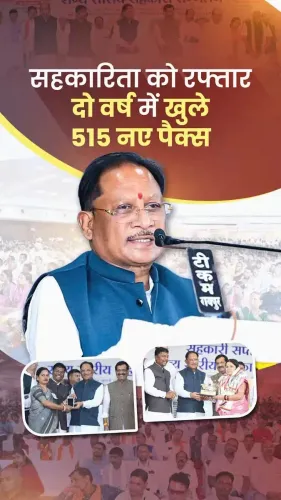
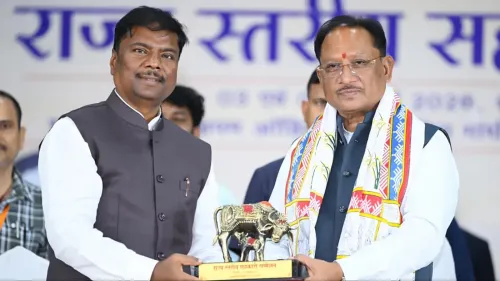
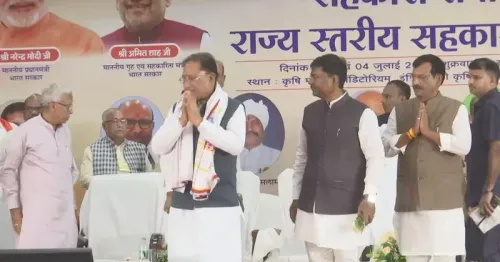
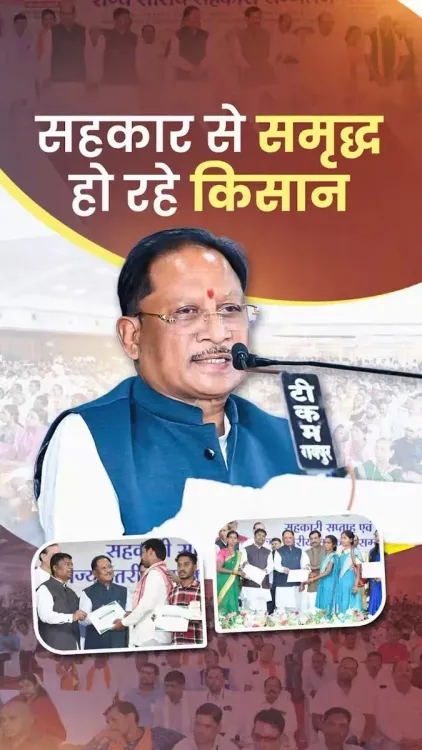
Raipur, 3 July 2026 — The Chief Minister's Office of Chhattisgarh on Friday shared a statement by Chief Minister Vishnu Dev Sai highlighting that India's cooperative network, under the guidance of Prime Minister Narendra Modi and the leadership of Union Cooperation Minister Amit Shah, has expanded to deliver 54 types of services to farmers — far beyond the traditional offerings of fertilisers, seeds, and credit.
Context
CM Sai stated, 'Sahkarita ka daayra lagaataar badh raha hai' ('The scope of cooperation is continuously expanding'), noting that farmers now receive 54 categories of services through the cooperative network. The post was shared under hashtags including #SahkarSeSamriddhi and #ViksitBharat, situating the announcement within the national cooperative revival campaign. The statement attributes this expansion directly to PM Modi's guidance and Minister Shah's direction.
Policy Backdrop
The Government of India created a dedicated Ministry of Cooperation in July 2021 — the first of its kind — to give focused attention to modernising and diversifying the cooperative sector. Since 2022, the computerisation of Primary Agricultural Credit Societies (PACS) and their transformation into multi-service rural hubs has been a central plank of this effort. The Sahkar Se Samriddhi campaign has been the flagship vehicle for promoting cooperatives as providers of agriculture, dairy, fisheries, retail, and financial services under one roof.
This policy trajectory is designed to reposition cooperatives — historically limited to credit disbursement — as comprehensive rural service platforms. The expansion to 54 services represents a significant scaling of that vision, moving cooperatives into domains such as warehousing, processing, and common service delivery at the village level.
Stakeholders and Impact
Small and marginal farmers stand to benefit most directly, as PACS and cooperative societies serve as the primary point of contact for rural households in states like Chhattisgarh. By consolidating multiple services — from input supply to market linkage — into a single cooperative touchpoint, the model aims to reduce transaction costs and improve access for farmers who previously had to approach multiple agencies. Cooperative societies themselves gain new revenue streams and institutional relevance under this framework.
For Chhattisgarh, a state with a large agrarian population and significant tribal farming communities, the expansion of cooperative services carries particular weight. The state government's amplification of this message signals its alignment with the central cooperative push and its intent to accelerate state-level rollout.
What's Next
Attention will now turn to how Chhattisgarh's PACS operationalise the full suite of 54 services at the ground level, including staffing, digital infrastructure, and inter-departmental coordination. Any follow-up announcements on state-level cooperative legislation, funding allocations, or district-wise implementation timelines will be closely watched. The #SahkarSeSamriddhiKe5Saal hashtag used in the post also suggests a broader anniversary milestone communication around five years of the Sahkar Se Samriddhi campaign is underway at the national level.
Point of View
The Chhattisgarh government publicly reinforces its ideological synchrony with the Centre on cooperative reform. The invocation of the five-year Sahkar Se Samriddhi milestone suggests a coordinated national communication push, with state governments acting as amplifiers. The shift from credit-only to 54-service cooperatives is substantively significant, but the real test lies in ground-level operationalisation, where infrastructure gaps in states like Chhattisgarh have historically slowed delivery. This communication also positions cooperatives as a rural governance tool ahead of any state-level electoral cycle, making the policy and the politics difficult to disentangle.
NationPress
3 Jul 2026
Frequently Asked Questions
What are the 54 services now available through cooperatives in India?
CM Vishnu Dev Sai's statement references 54 types of services being delivered through the cooperative network, expanding well beyond the traditional offerings of fertilisers, seeds, and agricultural credit. The full list spans agriculture, dairy, fisheries, warehousing, retail, and common service delivery, as part of the PACS multi-service expansion under the Ministry of Cooperation.
What is the Sahkar Se Samriddhi campaign?
Sahkar Se Samriddhi, meaning 'Prosperity through Cooperation,' is a national campaign promoted by the Ministry of Cooperation to diversify cooperative societies into multi-purpose rural service providers. It is a central pillar of India's cooperative revival policy since the ministry's creation in 2021.
When was India's Ministry of Cooperation formed and why?
The Ministry of Cooperation was established in July 2021 by the Government of India to give dedicated institutional focus to modernising and expanding the cooperative sector, which had previously been handled as part of a broader agriculture portfolio.
What is the role of PACS in delivering cooperative services to farmers?
Primary Agricultural Credit Societies (PACS) are village-level cooperative institutions that serve as the primary touchpoint between farmers and the cooperative network. Under the post-2021 policy framework, PACS are being computerised and upgraded to deliver a wide range of services beyond credit, including input supply, warehousing, and market linkage.
What did Chhattisgarh CM Vishnu Dev Sai say about cooperatives?
CM Sai stated that under PM Modi's guidance and Union Minister Amit Shah's leadership, the scope of cooperation has continuously expanded, and farmers are now receiving 54 types of services through cooperatives — not just fertilisers, seeds, and loans.