CM Sai extends Half Electricity Bill scheme to March 2027
Synopsis
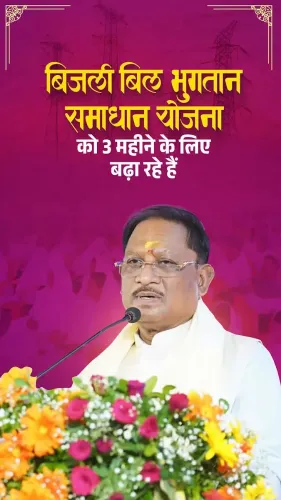
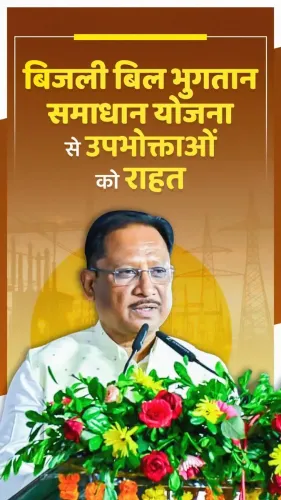
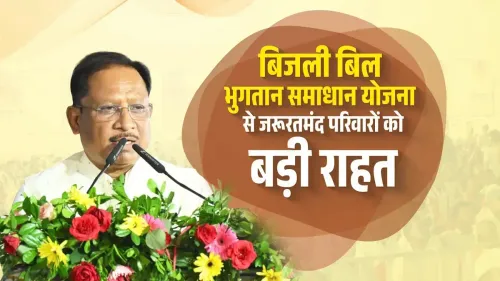
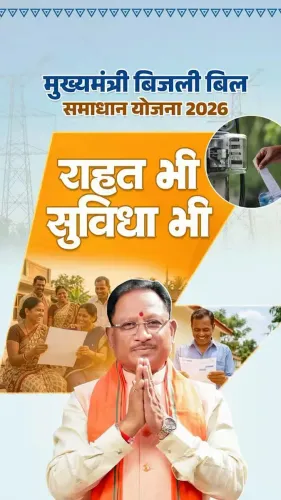
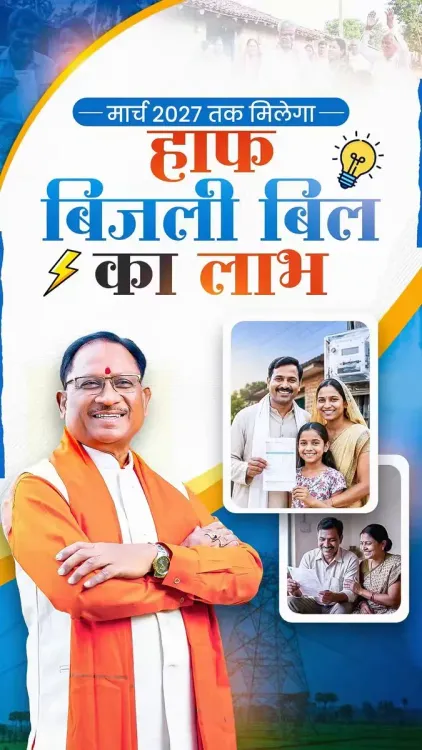
Chhattisgarh CM Vishnu Deo Sai announced the Cabinet's decision to extend the Haf Bijli Bill Yojana — offering 50% electricity bill relief — until 31 March 2027, covering over 7 lakh domestic consumers under the Mukhyamantri Urja Rahat Jan Abhiyan.
Key Takeaways
The Haf Bijli Bill Yojana has been extended until 31 March 2027 by the Chhattisgarh Cabinet.
The scheme provides a 50 percent reduction on electricity bills for domestic consumers.
More than 7 lakh household electricity consumers in Chhattisgarh are covered under the scheme.
The extension was announced under the Mukhyamantri Urja Rahat Jan Abhiyan campaign.
CM Vishnu Deo Sai framed the decision as a tool for household economic stability and budget relief.
The BJP government in Chhattisgarh has been in power since December 2023 , with electricity affordability a key welfare focus.
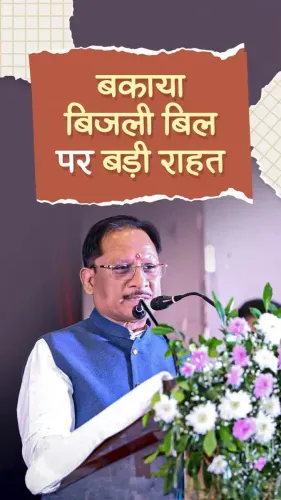
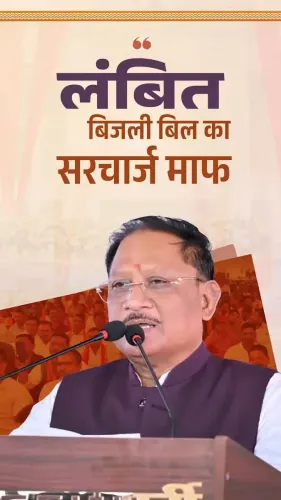
Relief at the meter — and relief for the monthly budget. Chhattisgarh Chief Minister Vishnu Deo Sai announced on 31 October 2026 that his Cabinet has extended the Haf Bijli Bill Yojana (Half Electricity Bill Scheme) until 31 March 2027, keeping a 50-percent power-bill concession alive for more than 7 lakh domestic electricity consumers across the state.
What the Cabinet decided — and who it reaches
The extension was cleared under the umbrella of the Mukhyamantri Urja Rahat Jan Abhiyan — the state government's flagship energy-cost-relief campaign. CM Sai framed the decision in straightforward terms: 'Ghar ke bijli bill mein rahat, parivaar ke budget ko sambhalne mein madad karti hai' ('Relief on the home electricity bill helps manage the family budget'). The scheme slashes residential electricity bills by half, directly easing one of the most predictable monthly expenses for working households.
The 7-lakh-plus beneficiary base covers domestic consumers — families, not commercial or industrial users — making the relief tightly targeted at residential affordability. By locking in the extended deadline at March 2027, the Cabinet gives households more than a year of planning certainty rather than a short-term rollover.
BJP's post-2023 welfare playbook in Chhattisgarh
Vishnu Deo Sai took charge as Chief Minister in December 2023 after the BJP won the Chhattisgarh assembly elections, ending the Congress government's tenure. Electricity affordability has been a recurring pressure point for households across central India, where rising distribution-company tariffs and seasonal demand spikes squeeze fixed-income families hardest.
The Haf Bijli Bill Yojana fits a broader pattern: BJP-governed states have increasingly used slab-based or percentage-cut power subsidies as a visible, direct-to-household welfare instrument. The Chhattisgarh scheme's extension signals that the administration views the relief not as a temporary patch but as a sustained commitment through the mid-term of the current government's tenure.
What to watch as the scheme runs through 2027
The practical questions now shift to implementation: how the state's power distribution companies absorb the revenue shortfall, and whether upcoming budget cycles ring-fence adequate allocations to keep the subsidy flowing without disruption. CM Sai's post signals political intent; the fiscal architecture behind it will determine whether all 7 lakh-plus consumers feel that intent at every billing cycle through March 2027.
For Chhattisgarh's households, the message from Raipur is simple — the half-bill promise isn't going anywhere for the next sixteen months.
Point of View
Kitchen-table benefit before the next electoral cycle heats up. Electricity subsidies have proven to be among the stickiest voter-retention instruments across Indian states, precisely because they show up as a number on a monthly bill. The real policy test, however, lies off the announcement: whether Chhattisgarh's power distribution companies can sustain the revenue gap without service deterioration will determine if the scheme's political dividend holds. It also reflects a national BJP pattern of deploying targeted, direct-relief schemes as an alternative to broad-based price controls.
NationPress
31 Oct 2026
Frequently Asked Questions
What is the Haf Bijli Bill Yojana in Chhattisgarh?
The Haf Bijli Bill Yojana is a Chhattisgarh state government scheme that provides a 50 percent reduction on electricity bills for domestic consumers, operating under the Mukhyamantri Urja Rahat Jan Abhiyan campaign.
How long has the Haf Bijli Bill Yojana been extended?
The Chhattisgarh Cabinet extended the scheme until 31 March 2027, as announced by Chief Minister Vishnu Deo Sai on 31 October 2026.
How many people benefit from Chhattisgarh's half electricity bill scheme?
More than 7 lakh domestic electricity consumers in Chhattisgarh are covered under the Haf Bijli Bill Yojana.
Who is eligible for the half electricity bill scheme in Chhattisgarh?
The scheme targets domestic (residential) electricity consumers in Chhattisgarh — it is not applicable to commercial or industrial users.
What is the Mukhyamantri Urja Rahat Jan Abhiyan?
It is the Chhattisgarh government's flagship energy-cost-relief campaign under which the Haf Bijli Bill Yojana operates, aimed at reducing household electricity expenses across the state.