CM Sai Flags ₹16,738 Cr Mineral Revenue at Mining Review
Synopsis
Chhattisgarh CM Vishnu Deo Sai disclosed ₹16,738 crore in mineral revenue for FY 2025-26 at a high-level meeting with Union Mines Minister G. Kishan Reddy, while highlighting the TIN portal initiative to ensure fair, transparent payments for Bastar's tribal tin collectors.
Key Takeaways
Chhattisgarh earned ₹16,738 crore in revenue from mineral resources in FY 2025-26 , as stated by CM Vishnu Deo Sai .
A high-level review meeting was held with Union Minister of Coal and Mines G.
Kishan Reddy on November 3, 2026 .
The state is developing a TIN portal to provide better prices and transparent payments to tribal tin collectors in Bastar .
CM Sai identified mineral development, local empowerment, and employment creation as the government's top priorities in the mining sector.
The 2015 MMDR Act amendments established District Mineral Foundations, a key mechanism for channelling mining royalties into local tribal area development in states like Chhattisgarh.
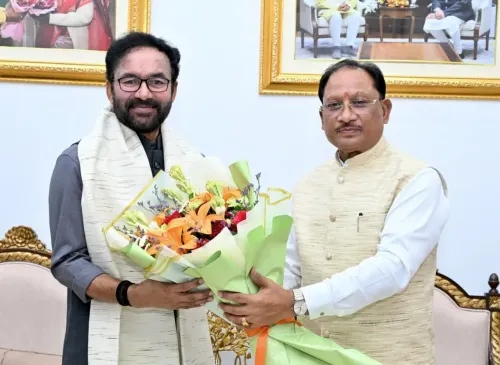
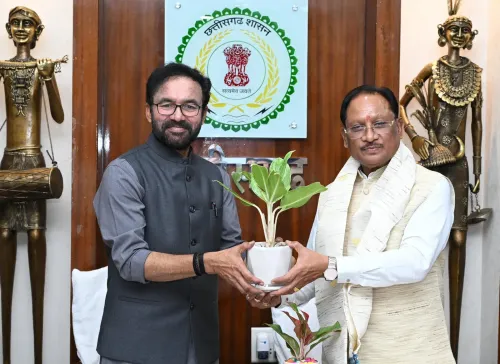
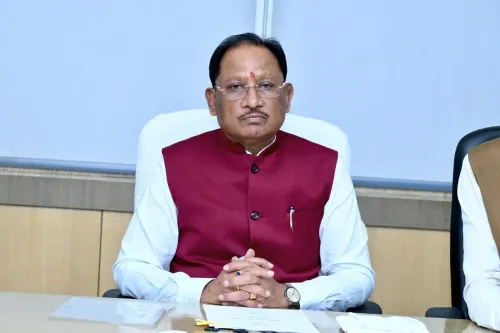
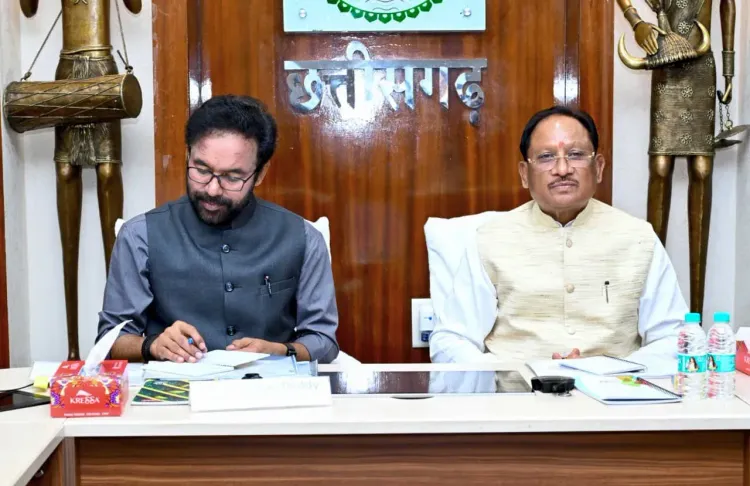
A high-level review meeting between Chhattisgarh Chief Minister Vishnu Deo Sai and Union Minister of Coal and Mines G. Kishan Reddy on Tuesday, November 3, 2026, produced a striking headline: the mineral-rich central Indian state pulled in ₹16,738 crore in revenue from its mining sector in financial year 2025-26. That number tells a story of strategic dependence — and of a government racing to turn raw extraction into lasting community wealth.
₹16,738 Crore and the Weight Behind That Figure
Chhattisgarh sits atop some of India's largest deposits of coal, iron ore, bauxite, and tin. Mineral revenues have long been the state's fiscal backbone, but successive governments have struggled to ensure that extraction wealth reaches the people living closest to the mines. CM Sai used Tuesday's meeting — convened with central government oversight — to assert that formalisation of the sector is now a stated priority, not just a bureaucratic aspiration.
The Chief Minister's Office stated that Sai emphasised 'proper utilisation of mineral resources, investment, employment generation, and economic empowerment of local communities.' The framing is deliberate: in a state where mining zones overlap heavily with tribal habitations, the political calculus demands that revenue numbers translate visibly into livelihoods.
Bastar's Tribal Tin Collectors and the TIN Portal Push
The sharpest detail to emerge from the meeting concerns Bastar, the southern Chhattisgarh region that is home to large tribal populations and significant tin ore deposits. The state government is rolling out a TIN portal — a digital initiative designed to give tribal tin collectors better market prices and transparent payment records, cutting out intermediaries who have historically captured most of the margin.
The effort fits within a wider national framework: the Mines and Minerals (Development and Regulation) Act amendments of 2015 established District Mineral Foundations (DMFs), which require mining companies to contribute a percentage of royalties toward local area development. Bastar's tin belt has been one of the regions where the gap between policy intent and on-ground delivery has been starkest, making the portal a meaningful test case.
Transparency in minor-mineral payments is not a new demand from tribal communities in Bastar — it has been raised for years. A digital portal that logs transactions and guarantees floor prices could, if implemented at scale, structurally shift the bargaining power of collectors who currently sell through informal chains.
Centre-State Coordination on Mining Governance
The presence of Union Minister G. Kishan Reddy at a state-level review signals active coordination between Raipur and New Delhi on mining governance. Kishan Reddy, who holds the Coal and Mines portfolio at the Centre, oversees the regulatory architecture within which state governments like Chhattisgarh operate their mineral concessions. Joint reviews of this kind are a mechanism to align state extraction targets with central licensing and environmental clearance pipelines.
For CM Sai's BJP government, which has been in office since December 2023, projecting a ₹16,738 crore mineral revenue figure in a meeting with the Union minister also serves a political function: it frames the administration as one that has maximised collections while shifting the conversation toward welfare outcomes — employment and empowerment — rather than extraction volume alone.
What Follows the Boardroom
The real test now is whether the TIN portal reaches the last-mile collector in Bastar's interior, and whether the revenue data triggers proportionate investment back into mining-district infrastructure. With the next state budget cycle approaching, revised mineral revenue targets and DMF spending disclosures will be the numbers to watch — because in Chhattisgarh, the distance between a crore on a revenue chart and a rupee in a tribal collector's hand is precisely the governance gap this administration has staked its credibility on closing.
Point of View
Welfare-linked extraction — a direct counter to longstanding criticism that mining revenues bypass tribal communities. The ₹16,738 crore figure, deployed in a Centre-state forum, positions Chhattisgarh as a high-performing revenue partner while the TIN portal simultaneously signals responsiveness to tribal welfare demands ahead of any future electoral cycle. However, digital portals for minor minerals have been announced across Indian states before without achieving last-mile reach in conflict-affected zones like Bastar; the administration's credibility will be measured in implementation data, not announcement rhetoric. The DMF framework already exists as a legal vehicle for redistribution — what the Sai government is really being tested on is whether it can make that framework legible and accessible to the people it was designed to serve.
NationPress
3 Nov 2026
Frequently Asked Questions
How much revenue did Chhattisgarh earn from mining in 2025-26?
CM Vishnu Deo Sai stated that Chhattisgarh received ₹16,738 crore in revenue from mineral resources in financial year 2025-26 .
What is the TIN portal in Chhattisgarh?
The TIN portal is a state government initiative aimed at ensuring tribal tin collectors in the Bastar region receive better market prices and transparent, traceable payments, reducing dependence on informal intermediaries.
Who is G. Kishan Reddy and why was he in Chhattisgarh?
G. Kishan Reddy is India's Union Minister of Coal and Mines. He presided over a high-level mining review meeting with CM Vishnu Deo Sai on November 3, 2026 to assess mineral governance, investment, and revenue performance in Chhattisgarh.
What is a District Mineral Foundation and how does it help tribal people?
A District Mineral Foundation (DMF) is a trust established under the 2015 MMDR Act amendments in every district where mining occurs. Mining companies contribute a share of royalties into the DMF, which funds local development — roads, health, education — primarily benefiting communities in mining-affected areas.
What minerals does Chhattisgarh produce?
Chhattisgarh holds major deposits of coal, iron ore, bauxite, and tin, making it one of India's most mineral-rich states and a significant contributor to national raw-material supply chains.