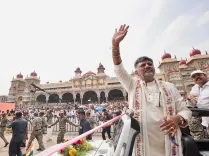
CM Sai Hails First Rawghat-Raipur Rail Link as Historic Milestone
Synopsis
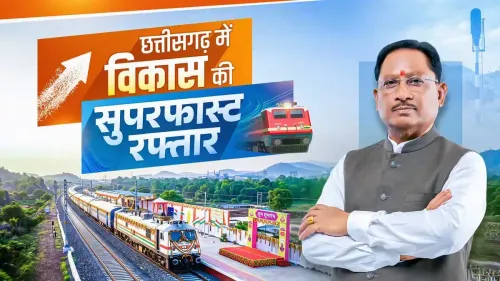
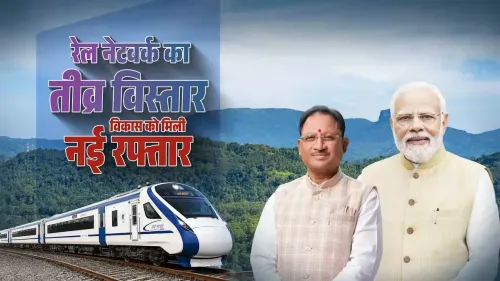
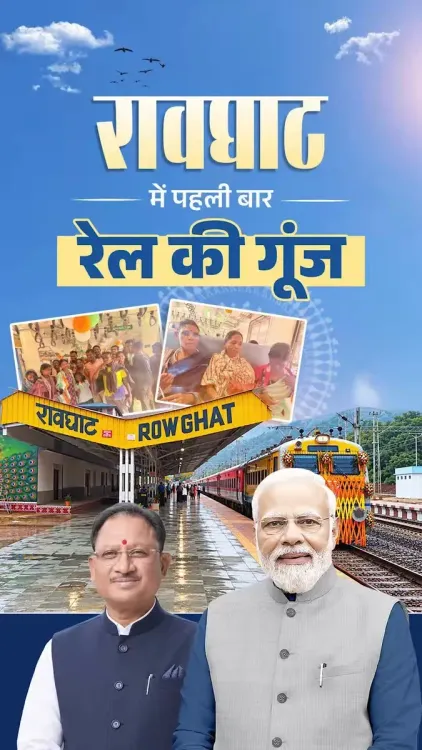
Chhattisgarh CM Vishnu Deo Sai hailed the inaugural Rawghat-Raipur rail service as a historic leap for the state's remote tribal and mineral-rich belt, crediting the BJP's 'double engine government' for ending years of connectivity drought.
Key Takeaways
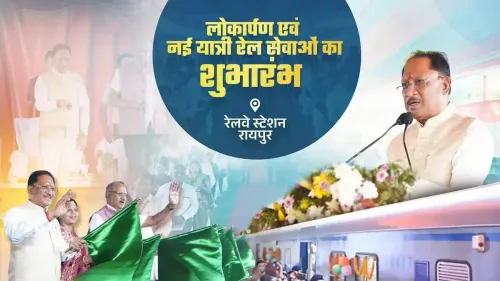
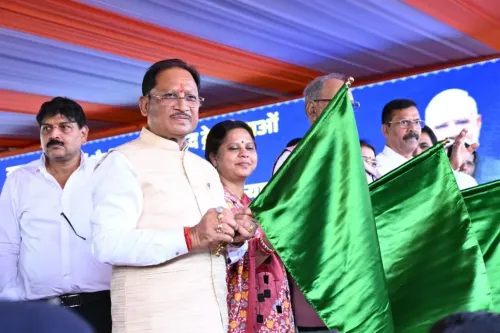
The first-ever rail service between Rawghat and state capital Raipur was inaugurated on 21 October 2026 .
CM Vishnu Deo Sai described the launch as a 'historic achievement' for the region after years of waiting.
The route connects Chhattisgarh's mineral-rich, tribal-dominated southern belt to the capital for the first time by rail.
The BJP 's 'double engine government' framework — state and Centre in alignment — is credited with driving the project forward.
The corridor is expected to boost trade, employment, and freight movement, particularly for the region's iron-ore economy.
The Ministry of Railways has prioritised rail expansion into Chhattisgarh's Bastar and Durg divisions since 2014 .
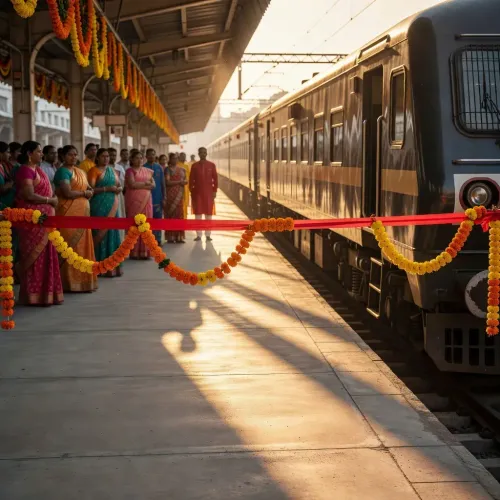
After years of waiting, the iron tracks have finally reached Rawghat — and Chhattisgarh Chief Minister Vishnu Deo Sai says the state's remotest corners are now stepping into a new era. The launch of the first-ever rail service connecting Rawghat to the state capital Raipur marks a watershed moment for a region long cut off from the country's rail grid, the Chief Minister announced on Wednesday, 21 October 2026.
Rawghat's Long Wait — and What the Connection Means
Rawghat, nestled in Chhattisgarh's mineral-rich southern belt, has historically sat outside the reach of any direct rail link to the capital. For residents of the region — largely tribal communities, small traders, and daily-wage workers — connectivity to Raipur meant long road journeys through difficult terrain. That changes now. CM Sai described the inauguration as 'kshetra ke liye aitihasik uplabdhi' — 'a historic achievement for the region' — and flagged it as direct evidence of the 'double engine government' delivering where previous administrations had not.
The phrase 'double engine government' is a well-worn BJP political frame, signalling alignment between the party-run state government and the NDA government at the Centre — and in this case, it points to a concrete output: years of coordinated rail-budget allocations and project clearances that have moved Chhattisgarh's lagging connectivity forward.
From Ore Deposits to Open Markets: The Economic Calculus
The stakes here go well beyond convenience. Chhattisgarh holds some of India's most substantial iron-ore deposits, and the Rawghat belt sits squarely in that mineral corridor. Direct rail access to Raipur is expected to unlock freight movement that road transport could never efficiently sustain — cutting costs for mining operations and, by extension, opening downstream business opportunities for local entrepreneurs. CM Sai specifically cited new possibilities for 'vyapar, rozgar aur vikas' — 'trade, employment, and development' — as the tangible dividends residents can expect.
The Ministry of Railways, tagged in the Chief Minister's post, has been the central driver of rail expansion into Chhattisgarh's Bastar and Durg divisions since 2014, with a stated policy priority of linking Naxal-affected and tribal districts to the national network. The Rawghat-Raipur corridor fits squarely into that broader programme.
Tribal Belt Connectivity and the Infrastructure Push
What makes this launch politically and socially significant is the population it serves. Chhattisgarh's southern and central tribal belts have, for decades, been cited in development indices as among the country's most under-connected zones — high in natural resources, low in infrastructure. Rail access is not merely an economic lever; it shapes access to healthcare, education, and markets for communities that have long travelled hours to reach them. Every new station in this region rewrites daily life in ways a highway bypass simply cannot.
Analysts watching the state will now track whether this inauguration is followed by additional service frequencies, freight-corridor announcements, and the expansion of rail infrastructure deeper into the Bastar division — the next logical frontier in the connectivity push CM Sai is championing.
The first train out of Rawghat toward Raipur is more than a scheduled service — it is a signal that one of India's most resource-rich, historically overlooked regions is finally on the map.
Point of View
And its political timing is deliberate — it anchors the 'double engine government' narrative to a physical track rather than a promise. For the BJP, connectivity projects in tribal and mineral belts serve a dual purpose: genuine development optics and a counter-narrative to longstanding criticism over Naxal-affected districts being neglected. The deeper question is whether this first service catalyses the freight-corridor investment that would truly monetise Rawghat's mineral endowment — or whether it remains a passenger-service milestone without transformative economic follow-through.
NationPress
21 Oct 2026
Frequently Asked Questions
What is the Rawghat-Raipur rail service?
It is the first-ever direct rail connection between Rawghat, a remote location in Chhattisgarh's mineral-rich southern region, and the state capital Raipur, inaugurated on 21 October 2026.
Why is the Rawghat rail link historically significant?
Rawghat and the surrounding tribal belt had no direct rail link to Raipur for decades, leaving communities dependent on long, difficult road journeys. The new service is the first to bridge that gap.
What does 'double engine government' mean in this context?
'Double engine government' is a BJP political phrase referring to alignment between a BJP-led state government and the BJP-led central government, allowing faster clearance and funding for projects like this rail corridor.
How will the Rawghat-Raipur rail line benefit the local economy?
CM Sai cited new possibilities for trade, employment, and development. The region holds significant iron-ore deposits, and rail access is expected to reduce freight costs and open markets for local businesses.
What is the Ministry of Railways' role in Chhattisgarh's rail expansion?
The central Ministry of Railways has prioritised rail projects in Chhattisgarh's Bastar and Durg divisions since 2014, aiming to connect Naxal-affected and tribal districts to the national rail network.