CM Sai Hails 12 Years of Modi-Led Infrastructure Growth
Synopsis
Chhattisgarh Chief Minister Vishnu Deo Sai credited PM Narendra Modi's 12-year leadership for transforming India's infrastructure, highlighting Vande Bharat trains, new airports, modern expressways, and digital connectivity as symbols of a self-reliant and globally capable India.
Key Takeaways
CM Vishnu Deo Sai posted on 16 June 2026 praising 12 years of infrastructure development under PM Narendra Modi .
The post cited Vande Bharat trains, modern expressways, new airports, and digital networks as key achievements.
Bharatmala Pariyojana (2015) targets over 34,000 km of new roads; the National Infrastructure Pipeline (2019) projected Rs 111 lakh crore in investment.
The Vande Bharat Express launched commercially in February 2019 ; the UDAN scheme began operations in 2017-18 .
The post was tagged #12YearsOfNayaBharatNirman , part of a broader BJP campaign marking the Modi government's developmental record.
The messaging aligns with a pattern of BJP-governed states amplifying central infrastructure programmes ahead of future electoral cycles.
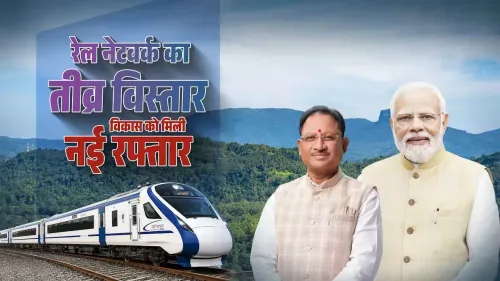
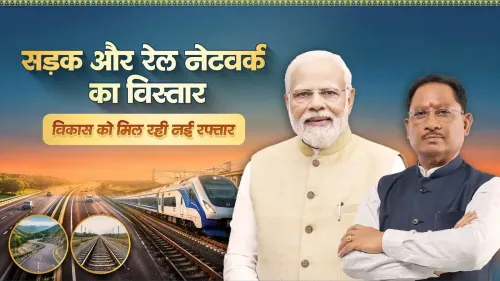
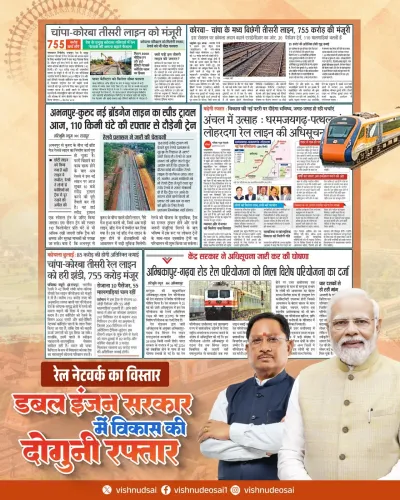
Chhattisgarh Chief Minister Vishnu Deo Sai on Tuesday, 16 June 2026, credited Prime Minister Narendra Modi's leadership for what he described as an unprecedented transformation of India's infrastructure over the past 12 years, citing modern expressways, Vande Bharat trains, new airports, and strengthened digital networks as markers of the country's accelerated development.
Context
Posting in Hindi on X (formerly Twitter), CM Sai wrote: 'Yashasvi Pradhanmantri Shri Narendra Modi ji ke netritva mein beete 12 varshon mein Bharat ne aadharabhoot sanrachna ke kshetra mein abhootpoorv parivartan ka naya adhyaya likha hai' — ('Under the leadership of the visionary Prime Minister Shri Narendra Modi ji, India has written a new chapter of unprecedented transformation in the field of infrastructure over the past 12 years.')
The post was tagged to @PMOIndia and @narendramodi and carried the hashtag #12YearsOfNayaBharatNirman, aligning with a broader BJP-led campaign marking a decade-plus of the Modi government's developmental record since May 2014.
Policy Backdrop
The 12-year window referenced by CM Sai spans a period during which the Union government launched several flagship infrastructure programmes. The Bharatmala Pariyojana, approved in 2015, targets construction of over 34,000 km of roads and expressways as a successor to the National Highways Development Project. The UDAN regional air connectivity scheme, formally launched in April 2017, operationalised new airports and subsidised routes in underserved regions, with the first flight under the programme taking off in 2018.
On the railways front, the Vande Bharat Express — India's indigenously developed semi-high-speed train — began commercial operations in February 2019 between Delhi and Varanasi, with multiple routes added since. The National Infrastructure Pipeline, unveiled in 2019, projected an investment of Rs 111 lakh crore over five years across roads, railways, and urban projects.
Successive Union budgets since 2014 have prioritised capital expenditure on multimodal transport corridors, combining physical assets — expressways and airports — with digital layers including GIS-based project monitoring and digital payment infrastructure, to reduce logistics costs and integrate domestic markets.
Stakeholders and Impact
The infrastructure push has direct implications for the logistics sector, rail and air passengers, and state governments, which depend on central capital flows to co-develop corridors. For Chhattisgarh — a landlocked state with significant tribal and mineral-rich hinterland — improved connectivity carries economic significance for moving goods and expanding access to services.
CM Sai's post reflects a pattern common among BJP-governed states, where chief ministers regularly amplify central government infrastructure messaging to highlight shared developmental outcomes and reinforce party alignment with national programmes.
What's Next
Attention will turn to state-level project completion reports for Chhattisgarh and any supplementary allocations for state corridors in the next Union Budget. Parliamentary questions on revised timelines for pending expressway stretches are also expected to keep infrastructure accountability in focus. CM Sai's post signals that the BJP's developmental narrative centred on infrastructure will remain a central plank heading into future electoral cycles, with the party seeking to consolidate its record across both national and state-level communications.
Point of View
Timed to a coordinated BJP campaign marking 12 years of the Modi government's infrastructure record. By invoking Vande Bharat, Bharatmala, and digital connectivity in a single breath, the communication seeks to fuse tangible assets with the ideological concept of 'Viksit Bharat' — a self-reliant, globally competitive India. For a state like Chhattisgarh, which remains dependent on central allocations for corridor development, such alignment also serves a practical purpose: reinforcing the state government's claim to developmental outcomes driven from the Centre. The broader pattern suggests infrastructure will remain the BJP's primary electoral narrative as the party looks to consolidate its record across both national and state platforms.
NationPress
15 Sept 2026
Frequently Asked Questions
What did Chhattisgarh CM Vishnu Deo Sai say about infrastructure?
CM Vishnu Deo Sai credited PM Narendra Modi's 12-year leadership for unprecedented infrastructure transformation in India, citing Vande Bharat trains, modern expressways, new airports, and digital connectivity as key milestones.
What is the #12YearsOfNayaBharatNirman hashtag about?
The hashtag #12YearsOfNayaBharatNirman is part of a BJP-led campaign marking over a decade of the Modi government's developmental and infrastructure record since May 2014.
What is the Bharatmala Pariyojana?
Bharatmala Pariyojana is a national highway development programme approved in 2015, targeting construction of over 34,000 km of roads and expressways across India as a successor to the earlier National Highways Development Project.
When did Vande Bharat Express start running?
The Vande Bharat Express began commercial operations in February 2019 on the Delhi-Varanasi route and has since expanded to multiple routes under Indian Railways' modernisation programme.
How much has India planned to invest in infrastructure under the National Infrastructure Pipeline?
The National Infrastructure Pipeline, unveiled in 2019, projected an investment of Rs 111 lakh crore over five years across roads, railways, and urban infrastructure projects.