CM Sai's Office Hails 12 Years of Modi-Led Infrastructure Push
Synopsis
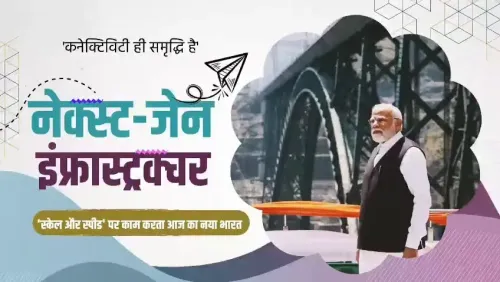
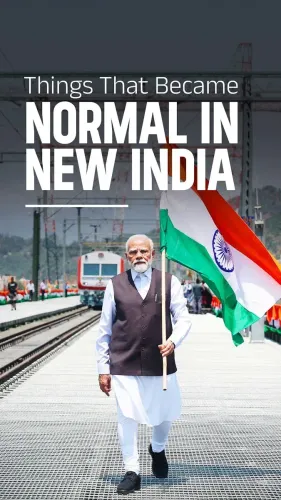
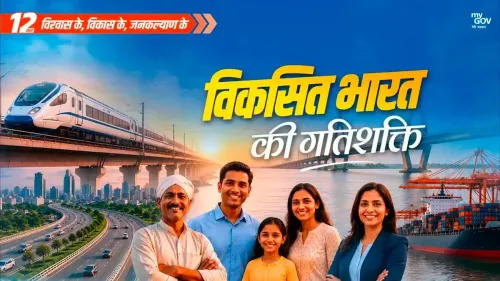
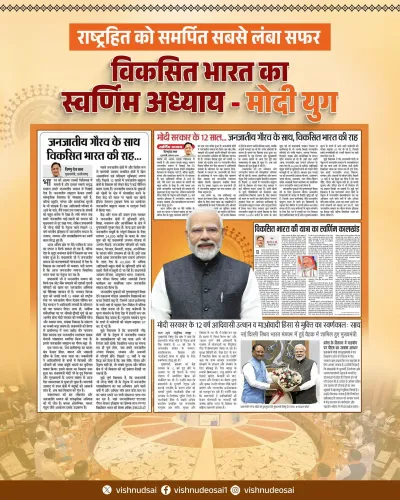
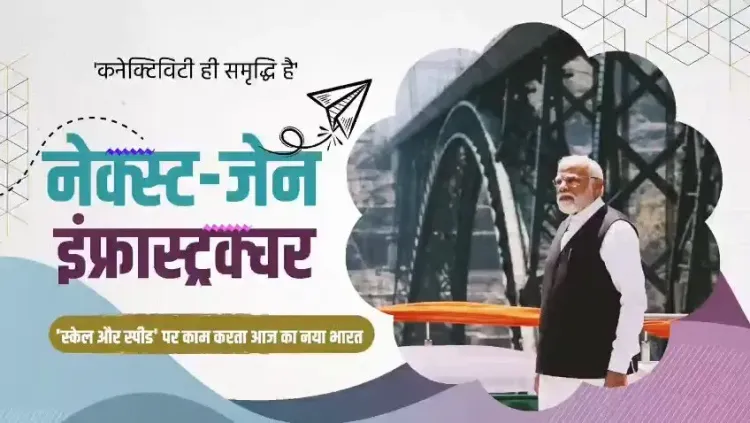
The Chief Minister's Office of Chhattisgarh on 16 June 2026 praised PM Modi's 12-year infrastructure record — expressways, Vande Bharat trains, new airports, and digital networks — framing it as the foundation of Viksit Bharat 2047 under the hashtag #12YearsOfNayaBharatNirman.
Key Takeaways
The Chhattisgarh CMO posted on 16 June 2026 crediting PM Narendra Modi with 12 years of 'unprecedented' infrastructure progress.
Key achievements cited include modern expressways , Vande Bharat trains , new airports , and a strengthened digital network .
The post was tagged to @PMOIndia and CM Vishnu Deo Sai under the hashtag #12YearsOfNayaBharatNirman .
Central programmes underpinning the narrative include Bharatmala Pariyojana (2015), UDAN (2016), and the Vande Bharat Express (2019).
The messaging aligns with the long-term Viksit Bharat 2047 vision of a fully developed India.
Chhattisgarh-specific project announcements under Bharatmala and UDAN future phases remain to be watched.
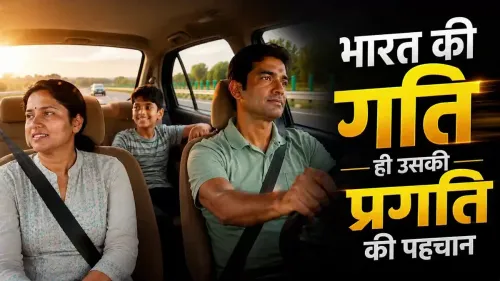
The Chief Minister's Office of Chhattisgarh on Tuesday, 16 June 2026 credited Prime Minister Narendra Modi with delivering 'unprecedented progress' in infrastructure over the past 12 years, citing modern expressways, Vande Bharat trains, new airports, and a strengthened digital network as markers of national transformation.
Context
The post, shared from the official @ChhattisgarthCMO handle and tagging both @PMOIndia and @vishnudsai — the account of Chief Minister Vishnu Deo Sai — states in Hindi: 'Pichle 12 varshon mein Bharat ne aadharabhoot sanrachna ke kshetra mein abhootpoorv pragati ki hai' ('In the last 12 years, India has made unprecedented progress in the field of infrastructure'). The post was published under the hashtag #12YearsOfNayaBharatNirman, a coordinated BJP messaging campaign marking a dozen years since the Modi government took office in May 2014.
The statement frames physical and digital connectivity as the 'strong foundation of India's future' and describes the transformation as a symbol of the resolve behind Viksit Bharat — the government's long-term vision of a developed India by 2047.
Policy Backdrop
The infrastructure arc referenced in the post spans several flagship programmes. The Bharatmala Pariyojana, launched in 2015, set out to construct expressways and economic corridors across states, including Chhattisgarh. The UDAN regional connectivity scheme, introduced in 2016, expanded air links to smaller cities by developing new airports and upgrading existing airstrips.
On the railways front, the Vande Bharat Express — India's indigenously designed semi-high-speed train — made its debut in 2019 and has since been rolled out on an expanding network of routes. The National Infrastructure Pipeline, also unveiled in 2019, projected sustained multi-year capital expenditure across roads, rail, ports, and digital connectivity, providing the fiscal architecture for these programmes.
Stakeholders and Impact
Commuters, logistics firms, and state governments are the primary stakeholders in India's infrastructure scale-up. Improved expressways and freight corridors directly reduce transportation costs for goods, while expanded airport connectivity opens new economic opportunities in tier-2 and tier-3 cities.
For Chhattisgarh specifically, integration with central schemes such as Bharatmala has meant new highway alignments through the state's interior regions, which were historically underserved by road and rail. The CMO's post signals that Raipur is keen to position the state as an active participant in — and beneficiary of — the national infrastructure narrative.
State-level BJP administrations have consistently aligned their public communications with central government milestones, using posts of this kind to reinforce the link between local development outcomes and Union government policy decisions.
What's Next
Analysts and infrastructure watchers will be tracking Chhattisgarh-specific project announcements under forthcoming phases of Bharatmala and UDAN, as well as any connectivity outlays earmarked for the state in the 2026-27 Union Budget. The broader Viksit Bharat 2047 framework means infrastructure spending is expected to remain a centrepiece of both central and state-level policy communication in the years ahead.
As India approaches the halfway mark of its centenary development target, the pace and geographic spread of infrastructure delivery — particularly in states like Chhattisgarh that straddle tribal, forest, and industrial zones — will be a key test of whether the transformation narrative translates into measurable ground-level change.
Point of View
The 12-year mark of the Modi government — to reinforce the political narrative of national transformation. By tagging both PMO India and CM Vishnu Deo Sai, the post explicitly links Chhattisgarh's development identity to Union government programmes, a strategy that serves dual purposes: crediting the Centre while elevating the state's own profile within the BJP ecosystem. The choice of infrastructure as the anchor theme is deliberate; it is the policy domain where the Modi government's record is most visually tangible and electorally potent. As the Viksit Bharat 2047 deadline draws closer, such coordinated messaging campaigns are likely to intensify, with infrastructure delivery becoming the primary metric by which both central and state governments seek public validation.
NationPress
15 Sept 2026
Frequently Asked Questions
What did the Chhattisgarh CMO post about PM Modi's infrastructure record?
The Chhattisgarh Chief Minister's Office posted on 16 June 2026 praising PM Narendra Modi's 12-year infrastructure record, highlighting modern expressways, Vande Bharat trains, new airports, and a strengthened digital network as symbols of India's transformation under the hashtag #12YearsOfNayaBharatNirman.
What is the Vande Bharat Express and when was it launched?
The Vande Bharat Express is India's indigenously designed semi-high-speed train service, first introduced in 2019 as part of Indian Railways' modernisation drive. It has since been expanded to multiple routes across the country.
What is Bharatmala Pariyojana and does it cover Chhattisgarh?
Bharatmala Pariyojana is a national highway and expressway development programme launched in 2015. It covers multiple states including Chhattisgarh, aiming to build economic corridors and improve road connectivity across the country.
What is Viksit Bharat 2047?
Viksit Bharat 2047 is the Indian government's long-term vision to make India a fully developed nation by the centenary of its independence in 2047. Infrastructure development — roads, railways, airports, and digital networks — is a core pillar of this framework.
Who is the Chief Minister of Chhattisgarh in 2026?
Vishnu Deo Sai has been the Chief Minister of Chhattisgarh since December 2023. His official handle @vishnudsai was tagged in the CMO's post marking 12 years of the Modi government's infrastructure push.