CM Sai launches Chhattisgarh paddy buy at ₹3,100/quintal from Nov 15
Synopsis
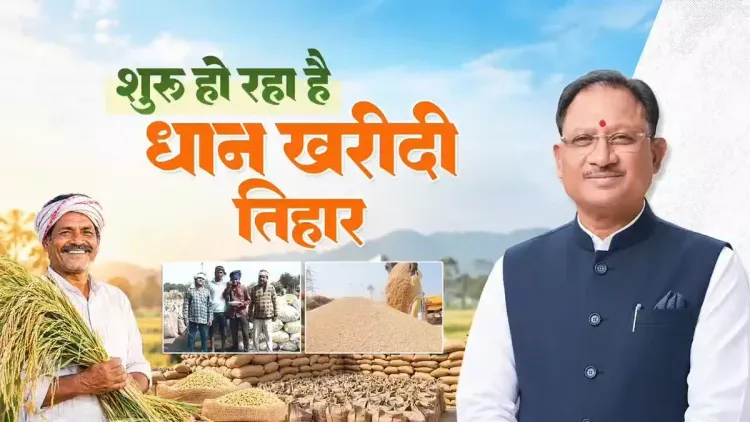
Chhattisgarh CM Vishnu Deo Sai has announced the state's annual paddy procurement season — 'Dhan Kharidi Tihar' — opening 15 November at ₹3,100 per quintal, with a 21-quintal-per-acre cap and an AgriStack re-registration waiver for existing farmers.
Key Takeaways
Paddy procurement ('Dhan Kharidi Tihar') begins on 15 November 2026 in Chhattisgarh.
Purchase rate set at ₹3,100 per quintal , with a cap of 21 quintals per acre .
Farmers already registered under AgriStack from last year are exempt from re-registration.
The state government has committed to increasing the number of procurement centres and improving facilities at each site.
Chhattisgarh is one of India's largest contributors to the central rice pool, making the season critical to rural household incomes.
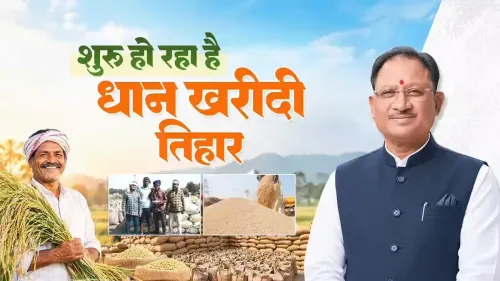
Millions of paddy farmers in Chhattisgarh have a firm date on the calendar: the state's annual procurement season — branded this year as the Krishak Samridhi ka Parv — Dhan Kharidi Tihar ('Festival of Farmer Prosperity — Paddy Procurement Festival') — opens on 15 November 2026. Chhattisgarh Chief Minister Vishnu Deo Sai announced the season on Wednesday, 28 October, setting the purchase rate at ₹3,100 per quintal with a ceiling of 21 quintals per acre.
₹3,100 per quintal — what the number means for farm households
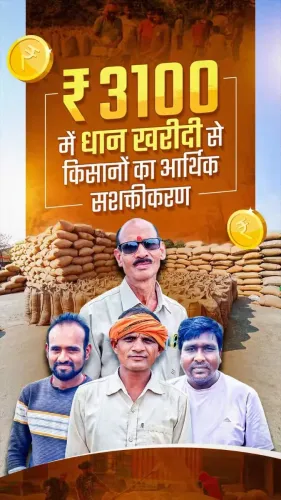
The procurement price is the most consequential figure in the announcement. At ₹3,100 per quintal, a farmer holding a single acre and selling up to the 21-quintal cap stands to receive up to ₹65,100 in guaranteed state purchase income for the season. For smallholders in Chhattisgarh's paddy belt — where the crop is often the sole cash earner — that number is the difference between a solvent year and a debt spiral.
Chhattisgarh is one of the largest contributors to India's central rice pool, and the state government's annual procurement announcement effectively operationalises the national Minimum Support Price framework, sometimes topped up with a state bonus. The 'Tihar' branding reflects the BJP government's effort to frame the exercise not as routine administration but as a celebration of the farming community's labour.
AgriStack IDs cut the paperwork queue
One of the clearest operational changes this season: farmers who registered last year under the AgriStack digital-ID system do not need to re-register. AgriStack is India's central digital agriculture platform, designed to assign each farmer a unique identifier that can anchor benefit delivery across multiple schemes.
By waiving repeat registration for existing AgriStack holders, the state is leaning into the national push for a single, portable farmer identity — reducing queue time at procurement centres and, in theory, compressing the gap between sale and payment. First-time sellers and those without AgriStack IDs will still need to complete the registration process before operations begin.
More procurement centres, smoother sales windows
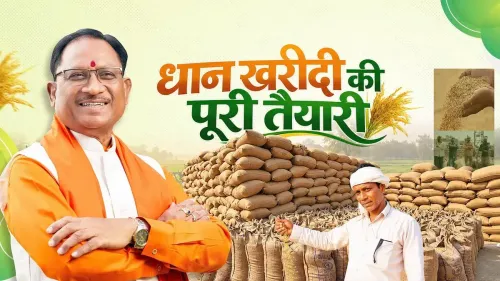
CM Sai also committed to expanding the number of uparjan kendras (procurement centres) and ensuring adequate facilities at each site. Overcrowding at centres has historically been one of the sharpest friction points in Chhattisgarh's paddy season — long waits, inadequate weighing infrastructure, and delayed token systems have drawn farmer complaints in past years.
Whether the expansion of centres and the AgriStack-based registration relief translate into genuinely smoother operations will become clear once the season opens in mid-November. Payment timelines and centre-level readiness will be the metrics to watch.
With the kharif harvest arriving in warehouses and farmers needing liquidity before the rabi sowing window closes, the clock on delivery has already started.
Point of View
When farmer liquidity pressures are highest and the political salience of price guarantees is sharpest. By retaining the ₹3,100 rate — and framing it as a 'festival' rather than a routine procurement order — the BJP government in Chhattisgarh is reinforcing a narrative of pro-farmer identity that has been central to the party's rural outreach since the 2023 state election. The AgriStack integration signals a broader national trend: states are increasingly using digital beneficiary IDs to streamline scheme delivery and reduce leakage, which, if executed well, can both cut costs and accelerate payments. The real test, however, lies in centre-level infrastructure and payment timelines — past seasons have shown that price announcements and ground-level execution can diverge sharply.
NationPress
28 Oct 2026
Frequently Asked Questions
When does Chhattisgarh paddy procurement start in 2026?
Paddy procurement in Chhattisgarh is set to begin on 15 November 2026 , as announced by Chief Minister Vishnu Deo Sai.
What is the paddy procurement price in Chhattisgarh for 2026?
The state government has announced a procurement rate of ₹3,100 per quintal , with a maximum purchase limit of 21 quintals per acre .
Do Chhattisgarh farmers need to re-register for paddy procurement this year?
No. Farmers who registered under the AgriStack digital-ID system in the previous year do not need to re-register; they are automatically eligible for the 2026 season.
What is AgriStack and how does it help paddy farmers?
AgriStack is India's central digital agriculture platform that assigns a unique ID to each farmer, enabling faster benefit delivery and reducing paperwork at procurement centres.
What is Dhan Kharidi Tihar in Chhattisgarh?
'Dhan Kharidi Tihar' — meaning 'Paddy Procurement Festival' — is Chhattisgarh's branded annual paddy purchase season, framed by the state government as a celebration of farmers' hard work and a guarantee of fair prices for their harvest.