CM Sai Attends Rashtriya Machhuara Sangh Oath Ceremony in Raipur
Synopsis
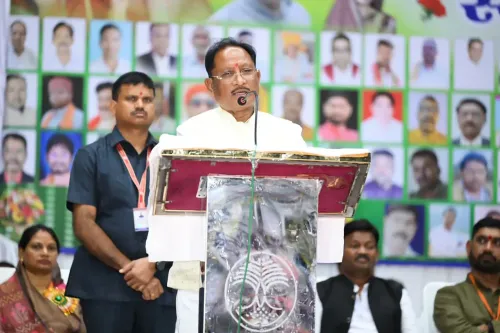
Chief Minister Vishnu Deo Sai attended the Rashtriya Machhuara Sangh Chhattisgarh oath ceremony in Raipur on June 7, 2026, pledging 'double engine government' support for fisheries development and increased incomes for fishing families across the state.
Key Takeaways
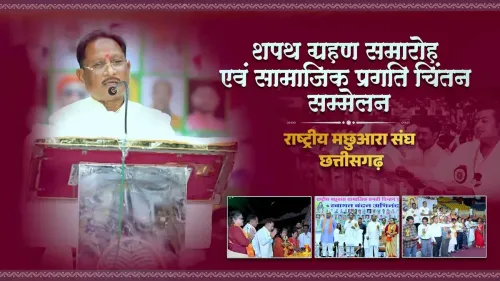
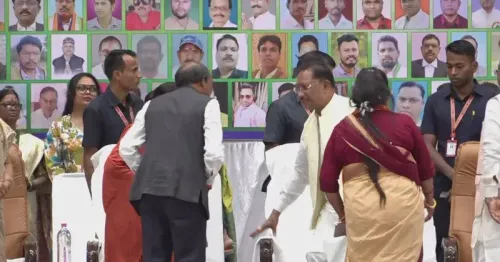
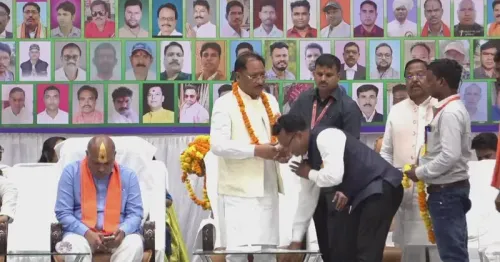
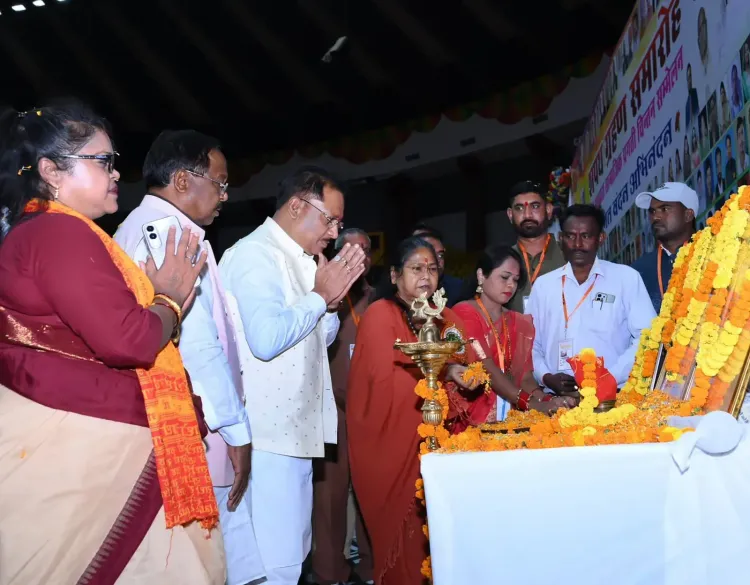
CM Vishnu Deo Sai attended the oath-taking ceremony of the Rashtriya Machhuara Sangh, Chhattisgarh , in Raipur on June 7, 2026 .
The event also included a Samajik Pragati Chintan Sammelan (Social Progress Deliberation Conference) alongside the installation of new office-bearers.
Sai credited fishing families with contributing to both the state economy and rural development through fish production.
The Chief Minister reaffirmed the 'double engine government's' commitment to promoting fisheries and raising fisherfolk incomes.
The central Pradhan Mantri Matsya Sampada Yojana (PMMSY) , launched in 2020 , is the key convergence scheme supporting inland fisheries in Chhattisgarh .
Budget allocations and district-level PMMSY implementation in 2026–27 will be the practical test of the government's stated priorities.
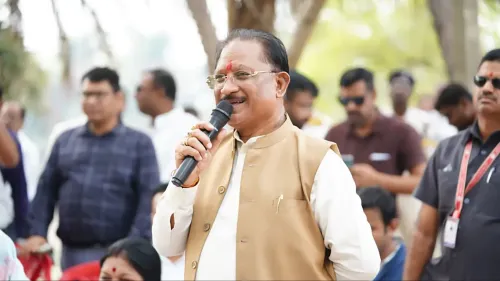
Chhattisgarh Chief Minister Vishnu Deo Sai attended the oath-taking ceremony and social progress conclave of the Rashtriya Machhuara Sangh, Chhattisgarh, in Raipur on Sunday, June 7, 2026, extending congratulations to the newly inducted office-bearers and reaffirming the state government's commitment to fisheries development.
Context
The event — formally titled the Shapat Grahan Samaroh evam Samajik Pragati Chintan Sammelan (Oath-Taking Ceremony and Social Progress Deliberation Conference) — marked the installation of a new leadership team for the state unit of the Rashtriya Machhuara Sangh, a national body focused on the welfare, rights, and skill development of fishing communities. CM Sai used the occasion to highlight the economic role of fisherfolk in Chhattisgarh's rural landscape.
In his address, as reflected in his post, Sai stated that fishing families are 'not only strengthening their own livelihoods through fish production, but also making an important contribution to the state's economy and rural development.' He described their 'hard work and dedication' as 'a strong foundation for the progress and self-reliance of Chhattisgarh's villages.'
Policy Backdrop
The Chief Minister invoked the concept of the 'double engine government' — a phrase the BJP uses to describe the alignment between its central and state administrations — pledging that it 'continuously works to promote fisheries and increase the income of fishing families.' This framing positions fisheries as a priority sector where central and state resources are meant to operate in convergence.
The central Pradhan Mantri Matsya Sampada Yojana (PMMSY), launched in 2020, is the primary vehicle for this convergence, aiming to modernise inland and marine fisheries, boost fish production, and support fisherfolk incomes across India. Chhattisgarh, a landlocked state with substantial inland water bodies including reservoirs, rivers, and ponds, adopted a state fisheries policy as far back as 2017–18 to expand aquaculture and reservoir fishing. The state's rural economy remains significantly reliant on agriculture and allied sectors, making fisheries a meaningful supplementary income source for marginal communities.
Stakeholders and Impact
Fishing communities in Chhattisgarh — spread across rural districts and dependent on inland water bodies — stand as the primary beneficiaries of both the PMMSY's infrastructure and training components and any state-level schemes flowing from it. The Rashtriya Machhuara Sangh's newly sworn leadership is expected to serve as an intermediary body channelling welfare schemes, resolving grievances, and organising capacity-building programmes for member families.
CM Sai expressed confidence that the new office-bearers would 'keep social welfare paramount and give fresh momentum to the work of development and public welfare.' The ceremony signals an organisational refresh at the state level of the fishermen's body, which could influence how centrally sponsored benefits are administered at the grassroots.
What's Next
Attention will now turn to whether the state's 2026–27 budget allocations for fisheries infrastructure — including pond development, cold-chain logistics, and training facilities — reflect the rhetorical priority placed on the sector at events such as this one. Implementation reports from district-level PMMSY activities will be a key indicator of whether the 'double engine' promise translates into measurable income gains for fishing families across Chhattisgarh's rural belt.
Point of View
Sai ties state-level fisheries spending to the credibility of central scheme delivery — a narrative that serves both governance and political messaging. Inland fisheries, often overlooked in headline policy debates, have quietly gained traction as a rural income diversification tool in BJP-governed states, with the PMMSY providing the financial scaffolding. The real measure of this commitment will lie in district-level fund utilisation and whether fishing families see tangible income improvements in the 2026–27 cycle.
NationPress
23 Oct 2026
Frequently Asked Questions
Why did CM Vishnu Deo Sai attend the Rashtriya Machhuara Sangh event in Raipur?
CM Sai attended the oath-taking ceremony and social progress conclave of the Rashtriya Machhuara Sangh, Chhattisgarh, on June 7, 2026, to mark the installation of new office-bearers and reaffirm the state government's support for fisheries development and fisherfolk welfare.
What is the Rashtriya Machhuara Sangh?
The Rashtriya Machhuara Sangh is a national-level fishermen's organisation with state units focused on the welfare, rights, and skill development of fishing communities across India.
What is the Pradhan Mantri Matsya Sampada Yojana and how does it apply to Chhattisgarh?
The Pradhan Mantri Matsya Sampada Yojana (PMMSY) is a central government scheme launched in 2020 to modernise fisheries, increase production, and support fisherfolk incomes. Chhattisgarh, with its inland water bodies, uses the scheme to expand aquaculture and reservoir fishing as a rural income source.
What did CM Sai say about fishing communities in Chhattisgarh?
CM Sai said that fishing families are strengthening their livelihoods through fish production while also contributing to the state's economy and rural development, calling their efforts 'a strong foundation for the progress and self-reliance of Chhattisgarh's villages.'
What is the 'double engine government' referred to by CM Sai?
'Double engine government' is a BJP phrase describing the alignment of a BJP-led central government and a BJP-led state government, implying coordinated policy delivery. CM Sai used it to signal that both levels of government are working together to promote fisheries and raise fisherfolk incomes in Chhattisgarh.