CM Sai marks 2 years of Sushasan Tihar in Chhattisgarh
Synopsis
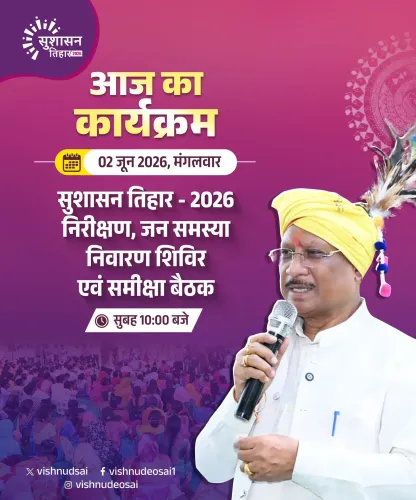
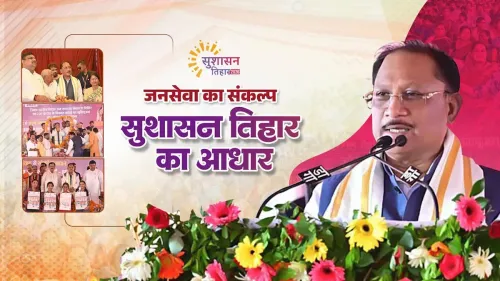
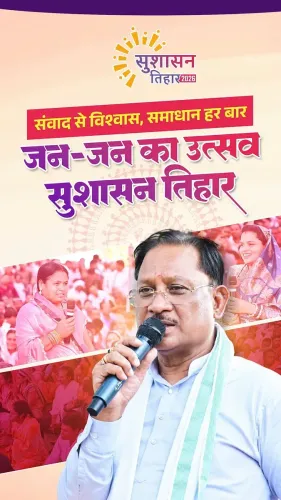
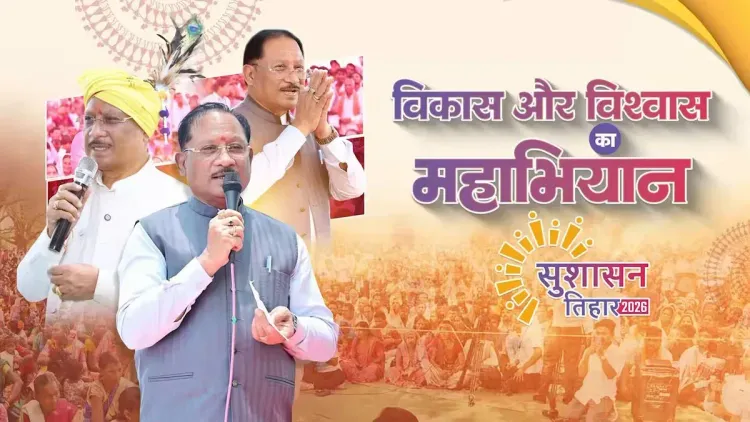
Chhattisgarh Chief Minister Vishnu Deo Sai has marked two years of the Sushasan Tihar initiative, describing it as a powerful platform for direct citizen engagement and effective last-mile delivery of government schemes across the state.
Key Takeaways
CM Vishnu Deo Sai publicly reaffirmed the Sushasan Tihar initiative on 10 July 2026 , marking two years of its operation.
The programme is designed to connect citizens directly with the administration for grievance redressal and scheme delivery.
The BJP government in Chhattisgarh has run the initiative since coming to power in December 2023 after winning 54 seats in the state assembly.
The initiative particularly targets tribal communities and rural populations who face barriers in accessing state services.
CM Sai described the programme as a symbol of the government's commitment to 'sensitive, accountable and people-centric governance.' The next phase of Sushasan Tihar camps and possible budget allocations are expected in the upcoming state assembly session.
Chhattisgarh Chief Minister Vishnu Deo Sai on Friday, 10 July 2026, reaffirmed his government's commitment to citizen-centric governance by highlighting two years of the Sushasan Tihar initiative, calling it a 'powerful medium' for direct engagement with the people of the state.
Context
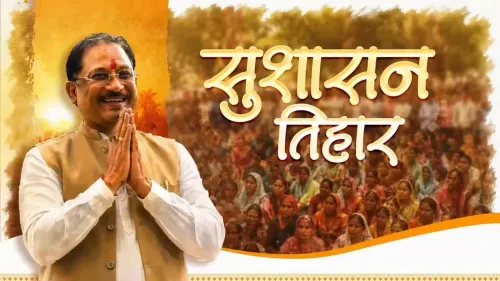
In his post, CM Sai described Sushasan Tihar ('Good Governance Festival') as more than a campaign — characterising it as a platform to understand citizens' 'expectations, problems and suggestions' firsthand. He wrote that over the past two years, the initiative has ensured that 'the benefits of government schemes and development works reach the last person in society effectively.' The post was accompanied by a video, suggesting a formal communication to mark the occasion.
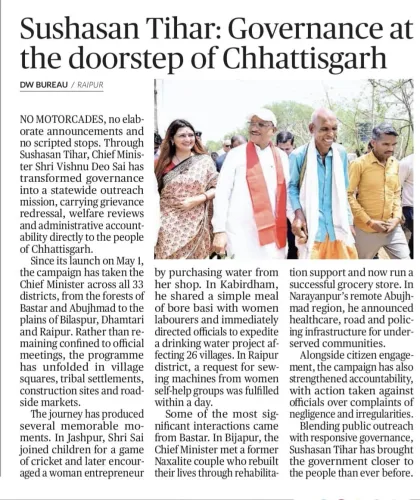
The Sushasan Tihar is a structured public outreach programme run by the Chhattisgarh state government, designed to bring administration closer to citizens, particularly in rural and tribal areas. It operates through camps and direct grievance-redressal sessions at the block and district level.
Policy Backdrop
The BJP government in Chhattisgarh came to power in December 2023, winning 54 seats in the state assembly elections. Since then, the administration has prioritised last-mile delivery of welfare schemes, with a particular focus on tribal communities and rural infrastructure — constituencies that form a significant share of Chhattisgarh's population.
The Sushasan Tihar model fits within a broader pattern among BJP-governed states of running governance-themed public outreach programmes alongside central initiatives such as Digital India and direct benefit transfers. The emphasis on 'sensitive, accountable and people-centric governance' — as CM Sai phrased it — mirrors the party's administrative messaging across states where it holds power.
Stakeholders and Impact
The primary beneficiaries of Sushasan Tihar are ordinary citizens of Chhattisgarh, especially those in remote and tribal regions who have historically faced barriers in accessing state services. The initiative's camp-based model is intended to reduce the distance between a citizen and the administration, allowing grievances to be logged and resolved without requiring travel to district headquarters.
Scheme beneficiaries — including those enrolled under state welfare programmes for agriculture, housing, and health — stand to gain from faster resolution of pending applications and on-the-spot delivery of entitlements. Civil society observers have noted that the success of such programmes depends significantly on follow-through after the camps conclude.
What's Next
The government is expected to roll out the next phase of Sushasan Tihar camps across Chhattisgarh's districts. Any related budget allocations or new scheme announcements tied to the initiative are likely to surface in the upcoming state assembly session. CM Sai's public reaffirmation of the programme's two-year milestone signals that it will remain a centrepiece of the administration's governance and outreach strategy heading into the second half of its term.
Point of View
Framing Sushasan Tihar not merely as an administrative exercise but as a political brand — one that positions the BJP government's identity around responsive, people-first governance ahead of the second half of its term. The emphasis on 'the last person in society' is a recurring rhetorical anchor in BJP governance messaging, echoing the party's Antyodaya philosophy and its use in central scheme communications. By marking two years publicly, the government is also pre-empting opposition narratives around delivery gaps, signalling that the outreach infrastructure is active and expanding. The initiative's durability will ultimately be judged by verifiable outcomes — grievances resolved, scheme penetration in tribal districts — rather than the political communication surrounding it.
NationPress
10 Jul 2026
Frequently Asked Questions
What is Sushasan Tihar in Chhattisgarh?
Sushasan Tihar, meaning 'Good Governance Festival,' is a public outreach initiative by the Chhattisgarh government under Chief Minister Vishnu Deo Sai. It involves camps and grievance-redressal sessions at the block and district level to connect citizens directly with the administration and improve delivery of government schemes.
When did Vishnu Deo Sai become Chief Minister of Chhattisgarh?
Vishnu Deo Sai became Chief Minister of Chhattisgarh in December 2023 after the BJP won 54 seats in the state assembly elections.
What did CM Sai say about Sushasan Tihar on 10 July 2026?
CM Sai said that Sushasan Tihar is 'not just a campaign' but a 'powerful medium' to understand citizens' expectations, problems and suggestions, and that over two years it has ensured government scheme benefits reach 'the last person in society effectively.'
Who benefits from the Sushasan Tihar initiative?
The primary beneficiaries are citizens of Chhattisgarh, particularly those in rural and tribal areas, who can access grievance redressal and government scheme entitlements through local camps without travelling to district headquarters.
What is the BJP government's governance approach in Chhattisgarh?
The BJP government in Chhattisgarh has emphasised last-mile delivery of welfare schemes, tribal welfare, and rural infrastructure since December 2023, running programmes like Sushasan Tihar alongside central initiatives such as Digital India and direct benefit transfers.