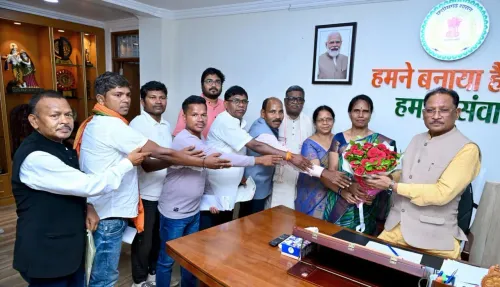
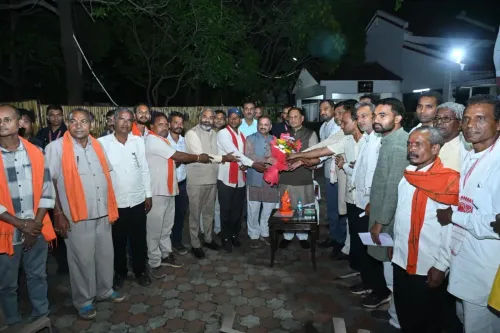
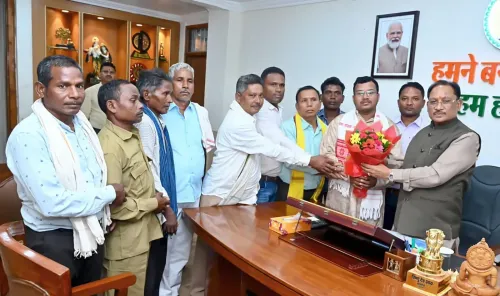
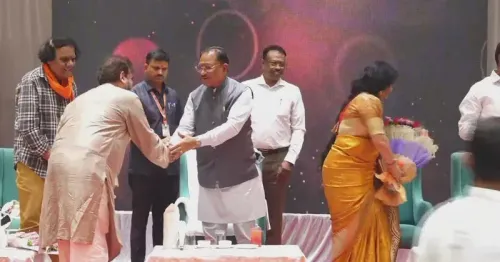
CM Vishnu Deo Sai meets Adivasi delegation at Chhattisgarh Sadan
Synopsis
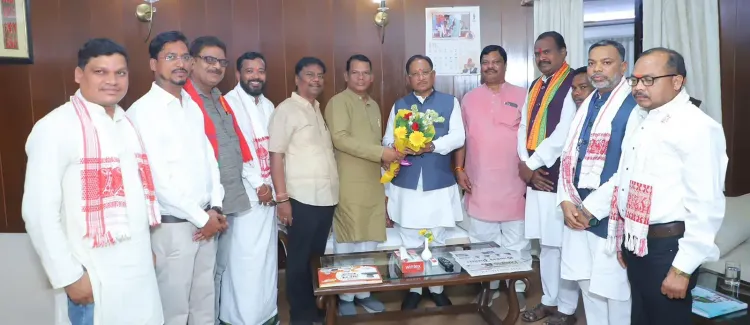
Chhattisgarh Chief Minister Vishnu Deo Sai met the Sarv Adivasi Samaj delegation led by senior minister Kedar Kashyap at Chhattisgarh Sadan in New Delhi on 24 May 2026, discussing tribal welfare, cultural heritage preservation, and social empowerment of Adivasi communities.
Key Takeaways
Chief Minister Vishnu Deo Sai held a meeting with the Sarv Adivasi Samaj delegation at Chhattisgarh Sadan, New Delhi on 24 May 2026 .
The delegation was led by senior Chhattisgarh minister Kedar Kashyap .
Discussions covered various subjects related to tribal welfare, cultural heritage preservation, and social empowerment .
Chhattisgarh has one of India's largest Scheduled Tribe populations, exceeding 30 percent of the state total.
The BJP government in Chhattisgarh has been in office since December 2023 , with tribal outreach as a stated priority.
Key tribal policy frameworks include PESA, 1996 and the Forest Rights Act, 2006 , both of which govern Adivasi rights in Chhattisgarh.
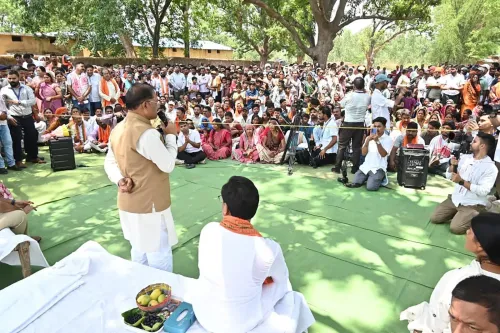
Chhattisgarh Chief Minister Vishnu Deo Sai on Sunday, 24 May 2026, held a warm meeting with a delegation representing the Sarv Adivasi Samaj at Chhattisgarh Sadan in New Delhi, led by senior state minister Kedar Kashyap. The delegation discussed a range of issues related to tribal welfare and community development with the Chief Minister.
Context
The Chief Minister posted about the meeting in Hindi, stating: 'नई दिल्ली स्थित छत्तीसगढ़ सदन में आज वरिष्ठ मंत्री श्री केदार कश्यप जी के नेतृत्व में आए सर्व आदिवासी समाज के प्रतिनिधिमंडल से आत्मीय भेंट हुई' — ('Today at Chhattisgarh Sadan in New Delhi, I had a warm meeting with the Sarv Adivasi Samaj delegation led by senior minister Shri Kedar Kashyap.'). Sai added that discussions covered 'जनजातीय जनकल्याण से जुड़े विभिन्न विषयों' — various subjects connected to tribal welfare.
Chhattisgarh Sadan serves as the state government's official liaison point in the national capital and is regularly used for meetings that require coordination between state leadership and central authorities. Such visits by tribal delegations to the capital reflect the cross-jurisdictional nature of Adivasi policy, which involves both state governments and the central Ministry of Tribal Affairs.
Policy Backdrop
Chhattisgarh, carved out of Madhya Pradesh in 2000, has one of India's largest Scheduled Tribe populations, estimated at over 30 percent of the state's total. The state's tribal-majority districts are concentrated in forested and mineral-rich zones, making land rights, livelihood, health, and cultural preservation perennial policy priorities.
The legislative scaffolding for tribal welfare includes the Panchayats (Extension to Scheduled Areas) Act, 1996 (PESA), which extended self-governance provisions to Scheduled Areas, and the Scheduled Tribes and Other Traditional Forest Dwellers (Recognition of Forest Rights) Act, 2006, which granted land and resource rights to Adivasi communities. Chief Minister Sai's government, in office since the BJP's return to power in December 2023, has publicly aligned itself with both economic development and the preservation of indigenous cultural heritage.
Senior minister Kedar Kashyap, who led the delegation, is a prominent tribal-community voice within the Chhattisgarh cabinet and has been associated with outreach to Adivasi groups since the party's election campaign.
Stakeholders and Impact
The Sarv Adivasi Samaj is a broad-based platform representing tribal communities across caste and sub-group lines, making its delegation politically significant for any state government seeking to demonstrate inclusive outreach. Chhattisgarh's Adivasi communities have historically sought stronger implementation of forest rights, better access to education and health infrastructure, and formal recognition of their cultural traditions.
Chief Minister Sai stated that his government is working 'पूर्ण प्रतिबद्धता के साथ निरंतर' — 'continuously with full commitment' — toward the development, cultural heritage preservation, and social empowerment of the Adivasi community. The meeting signals the state government's intent to maintain direct engagement with tribal representatives at the national level, beyond routine state-level consultations.
What's Next
Observers will watch for concrete follow-up in the form of state budget allocations, scheme announcements, or legislative proposals addressing the issues raised by the delegation. The next fiscal cycle's tribal welfare outlays and any updates to forest-rights implementation in Chhattisgarh will be key indicators of how the discussions translate into policy action.
With tribal communities forming a decisive electoral and social constituency in the state, the BJP government's engagement through platforms like the Sarv Adivasi Samaj is likely to continue as a regular feature of its governance outreach.
Point of View
Direct engagement at this level serves a dual purpose: reinforcing the party's Adivasi outreach narrative and creating a visible record of consultation. The involvement of minister Kedar Kashyap, himself from a tribal background, lends the meeting community credibility beyond ceremonial optics. Whether the discussions produce measurable policy shifts will be the real test of the government's stated 'full commitment.'
NationPress
22 Sept 2026
Frequently Asked Questions
Who is Vishnu Deo Sai?
Vishnu Deo Sai is the Chief Minister of Chhattisgarh and a senior BJP leader who assumed office in December 2023 after the party won the state assembly elections. He has focused on tribal welfare and state development as key governance priorities.
What is the Sarv Adivasi Samaj?
The Sarv Adivasi Samaj is a broad-based platform representing tribal communities across various sub-groups and castes in Chhattisgarh, often engaging with government on issues of land rights, cultural preservation, education, and social welfare.
What is Chhattisgarh Sadan in New Delhi?
Chhattisgarh Sadan is the official state guest house and liaison office of the Chhattisgarh government in New Delhi, used for government meetings, delegation visits, and coordination with central authorities.
What tribal welfare laws apply to Chhattisgarh?
Key laws include the PESA Act of 1996, which extended Panchayati Raj provisions to Scheduled Areas, and the Forest Rights Act of 2006, which granted land and resource rights to Adivasi communities. Chhattisgarh, with over 30 percent tribal population, is among the states most directly affected by both laws.
Who is Kedar Kashyap?
Kedar Kashyap is a senior minister in the Chhattisgarh government and a BJP leader associated with tribal community outreach. He led the Sarv Adivasi Samaj delegation that met Chief Minister Vishnu Deo Sai at Chhattisgarh Sadan on 24 May 2026.