India runs national drill to guard against FMD SAT-1 serotype threat
Synopsis
India has never reported FMD SAT-1 — but it ran a national drill anyway. With the strain spreading from Africa into West Asia, the DAHD and ICAR-NIVEDI convened 83 experts from 25 states to simulate an outbreak, testing detection, containment and emergency vaccination protocols before the disease can reach India's vast livestock economy.
Key Takeaways
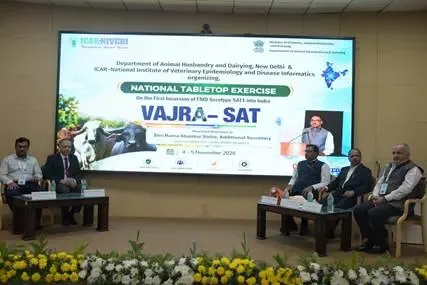
DAHD and ICAR-NIVEDI concluded a two-day national tabletop exercise on FMD SAT-1 preparedness on 6 November 2026 in New Delhi .
83 participants from 25 states and 3 Union Territories took part, including defence and border guarding agencies.
FMD SAT-1 has not been reported in India but is spreading beyond Africa into parts of West Asia , raising concern.
Simulations covered disease detection, emergency vaccination, animal movement controls, and risk communication.
Rama Shankar Sinha , Additional Secretary (Livestock Health), called for upgraded regional FMD laboratories and faster diagnostic infrastructure.
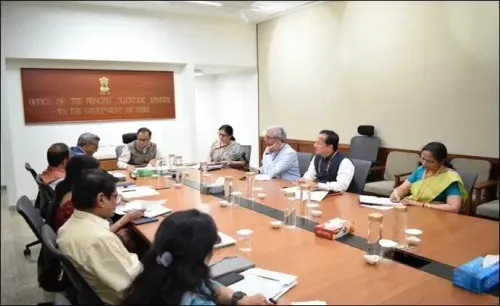
The Department of Animal Husbandry and Dairying (DAHD), in collaboration with ICAR-National Institute of Veterinary Epidemiology and Disease Informatics (ICAR-NIVEDI), concluded a two-day national tabletop exercise on 6 November 2026 in New Delhi, focused on building India's preparedness against Foot-and-Mouth Disease (FMD) serotype SAT-1 — a strain not yet reported in India but under close surveillance as it spreads beyond Africa into parts of West Asia. The drill, held under the theme 'Detect Early, Confirm Fast, Contain Together', brought together 83 participants from 25 states, three Union Territories, and key national institutions.
Scope of the Exercise
The exercise assembled representatives from state animal husbandry departments, ICAR institutes, veterinary diagnostic laboratories, veterinary universities, vaccine manufacturers, and defence and border guarding agencies. Participants worked through simulated outbreak scenarios, stress-testing protocols for disease detection, laboratory diagnosis, epidemiological investigations, animal movement controls, emergency vaccination strategies, and risk communication. This comes amid a broader global push to strengthen transboundary animal disease early-warning systems, as FMD SAT-1 has shown an expanding geographic footprint beyond its traditional African range.
Key Voices at the Drill
At the inaugural session, Animal Husbandry Commissioner Dr. Naveena B.M. stressed the importance of advance planning, early disease detection, rapid response, and close coordination between central and state authorities. Dr. Baldev R. Gulati, Director of ICAR-NIVEDI, highlighted the evolving epidemiological landscape of FMD SAT-1 and underscored the role of risk-based surveillance and epidemiological intelligence in mitigating the threat. Dr. J.K. Mohapatra, Director of the ICAR-National Institute of Foot-and-Mouth Disease (ICAR-NIFMD), emphasised laboratory preparedness, rapid diagnostic capabilities, and vaccine readiness.
Border Security and Inter-Agency Cooperation
Brigadier M.M. Ramachandra from the National Security Council Secretariat stressed the need for enhanced border vigilance and inter-agency cooperation to prevent the entry of transboundary animal diseases. The involvement of defence and border agencies underlines how animal health crises are increasingly treated as national security concerns — a recognition that livestock disease incursions can carry significant economic and food security consequences. Notably, India's livestock economy is among the largest in the world, making a potential FMD SAT-1 incursion a material risk to farmers' livelihoods and export markets.
Way Forward
The concluding session was chaired by Rama Shankar Sinha, Additional Secretary (Livestock Health), DAHD, who called for strengthening preparedness at both national and state levels, including upgrading diagnostic infrastructure such as regional FMD laboratories and Regional Disease Diagnostic Laboratories, with technical support from ICAR-NIFMD. The exercise's findings are expected to inform updated national contingency plans, with enhanced cross-state coordination and faster laboratory confirmation protocols emerging as priority areas going forward.
Point of View
And given that India holds one of the world's largest livestock populations, an uncontrolled incursion would not just be a veterinary problem but an agricultural and export-market crisis. The inclusion of the National Security Council Secretariat and border agencies in this exercise reflects a welcome shift in framing: livestock biosecurity as a national security issue. The real test, however, is whether the exercise's findings translate into funded infrastructure upgrades — regional diagnostic labs remain a known weak link — or whether this remains a well-designed drill that gathers dust.
NationPress
6 Nov 2026
Frequently Asked Questions
What is FMD SAT-1 and why is India concerned about it?
FMD SAT-1 is a serotype of Foot-and-Mouth Disease traditionally confined to sub-Saharan Africa that has been spreading into parts of West Asia, moving it closer to India's borders. While it has not been reported in India, its proximity and potential impact on the country's large livestock economy have prompted active surveillance and preparedness planning.
What was the purpose of the two-day national tabletop exercise?
The exercise, concluded on 6 November 2026 in New Delhi, was designed to test India's readiness to detect, confirm, and contain a potential FMD SAT-1 outbreak. Participants from 25 states and 3 Union Territories worked through simulated outbreak scenarios covering detection, laboratory diagnosis, emergency vaccination, and inter-agency coordination.
Who participated in the FMD SAT-1 preparedness drill?
The drill brought together 83 participants from 25 states, 3 Union Territories, and institutions including state animal husbandry departments, ICAR institutes, veterinary diagnostic laboratories, vaccine manufacturers, and defence and border guarding agencies, including the National Security Council Secretariat.
What did officials say needs to be strengthened after the exercise?
Additional Secretary Rama Shankar Sinha called for upgraded diagnostic infrastructure, specifically regional FMD laboratories and Regional Disease Diagnostic Laboratories, with technical support from ICAR-NIFMD. Senior officials also flagged the need for better border vigilance and faster central-state coordination mechanisms.
How does FMD SAT-1 differ from the FMD strains already present in India?
India already deals with other FMD serotypes, but SAT-1 is a distinct strain with different antigenic properties, meaning existing vaccines may not provide adequate protection against it. Its potential introduction would require new vaccine formulations and updated diagnostic tools, making advance preparedness critical.