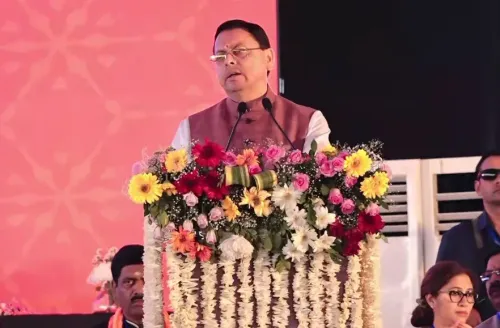
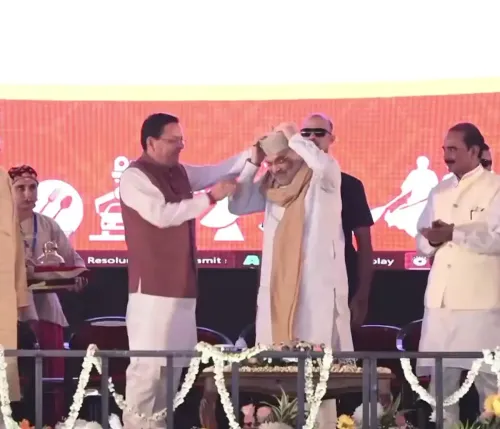
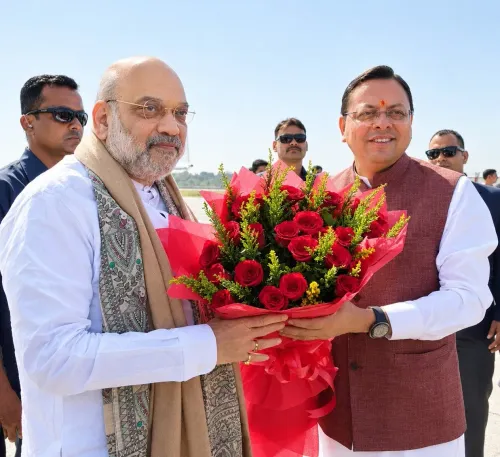
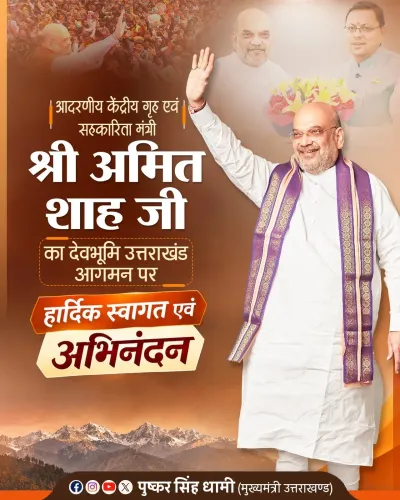
Amit Shah addresses Uttarakhand Rajyotsav on state's 26th foundation day
Synopsis
Union Home Minister Amit Shah addressed the Uttarakhand Rajyotsav in Dehradun on 6 November 2026, marking the state's 26th foundation day and describing it as a 'land of progress' under BJP governance alongside its heritage as a sacred land of nature and culture.
Key Takeaways
Amit Shah addressed the Uttarakhand Rajyotsav foundation-day celebration in Dehradun on 6 November 2026 .
Uttarakhand is completing 26 years since attaining statehood on 9 November 2000 , carved out of Uttar Pradesh .
Shah described the state as moving from a 'sacred land of nature and culture' to a 'pragati ki bhoomi' — a land of progress — under the BJP government.
The BJP has governed Uttarakhand since 2017 ; central leaders' participation in state milestones links local governance to national development priorities.
Uttarakhand's development narrative centres on Himalayan infrastructure, border-area connectivity, and pilgrimage tourism including the Char Dham yatra .
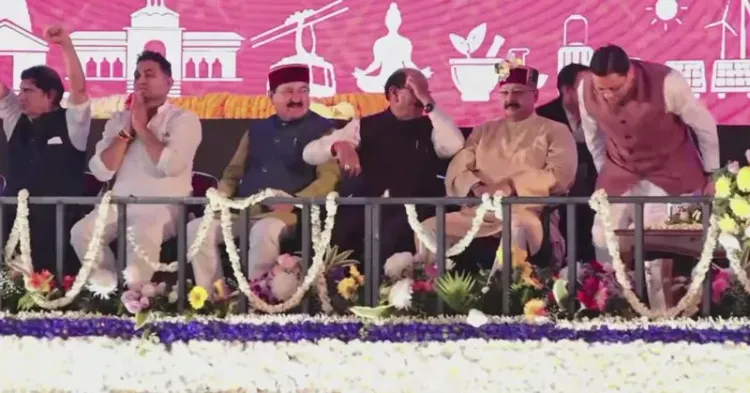
Twenty-six years after a Himalayan dream carved itself into the map of India, Union Home Minister Amit Shah stood before the crowd at Dehradun on Friday, 6 November 2026 to mark Uttarakhand's foundation day — framing the young hill state not just as a land of temples and peaks, but as a rising story of governance and growth.
Addressing the 'Uttarakhand Rajyotsav' celebrations, Shah declared: 'Prakriti va sanskriti ki punya bhoomi Uttarakhand' — 'the sacred land of nature and culture, Uttarakhand' — is becoming, under the BJP government, a 'pragati ki bhoomi': a land of progress. The formulation was deliberate, stitching together the state's ancient identity and its contemporary ambition in a single phrase.
The 26-year journey from bifurcation to Himalayan state
Uttarakhand was born on 9 November 2000, carved out of Uttar Pradesh after years of agitation by hill communities who felt their distinct geography and culture were neglected by the plains-dominated parent state. The demand was rooted in practical grievances — poor connectivity, underinvestment in remote areas, and the unique challenges of mountain governance — as much as in cultural pride.
At 26, the state has grown into one of India's most watched development experiments: a small, rugged territory that must balance mass pilgrimage tourism to sites like Kedarnath, Badrinath, Haridwar and Rishikesh with ecological sensitivity, border-area infrastructure on its frontiers with China and Nepal, and the persistent challenge of reverse migration from hill villages.
Central leadership at a state milestone — and what it signals
The presence of a Union Home Minister at a state foundation-day address is a routine but meaningful signal in Indian federal politics. Shah's attendance underscores the Centre's interest in anchoring Uttarakhand's development narrative within the BJP's broader national governance record — a state the party has held since 2017.
Uttarakhand's progress story, as consistently told at such forums, points to infrastructure investments: road and tunnel projects linking remote hill districts, expanded border connectivity under programmes tied to national security priorities, and a tourism economy that received a dramatic fillip after the post-pandemic pilgrimage surge swelled Char Dham yatra numbers to record levels.
The speech was live-streamed, extending its reach well beyond Dehradun's festival grounds and into the Uttarakhand diaspora — a community with a large presence in Indian cities — for whom foundation day carries genuine emotional weight.
As Uttarakhand enters its 27th year, the question the state's own residents ask is whether the infrastructure momentum translates into year-round economic opportunity for hill families, or whether the demographic drift to the plains continues. That is the benchmark Shah's 'land of progress' framing will ultimately be measured against.
Point of View
Particularly as infrastructure investments in border and hill areas are increasingly tied to national-security optics. For BJP, Uttarakhand is both a model hill-state story and a demonstration that mountain governance challenges — connectivity, migration, ecology — can be managed without sacrificing cultural symbolism. The real test of the 'land of progress' claim will come from rural economic data and migration trends, not festival-ground oratory.
NationPress
6 Nov 2026
Frequently Asked Questions
When was Uttarakhand formed as a separate state?
Uttarakhand was formed on 9 November 2000 , when it was carved out of Uttar Pradesh following a prolonged movement by hill communities seeking separate statehood.
Why did Amit Shah attend the Uttarakhand Rajyotsav 2026?
Union Home Minister Amit Shah addressed the Uttarakhand Rajyotsav in Dehradun on the state's 26th foundation day , emphasising the state's development under the BJP government alongside its cultural and natural heritage.
What is Uttarakhand Rajyotsav?
Uttarakhand Rajyotsav is the annual state foundation-day celebration marking the creation of Uttarakhand on 9 November 2000 . It includes cultural programmes and addresses by political leaders.
How many years of statehood is Uttarakhand completing in 2026?
Uttarakhand is completing 26 years of statehood in 2026 , having been established on 9 November 2000.
What development themes did Amit Shah highlight for Uttarakhand?
Shah described Uttarakhand as a 'pragati ki bhoomi' — land of progress — under the BJP government, pointing to the state's advancement alongside its identity as a sacred land of nature and culture.