CM Sai Meets Padma Shri Dwivedi, Talks Chanakya and Chhattisgarh Culture
Synopsis
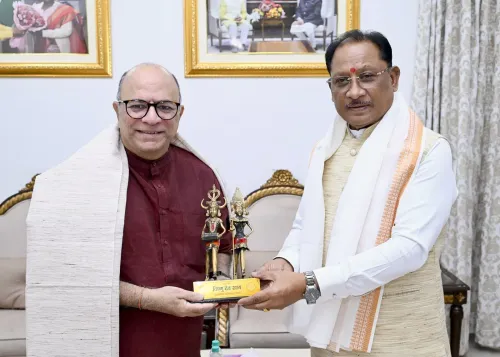
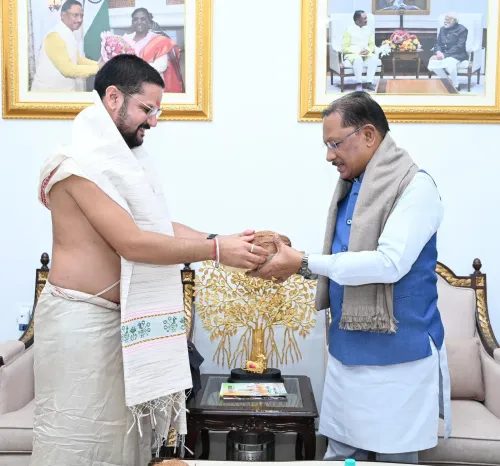
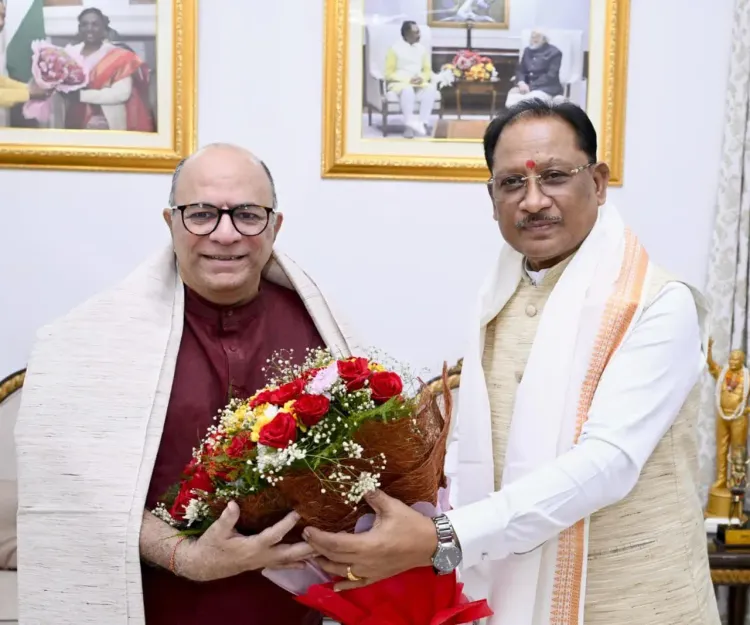
Chhattisgarh Chief Minister Vishnu Deo Sai hosted Padma Shri filmmaker Chandraprakash Dwivedi — director of the iconic Doordarshan serial 'Chanakya' — at his Raipur residence on 14 August 2026, for a wide-ranging discussion on Indian history, literature, cinema, and Chhattisgarh's tribal folk traditions.
Key Takeaways
CM Vishnu Deo Sai met Padma Shri Dr.
Chandraprakash Dwivedi at his Raipur residence on 14 August 2026 .
The discussion covered Indian history, culture, literature, cinema, and Chhattisgarh's tribal and folk traditions .
Dwivedi is best known for directing the landmark 1991–92 Doordarshan serial Chanakya , which dramatised ancient Indian statecraft.
The CMO specifically highlighted Dwivedi's role in presenting Indian history and national consciousness to a mass audience.
The meeting signals a possible push to integrate Chhattisgarh's grassroots heritage into a broader national cultural narrative under the #ViksitChhattisgarh agenda.
On the eve of Independence Day, Chhattisgarh Chief Minister Vishnu Deo Sai sat down at his Raipur residence with Padma Shri Dr. Chandraprakash Dwivedi — the filmmaker who brought ancient India's most formidable strategist to life for an entire generation of television viewers. The meeting, announced by the Chief Minister's Office of Chhattisgarh on 14 August 2026, ranged across Indian history, literature, cinema, and the tribal folk traditions that make Chhattisgarh distinct.
The man behind 'Chanakya' and what he carries into every room
Dr. Chandraprakash Dwivedi is not merely a filmmaker. His 1991–92 Doordarshan serial Chanakya — dramatising the life and statecraft of the ancient philosopher-strategist — became a landmark in Indian public broadcasting, shaping how millions understood Mauryan-era politics and the idea of a unified nation. Awarded the Padma Shri for his contribution to Indian arts and culture, Dwivedi carries into any conversation a rare fluency in both classical scholarship and mass storytelling. The CMO described his contribution to presenting Indian history and national consciousness through the serial as 'atyanth ullekhaniya' — 'extraordinarily noteworthy.'
Chhattisgarh's tribal heritage enters a pan-Indian conversation
The discussion was not limited to the grand sweep of ancient Indian polity. Chhattisgarh's tribal communities — among the most culturally distinct in central India — and the state's folk traditions were explicitly part of the dialogue. That detail matters. It signals an intent to weave Chhattisgarh's living, grassroots heritage into a larger national cultural narrative, rather than treating it as a regional footnote. CM Sai, who took office in December 2023, has made heritage promotion a visible thread in his governance agenda.
Why state governments court national cultural figures
Indian state governments have long used high-profile cultural meetings to do two things at once: burnish their credentials as custodians of civilisational heritage, and signal to local communities that their traditions belong in the national conversation. A filmmaker of Dwivedi's stature, associated with themes of national unity and ancient wisdom, is a particularly resonant interlocutor for a state like Chhattisgarh — home to a significant tribal population whose folk traditions remain under-represented in mainstream cultural discourse. Whether this courtesy visit seeds a concrete cultural initiative — a heritage festival, a documentary collaboration, a state-backed production — is the question worth watching.
One filmmaker, one chief minister, one room in Raipur: but the conversation they are signalling reaches back two millennia and forward into what Chhattisgarh wants to say about itself.
Point of View
Using such engagements to frame governance within a heritage-forward narrative. For CM Sai — who leads a state with one of India's largest tribal populations — hosting a filmmaker celebrated for dramatising ancient Indian unity is a deliberate signal about which cultural stories Chhattisgarh wants to claim. The explicit mention of tribal folk traditions alongside pan-Indian history is notable: it suggests an effort to avoid the optics of sidelining Adivasi culture in favour of Brahminic classical narratives. Whether the conversation translates into funded cultural programming will determine whether this is politics or policy.
NationPress
14 Aug 2026
Frequently Asked Questions
Who is Chandraprakash Dwivedi and why is he famous?
Chandraprakash Dwivedi is a Padma Shri-awarded Indian filmmaker best known for directing and starring in the 1991–92 Doordarshan television serial 'Chanakya', which dramatised the life of the ancient Indian strategist and philosopher Chanakya and themes of national unity.
Why did Chandraprakash Dwivedi meet Chhattisgarh CM Vishnu Deo Sai?
The meeting on 14 August 2026 was a courtesy visit at CM Sai's Raipur residence, during which the two discussed Indian history, culture, literature, cinema, and Chhattisgarh's tribal folk traditions and heritage.
What is the Chanakya Doordarshan serial about?
The 'Chanakya' serial, directed by Chandraprakash Dwivedi and aired on Doordarshan in 1991–92, dramatised the life and political strategies of the ancient Indian philosopher-statesman Chanakya and the establishment of the Mauryan Empire, exploring themes of national unity and statecraft.
Who is Vishnu Deo Sai, the Chief Minister of Chhattisgarh?
Vishnu Deo Sai is the Chief Minister of Chhattisgarh, sworn into office in December 2023. He has focused on state governance and promoting Chhattisgarh's cultural and tribal heritage.
What is Chhattisgarh's tribal cultural heritage?
Chhattisgarh is home to one of India's largest tribal populations and has a rich tradition of distinct folk art, music, dance, and customs associated with communities such as the Gond, Baiga, and Halba, which form a significant part of the state's cultural identity.