CM Sai Announces Strike-Period Pay for Chhattisgarh NHM Workers
Synopsis
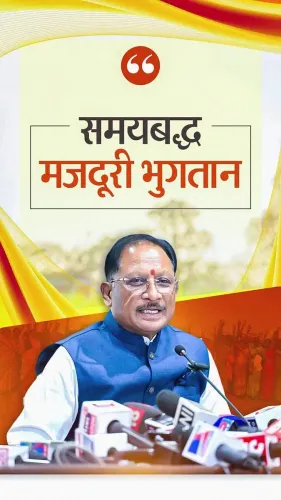
Chief Minister Vishnu Deo Sai attended the Chhattisgarh NHM Employees Union state convention in Raipur on 13 June 2026 and announced that contractual NHM workers will receive wages for their 33-day strike period, calling them the backbone of the state's health services.
Key Takeaways
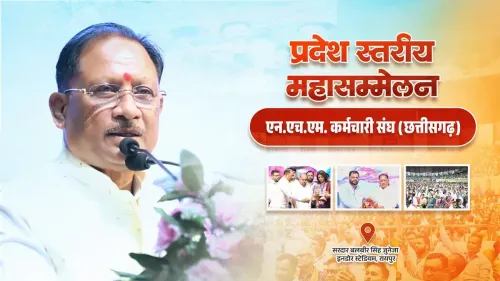
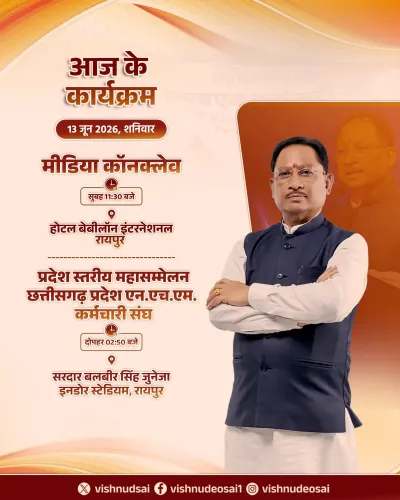
CM Vishnu Deo Sai attended the state-level convention of the Chhattisgarh Pradesh NHM Employees Union at Balbir Singh Juneja Indoor Stadium, Raipur on 13 June 2026 .
He announced that NHM contractual workers will be paid wages for their 33-day strike period , addressing a key financial grievance.
CM Sai described NHM employees as the 'backbone' of Chhattisgarh's health services and credited them with reaching remote and difficult areas.
The National Health Mission , launched in 2013 , relies on a large contractual workforce for frontline health delivery across rural India.
The announcement is expected to benefit NHM workers statewide and improve morale among frontline health staff serving tribal and rural communities.
Broader questions around regularisation and long-term pay-scale revision for NHM contractual staff remain open for future negotiations.
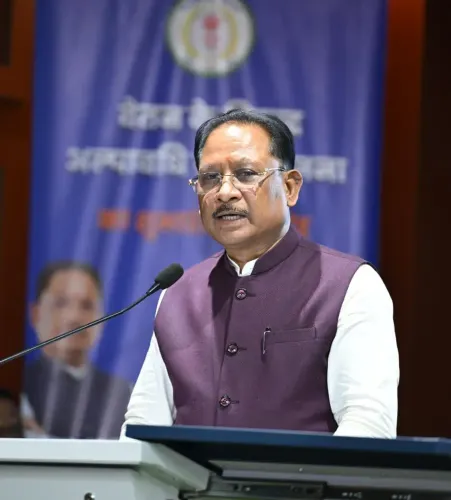
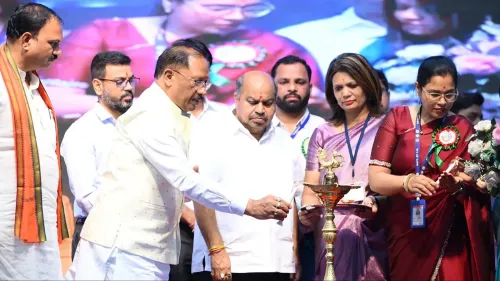
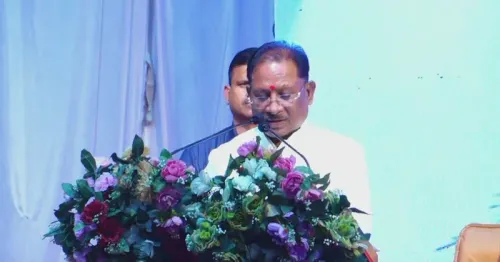
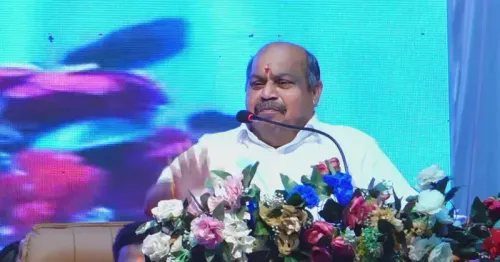
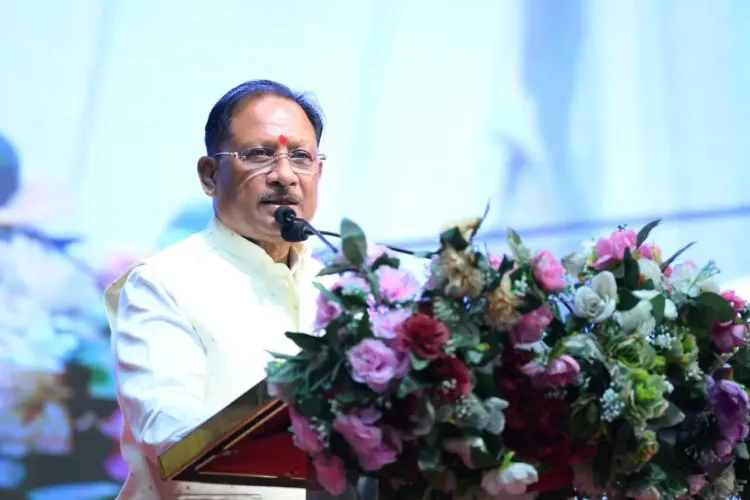
Chief Minister Vishnu Deo Sai on Saturday, 13 June 2026 attended the state-level grand conference of the Chhattisgarh Pradesh National Health Mission (NHM) Employees Union held at the Balbir Singh Juneja Indoor Stadium in Raipur, where he announced that contractual NHM workers would be paid wages for their 33-day strike period.
Context
Addressing the pradesh-stariya mahasammelan (state-level grand convention), CM Sai described NHM employees as the 'reedh ki haddi' — the 'backbone' — of the state's health services. He credited them with delivering healthcare to even the most remote and difficult-to-reach areas of Chhattisgarh. The announcement of wages for the 33-day strike period was the centrepiece of the event, framed as a significant concession to the workforce.
The Chief Minister stated that the contribution of NHM workers in building a 'Swasth Chhattisgarh' (Healthy Chhattisgarh) is 'unparalleled' and that the government respects their work. The convention drew NHM staff from across the state, reflecting the scale of the contractual health workforce that underpins primary care delivery in Chhattisgarh.
Policy Backdrop
The National Health Mission was launched by the Central government in 2013, subsuming the earlier National Rural Health Mission of 2005, with the goal of strengthening rural health infrastructure through a large contractual workforce. These workers — including ANMs, ASHAs, lab technicians, and paramedics — form the frontline of public health delivery across India's states and union territories.
Contractual NHM staff across several Indian states have periodically gone on strike since the mid-2010s, demanding wage parity with regular government employees, job security, and regularisation of service. The tension between the mission-mode flexible hiring model and the workforce's demand for formalisation has been a recurring friction point in India's public health administration. Chhattisgarh, a state with a large tribal and rural population, is particularly dependent on this cadre for last-mile health delivery.
Stakeholders and Impact
The immediate beneficiaries of CM Sai's announcement are the contractual NHM workers who had participated in the strike and stood to lose wages for those 33 days. By committing to release these wages, the state government addresses a direct financial grievance that had remained unresolved since the industrial action concluded.
The broader beneficiaries are the rural and tribal communities of Chhattisgarh who depend on NHM workers for immunisation, maternal health, disease surveillance, and primary care. Improved morale and financial security among this workforce can directly translate into more consistent service delivery in underserved regions. The BJP government under Sai, which came to power in December 2023, has positioned welfare delivery as a core governance priority.
What's Next
The critical follow-through will be the release of actual funds from the state budget to cover the announced strike-period wages. Observers will also watch whether this announcement opens the door to broader negotiations on regularisation of NHM contractual staff or revision of pay scales — demands that have historically followed such concessions in other states.
For CM Sai's administration, the move signals a willingness to engage with organised labour in the health sector ahead of what remains a complex policy challenge: building a stable, motivated public health workforce without converting the mission-mode staffing model into a permanent government payroll commitment.
Point of View
Sai elevates their symbolic status without committing to the far more expensive and legally complex step of absorbing them into the permanent state payroll. The real test will be whether budget allocations follow the announcement and whether this opens formal talks on long-term service security.
NationPress
13 Sept 2026
Frequently Asked Questions
What did CM Vishnu Deo Sai announce for NHM workers in Chhattisgarh?
CM Vishnu Deo Sai announced at a state convention in Raipur on 13 June 2026 that NHM contractual workers will be paid their wages for the 33-day period during which they were on strike.
What is the National Health Mission and who are its workers?
The National Health Mission (NHM) is a Central government programme launched in 2013 to strengthen rural health infrastructure. Its workforce includes contractual staff such as ANMs, ASHAs, lab technicians, and paramedics who deliver frontline healthcare in rural and underserved areas.
Why did NHM workers go on strike in Chhattisgarh?
NHM contractual workers across India, including in Chhattisgarh, have periodically struck work over demands for wage parity with regular government employees, job security, and regularisation of their contractual status. The specific 33-day strike referenced by CM Sai reflects these longstanding grievances.
Where was the NHM employees convention held in Chhattisgarh?
The state-level grand convention of the Chhattisgarh Pradesh NHM Employees Union was held at the Balbir Singh Juneja Indoor Stadium in Raipur on 13 June 2026.
Will NHM workers in Chhattisgarh be regularised after this announcement?
CM Sai's announcement covers wages for the strike period only. Questions of regularisation and long-term pay-scale revision for NHM contractual staff remain unresolved and are expected to be the subject of future negotiations between the union and the state government.