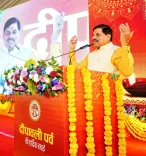
CM Vishnu Deo Sai pays tribute to C.V. Raman on birth anniversary
Synopsis
Chhattisgarh CM Vishnu Deo Sai marked the birth anniversary of Nobel laureate Sir C.V. Raman on November 7, 2026, calling his spirit of curiosity and research an enduring inspiration for future generations of Indian innovators.
Key Takeaways
Chhattisgarh CM Vishnu Deo Sai posted a tribute to Sir C.V.
Raman on his birth anniversary, November 7, 2026 .
Raman won the Nobel Prize in Physics in 1930 for the discovery of the Raman Effect , making him the first Asian to win a Nobel in a science category.
Raman was awarded the Bharat Ratna in 1954 , the year the honour was first instituted.
He founded the Raman Research Institute in Bengaluru , which remains an active centre of fundamental research.
Indian leaders across the political spectrum mark November 7 with annual tributes to Raman's scientific legacy.
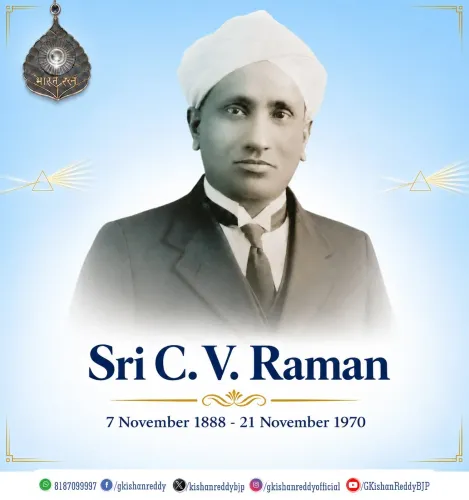
A Nobel laureate who bent light itself — and in doing so, rewrote physics. On the birth anniversary of Sir Chandrasekhara Venkata Raman, Chhattisgarh Chief Minister Vishnu Deo Sai paid tribute on Saturday, November 7, 2026, honouring the towering legacy of India's most celebrated scientist.
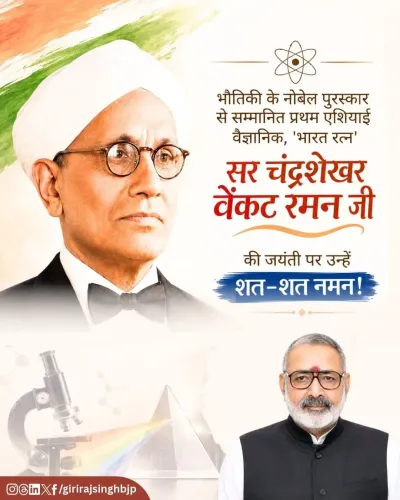
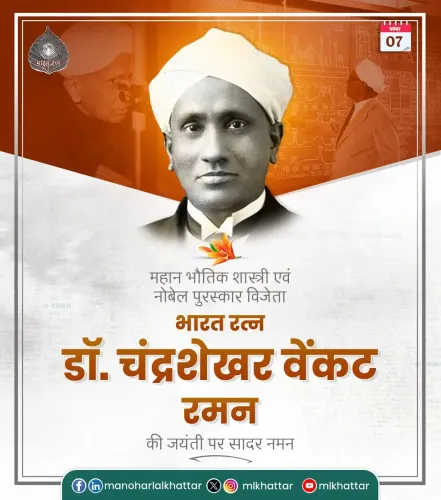
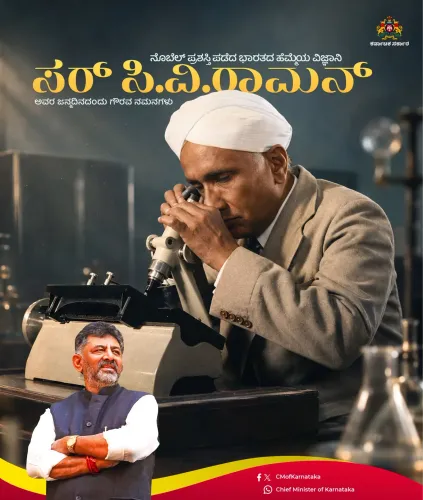
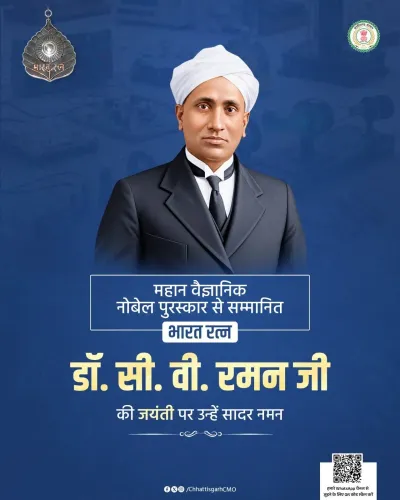
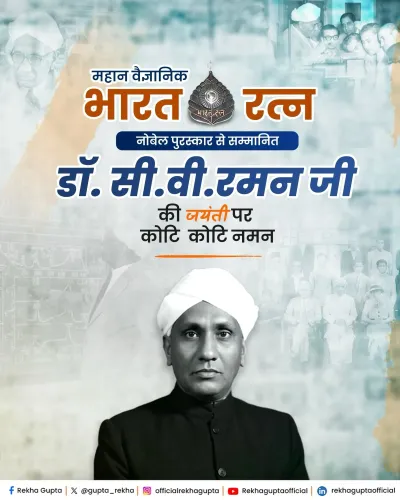
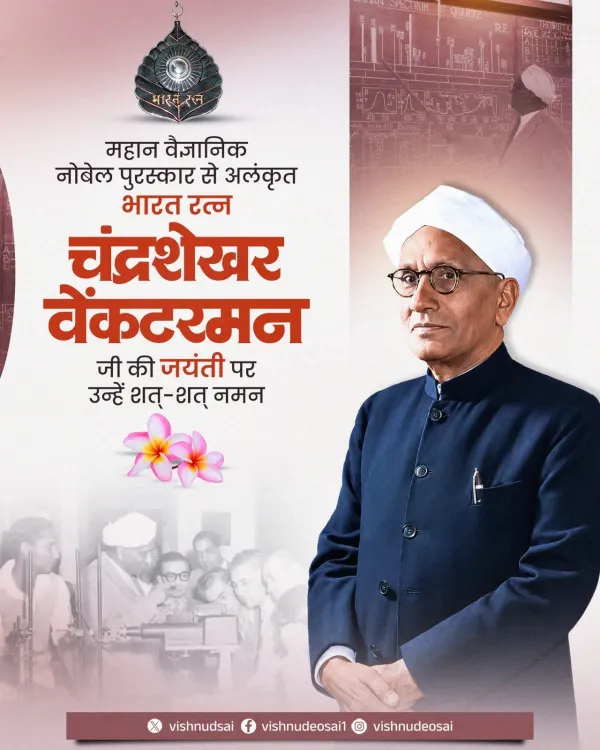
In a post on X, CM Sai wrote: 'महान वैज्ञानिक, नोबेल पुरस्कार से सम्मानित 'भारत रत्न' सर चंद्रशेखर वेंकटरमन जी की जयंती पर विनम्र श्रद्धांजलि।' — 'A humble tribute on the birth anniversary of the great scientist, Nobel Prize-honoured 'Bharat Ratna' Sir Chandrasekhara Venkata Raman.' He added that Raman's dedication to science, his curiosity, and his spirit of research 'will forever inspire coming generations towards innovation.'
The discovery that made India a global science landmark
When C.V. Raman published his findings on the scattering of light in 1928, it was a discovery built not in a lavishly funded laboratory but on relentless curiosity. The phenomenon — the Raman Effect — demonstrated that when light passes through a transparent material, a fraction of that light changes wavelength, revealing the material's molecular identity. The world took notice immediately. In 1930, Raman became the first Asian and first non-white scientist to win the Nobel Prize in Physics.
India recognised him with the Bharat Ratna in 1954, the country's highest civilian honour — the same year the award itself was instituted. He went on to found the Raman Research Institute in Bengaluru, a centre that continues to produce fundamental science to this day.
November 7 and India's annual science salute
Raman's birth anniversary has become a fixed point of national scientific reflection. Leaders across party lines and states regularly mark the date, a collective acknowledgement that scientific ambition is woven into India's post-independence identity. November 7 serves as an informal reminder that India's scientific heritage is not abstract — it has a name, a date, and a Nobel medal to prove it.
For a state like Chhattisgarh, still investing in educational infrastructure and research ecosystems, invoking Raman carries practical weight beyond ceremony. The aspiration he embodied — that curiosity, not just capital, drives discovery — remains the most accessible model for the next generation of Indian scientists.
Point of View
Associating Chhattisgarh's development narrative with Raman's story of curiosity-driven discovery signals an aspirational framing for the state's youth. At a national level, such annual commemorations — cutting across party and regional lines — quietly reinforce the idea that science, not just growth metrics, defines India's self-image as a rising power. The constancy of these tributes also suggests that November 7 has acquired near-ceremonial status in India's political calendar.
NationPress
7 Nov 2026
Frequently Asked Questions
Why is November 7 significant for Indian science?
November 7 is the birth anniversary of Sir C.V. Raman , India's first Nobel laureate in a science category. Indian leaders and institutions mark the date annually as a celebration of scientific heritage and an inspiration for future researchers.
What is the Raman Effect?
The Raman Effect is the phenomenon by which light scattered through a transparent material shifts in wavelength, revealing information about the material's molecular composition. C.V. Raman discovered it in 1928 , earning him the Nobel Prize in Physics in 1930 .
What awards did C.V. Raman receive?
Sir C.V. Raman was awarded the Nobel Prize in Physics in 1930 and the Bharat Ratna in 1954 , the year India's highest civilian honour was first instituted, making him one of its earliest recipients.
What is the Raman Research Institute?
The Raman Research Institute , located in Bengaluru , was founded by C.V. Raman himself. It continues to operate as an independent research institution focused on fundamental science.
Why did Chhattisgarh CM Vishnu Deo Sai post about C.V. Raman?
Chhattisgarh CM Vishnu Deo Sai posted a tribute on November 7, 2026 to mark the birth anniversary of Sir C.V. Raman , expressing that Raman's dedication and spirit of inquiry will continue to inspire innovation in future generations.