CM Sai Plants Parijat Sapling on Hareli at Nava Raipur

Synopsis
Chief Minister Vishnu Deo Sai planted a Parijat sapling at his Nava Raipur residence on Hareli 2026, linking Chhattisgarh's traditional monsoon festival to the state's 'Hariyar Chhattisgarh' programme and the national 'Ek Ped Maa Ke Naam' campaign.
Key Takeaways
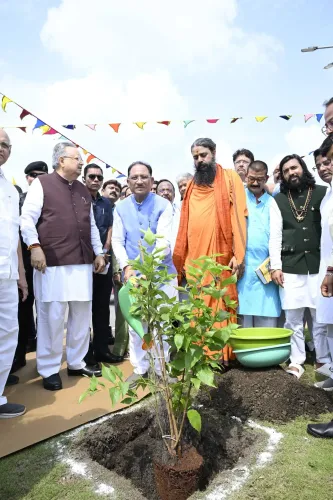
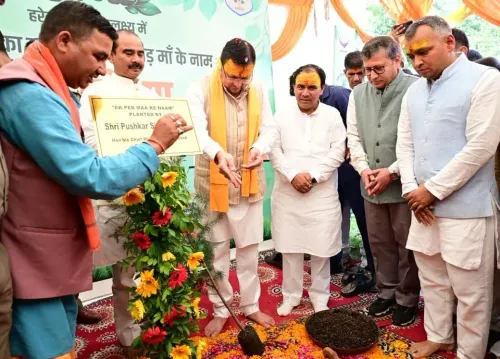
CM Vishnu Deo Sai planted a Parijat sapling at the Chief Minister's residence in Nava Raipur on 12 August 2026 .
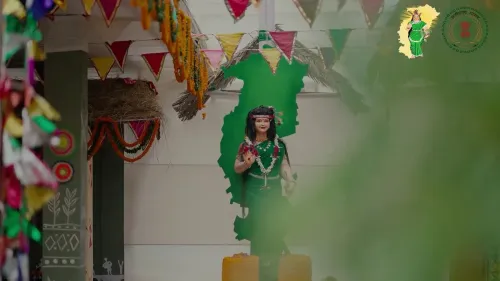
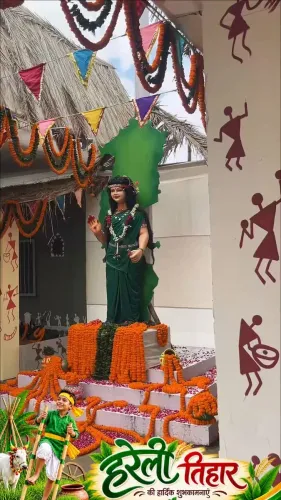
The event coincided with Hareli , Chhattisgarh's traditional festival honouring nature at the onset of the monsoon.
Sai invoked the festival's message of connecting with nature and preserving it for future generations.
The drive links to the state's 'Hariyar Chhattisgarh' afforestation programme and the national 'Ek Ped Maa Ke Naam' campaign launched in 2024.
Chhattisgarh's approach emphasises community and cultural participation in conservation over new legislation.
On the auspicious occasion of Hareli — Chhattisgarh's oldest and most beloved folk festival — Chief Minister Vishnu Deo Sai stepped into the grounds of his official residence in Nava Raipur on Wednesday, 12 August 2026, and planted a Parijat sapling, sending a quiet but deliberate message: conservation is not a policy document, it is a living act.
The Chief Minister's Office of Chhattisgarh shared the moment on X, quoting Sai as saying that Hareli 'hame prakriti se judne, use sahejne aur aane wali peedhiyon ke liye surakshit rakhne ki prerna deti hai' — 'inspires us to connect with nature, nurture it, and keep it safe for generations to come.'
Hareli: The Festival That Puts the Forest First
Hareli, which marks the onset of the monsoon and the greening of the earth, is deeply embedded in the agricultural and tribal calendar of Chhattisgarh. Farmers traditionally worship their tools, and communities gather to honour the land that sustains them. For a state where forests cover more than 44 percent of the total geographical area and where tribal communities depend intimately on forest ecosystems, the festival carries weight beyond ritual — it is an annual civic reminder of ecological debt. Sai's choice of the Parijat — a fragrant, night-blooming flower revered in Hindu tradition — was not incidental. The tree carries cultural resonance that bridges the spiritual and the environmental, making it a fitting symbol for a government trying to weave conservation into the fabric of everyday life.Hariyar Chhattisgarh and the 'Ek Ped Maa Ke Naam' Push
The plantation drive sits within two overlapping frameworks. The state's own 'Hariyar Chhattisgarh' programme has made green cover expansion a recurring theme of official messaging, deliberately aligning traditional festivals with afforestation goals. Alongside it runs the national 'Ek Ped Maa Ke Naam' campaign — launched in 2024 — which asks every citizen to plant a tree in honour of their mother, turning a personal gesture into a collective ecological act. Both campaigns share a philosophy: community participation over legislation. Rather than announcing new penalties for deforestation or fresh regulatory targets, the Chhattisgarh government has consistently chosen cultural occasions — Hareli chief among them — as the stage for environmental outreach. The approach bets that a habit rooted in tradition will outlast any policy cycle. With the 2026 monsoon season now fully underway, all eyes will be on whether the state's tree plantation targets translate from ceremonial saplings to verifiable green cover on the ground.Point of View
The Sai government is pursuing a soft-power model of environmental governance — one that trades legislative muscle for cultural legitimacy. This mirrors a broader BJP pattern of fusing Hindu-tribal festival calendars with national scheme messaging, giving central campaigns like 'Ek Ped Maa Ke Naam' a local, emotionally resonant face. For a state with over 44 percent forest cover and a large tribal constituency, the optics of a Chief Minister planting a sacred Parijat tree carry electoral as well as ecological undertones. The real test, as always, will be in the plantation data when the monsoon season closes.
NationPress
13 Aug 2026
Frequently Asked Questions
What is Hareli festival in Chhattisgarh?
Hareli is Chhattisgarh's oldest folk festival, celebrated at the onset of the monsoon to honour nature and agricultural tools. It is especially significant for the state's farming and tribal communities.
What did CM Vishnu Deo Sai do on Hareli 2026?
CM Vishnu Deo Sai planted a Parijat sapling at the Chief Minister's residence in Nava Raipur on 12 August 2026, calling on citizens to connect with and protect nature.
What is the 'Ek Ped Maa Ke Naam' campaign?
'Ek Ped Maa Ke Naam' is a national tree plantation campaign launched in 2024 that encourages every citizen to plant a tree in honour of their mother, promoting widespread afforestation.
What is the 'Hariyar Chhattisgarh' programme?
'Hariyar Chhattisgarh' is a state-level environmental initiative that integrates traditional festivals and community participation to expand green cover across Chhattisgarh.
Why did CM Sai choose a Parijat tree to plant?
The Parijat is a night-blooming flower with deep cultural and spiritual significance in Hindu tradition, making it a symbolically resonant choice for an event linking conservation with the sacred occasion of Hareli.