CM Sai Calls for Drug-Free Chhattisgarh on Anti-Drug Day
Synopsis
On International Anti-Drug Day, 26 June 2026, Chhattisgarh Chief Minister Vishnu Deo Sai called for public awareness and collective participation to build a drug-free, healthy, and prosperous Chhattisgarh, aligning state messaging with the national Nasha Mukt Bharat Abhiyan framework.
Key Takeaways
Chief Minister Vishnu Deo Sai posted his message on 26 June 2026 , the International Day Against Drug Abuse and Illicit Trafficking .
He called for a pledge to build a drug-free, healthy, and aware society in Chhattisgarh.
The message emphasised public awareness, public participation, and collective efforts as the path to a prosperous state.
The national Nasha Mukt Bharat Abhiyan , launched in August 2020 , covers Chhattisgarh and combines legal enforcement with community-led rehabilitation.
India's drug control framework is grounded in the NDPS Act, 1985 and three UN drug control conventions.
Youth, tribal communities, and families are the primary stakeholders in Chhattisgarh's anti-drug efforts.
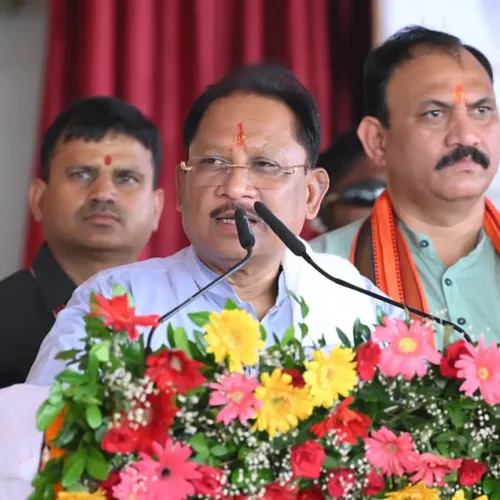
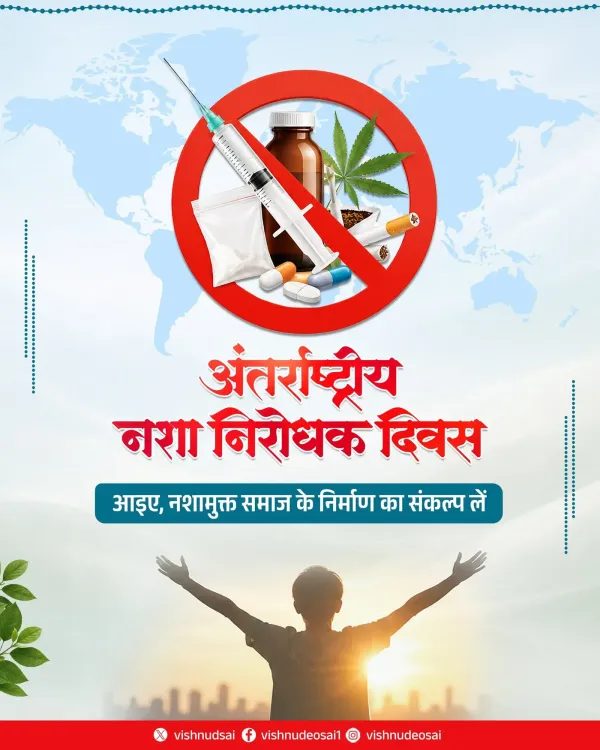
Chhattisgarh Chief Minister Vishnu Deo Sai on Friday, 26 June 2026, marked the International Day Against Drug Abuse and Illicit Trafficking by calling on citizens to pledge collective action toward building a drug-free, healthy, and aware society in the state.
In his post on X, Chief Minister Sai wrote: 'Antararashtriya nasha nirodhan divas ke avasar par aaiye, nashamukta, swastha aur jagruk samaj ke nirman ka sankalp len' — urging people on the occasion of International Anti-Drug Day to resolve to build a drug-free, healthy, and aware society. He added that through public awareness, public participation, and collective efforts, a healthy and prosperous Chhattisgarh can be built.
Context
Every year on 26 June, the world observes the International Day Against Drug Abuse and Illicit Trafficking, an annual United Nations observance established to strengthen global action and cooperation in achieving a world free of drug abuse. The day serves as a focal point for governments, civil society, and communities to renew commitments against substance abuse.
Chief Minister Sai, who has led Chhattisgarh since December 2023 following the BJP's victory in the state assembly elections, used the occasion to reinforce the state's alignment with national anti-drug messaging.
Policy Backdrop
India's legislative framework on drug control is anchored in the Narcotic Drugs and Psychotropic Substances (NDPS) Act, 1985, which regulates and penalises drug-related offences across the country. On the preventive side, the central government launched the Nasha Mukt Bharat Abhiyan in August 2020 under the Ministry of Social Justice and Empowerment, initially targeting 272 districts identified as high-risk before expanding to additional states including Chhattisgarh.
The campaign combines legal enforcement with community-led awareness and rehabilitation, emphasising the role of local participation — a theme directly echoed in Chief Minister Sai's message of 'janjagrukta, jansahbhagita aur samuhik prayas' (public awareness, public participation, and collective effort).
Stakeholders and Impact
Chhattisgarh is a central Indian state with a substantial tribal population, and substance abuse has been identified as a public health concern across several districts, particularly affecting youth and tribal communities. Families in affected areas bear significant social and economic burdens linked to drug dependency.
State-level messaging on days such as this is intended to mobilise community leaders, health workers, and local bodies to participate in awareness drives and direct individuals toward de-addiction services. India is also a signatory to the three principal UN drug control conventions, making domestic observances part of a broader international accountability framework.
What's Next
Observers will watch for follow-through in the form of district-level de-addiction centre rollouts and any fresh budget allocations by the Chhattisgarh government for rehabilitation programmes under the Nasha Mukt Bharat Abhiyan framework. The Chief Minister's call for 'collective efforts' signals an intent to leverage community networks alongside state machinery — the depth of that engagement at the grassroots level will determine the practical impact of this pledge.
Point of View
The messaging reflects a broader national shift toward demand-reduction strategies alongside supply-side legal action. For a state like Chhattisgarh — with its large tribal population and documented vulnerability to substance abuse — the credibility of such pledges will ultimately rest on measurable outcomes: de-addiction centre capacity, district-level outreach data, and rehabilitation funding. The post signals political intent; the policy follow-through will be the harder test.
NationPress
24 Sept 2026
Frequently Asked Questions
What is International Day Against Drug Abuse and Illicit Trafficking?
It is an annual United Nations observance held on 26 June each year to strengthen global action against drug abuse and illicit drug trafficking. India participates through national and state-level awareness campaigns.
What is Nasha Mukt Bharat Abhiyan?
Nasha Mukt Bharat Abhiyan is a national campaign launched in August 2020 by India's Ministry of Social Justice and Empowerment. It initially targeted 272 high-risk districts and has since expanded to include states such as Chhattisgarh, combining legal enforcement with community rehabilitation.
Why did CM Vishnu Deo Sai post about anti-drug day?
Chief Minister Vishnu Deo Sai marked the International Day Against Drug Abuse on 26 June 2026 by calling on citizens to pledge collective action for a drug-free and healthy Chhattisgarh, aligning with both UN observance traditions and the national Nasha Mukt Bharat Abhiyan.
Is drug abuse a problem in Chhattisgarh?
Substance abuse has been identified as a public health concern in several districts of Chhattisgarh, particularly affecting youth and tribal communities. The state participates in the Nasha Mukt Bharat Abhiyan to address prevention and rehabilitation.
What law governs drug offences in India?
The Narcotic Drugs and Psychotropic Substances (NDPS) Act, enacted in 1985, is the primary legislation governing drug-related offences in India. It regulates, restricts, and penalises the production, possession, sale, and consumption of narcotic and psychotropic substances.