CM Sai Pushes Cooperative Strengthening for Rural Chhattisgarh
Synopsis
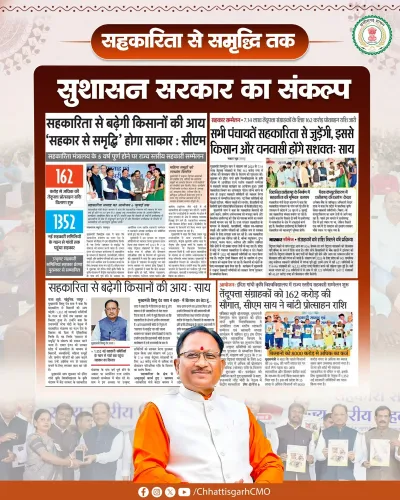
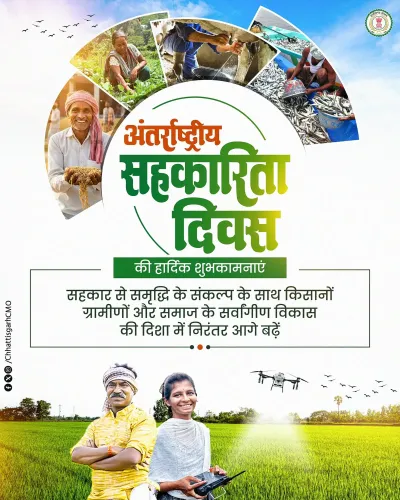
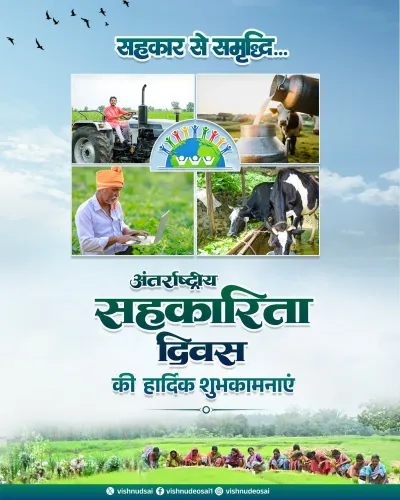
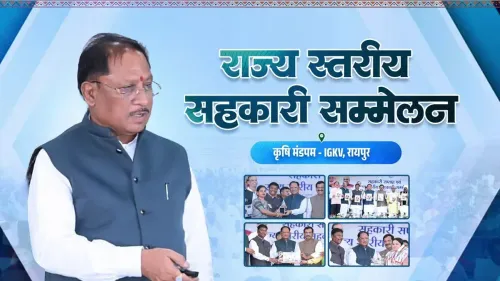
Chhattisgarh Chief Minister Vishnu Deo Sai on 4 July 2026 reaffirmed his government's drive to empower cooperatives under the 'Sahakar se Samriddhi' mission, targeting self-reliance for farmers, women, youth and rural communities as the cornerstone of a developed Chhattisgarh.
Key Takeaways
CM Vishnu Deo Sai publicly committed to cooperative empowerment as a governance priority on 4 July 2026 .
The initiative is framed under the slogan 'Sahakar se Samriddhi' (Prosperity through Cooperation), aligned with the national cooperative policy direction since 2021 .
Target beneficiaries include small farmers, rural women, rural youth and broader village communities across Chhattisgarh .
The cooperative policy builds on a framework dating to Chhattisgarh's formation in 2000 , centred on agricultural credit societies and dairy cooperatives.
Key future indicators include state budget allocations for cooperatives, amendments to the Chhattisgarh Cooperative Societies Act , and growth in women-led self-help cooperative groups.
Chhattisgarh Chief Minister Vishnu Deo Sai on Saturday, 4 July 2026, reaffirmed his government's commitment to empowering the cooperative sector as a pillar of rural self-reliance, stating that cooperatives would serve as the foundation for building a prosperous and developed Chhattisgarh.
Context
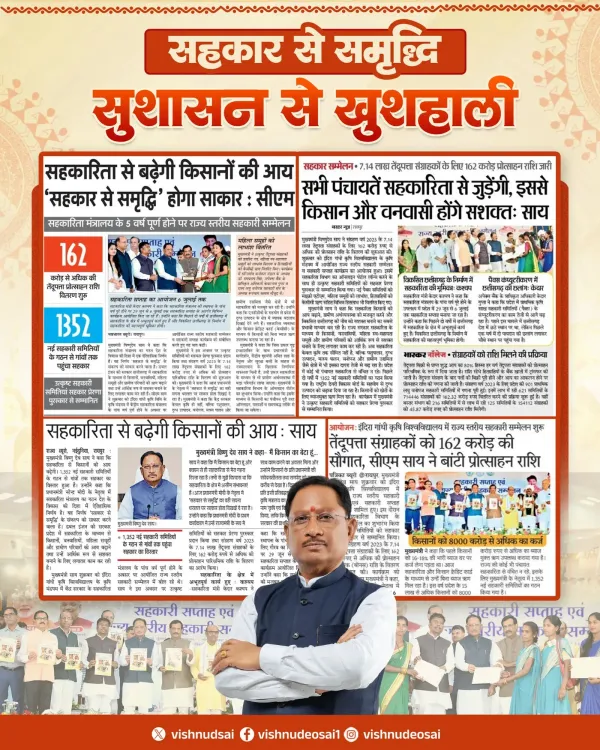
Posting on X, CM Sai invoked the slogan 'Sahakar se Samriddhi' (Prosperity through Cooperation), declaring: 'With good governance and cooperation as a strong foundation for prosperity, our government is empowering cooperatives so that farmers, women, youth and rural communities become self-reliant and the construction of a developed Chhattisgarh gains new momentum.' The post signals a deliberate policy framing ahead of what observers expect to be a period of heightened rural outreach by the state government.
The slogan 'Sahakar se Samriddhi' has been a recurring motif in BJP-led state governments since the Union Ministry of Cooperation was established in July 2021 at the central level to give focused institutional support to India's cooperative ecosystem. Chhattisgarh's adoption of the phrase signals alignment with that national framework.
Policy Backdrop
Cooperatives in Chhattisgarh have historically centred on primary agricultural credit societies and dairy cooperatives, with the foundational policy architecture laid down after the state was carved out of Madhya Pradesh in 2000. The current government, which took office in December 2023 under CM Sai, has sought to modernise and expand that framework under the Atmanirbhar Bharat (Self-Reliant India) narrative championed at the national level.
Across India, the cooperative model has long been associated with transformative outcomes in agriculture and allied sectors — the dairy cooperative movement in Gujarat being the most cited example. BJP-led state governments have increasingly recast cooperatives not merely as credit channels but as instruments of economic inclusion, linking them to good-governance messaging and rural development targets.
In Chhattisgarh, the focus areas identified by the government include small and marginal farmers, rural women through self-help group networks, and rural youth seeking livelihood opportunities outside traditional agriculture. The Chhattisgarh Cooperative Societies Act provides the legal backbone for these structures, and any amendments to it will be closely watched as an indicator of the government's legislative seriousness on this agenda.
Stakeholders and Impact
Small farmers stand to benefit most directly if cooperative credit and input-supply networks are strengthened, reducing dependence on informal moneylenders and middlemen. Rural women organised into self-help groups represent another critical constituency, with cooperatives offering pathways to collective marketing and micro-enterprise formation.
Rural youth in Chhattisgarh — a state where a significant share of the workforce remains in agriculture and allied activities — could gain through cooperative-linked skill development and entrepreneurship programmes. The state's economy, which is also heavily reliant on mining and forest produce, has long needed diversified rural income sources, making cooperative deepening a structural priority beyond its political optics.
What's Next
The immediate indicators to watch are the state budget's allocation line for cooperative societies, any proposed amendments to the Chhattisgarh Cooperative Societies Act, and data on the formation of new primary agricultural credit societies or women-led cooperative bodies. If the government follows through with legislative or budgetary action, CM Sai's post will mark the public launch of a substantive policy push rather than a messaging exercise alone.
Sustained investment in cooperative infrastructure — digital record-keeping, warehousing, and credit linkage — will determine whether the 'Sahakar se Samriddhi' vision translates into measurable rural income gains ahead of the next state electoral cycle.
Point of View
The Chhattisgarh government explicitly ties itself to the central government's cooperative push, reinforcing vertical alignment between Raipur and New Delhi. The emphasis on farmers, women and youth as beneficiaries maps precisely onto the three voter constituencies that BJP has prioritised in its rural outreach strategy ahead of future electoral cycles. Whether this translates into structural reform — legislative amendments, budget outlays, measurable credit disbursal — or remains aspirational rhetoric will be the real test of the government's intent.
NationPress
4 Jul 2026
Frequently Asked Questions
What is 'Sahakar se Samriddhi' in Chhattisgarh?
'Sahakar se Samriddhi' means 'Prosperity through Cooperation' and is the Chhattisgarh government's stated mission to strengthen cooperative societies so that farmers, rural women, youth and village communities become economically self-reliant.
Who is Vishnu Deo Sai and why is he promoting cooperatives?
Vishnu Deo Sai is the Chief Minister of Chhattisgarh, in office since December 2023 and a senior BJP leader. He is promoting cooperatives as part of his government's rural development and good-governance agenda, aligned with the national cooperative policy framework.
What is the Ministry of Cooperation and how does it relate to Chhattisgarh?
The Union Ministry of Cooperation was created in July 2021 to provide dedicated policy and institutional support to India's cooperative sector. Chhattisgarh's 'Sahakar se Samriddhi' initiative reflects alignment with this central framework at the state level.
How do cooperatives help farmers in Chhattisgarh?
Cooperatives in Chhattisgarh provide small and marginal farmers with access to agricultural credit, inputs and collective marketing, reducing their dependence on informal moneylenders and helping them get better prices for their produce.
What should I watch for to see if Chhattisgarh's cooperative push is real?
Key indicators include the state government's budget allocation for cooperative societies, any amendments to the Chhattisgarh Cooperative Societies Act, and data on new primary agricultural credit societies or women-led self-help cooperative groups being formed.