CM Sai Pushes Cow Protection and Dairy Growth in Chhattisgarh
Synopsis
Chhattisgarh Chief Minister Vishnu Deo Sai on 26 July 2026 reaffirmed his government's push to expand Surabhi Gaudhams, strengthen dairy cooperatives, and make animal husbandry a profitable livelihood for farmers and livestock keepers, aiming for a self-reliant rural economy.
Key Takeaways
CM Vishnu Deo Sai on 26 July 2026 outlined cattle conservation and dairy growth as government priorities for rural income.
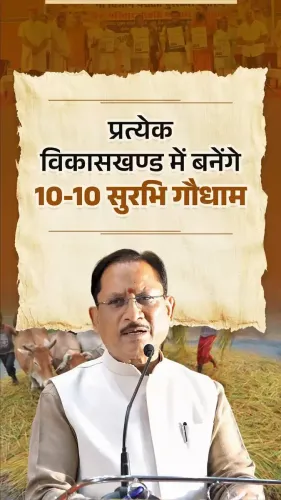
The Surabhi Gaudham scheme — Chhattisgarh's state-run cow shelter network — is being expanded to support livestock keepers.
Strengthening milk cooperative societies is central to improving collection, processing, and marketing access for dairy farmers.
The policy draws on the national Rashtriya Gokul Mission (2014) framework for indigenous cattle development.
The approach mirrors BJP-governed states such as Madhya Pradesh and Uttar Pradesh in linking gaushalas with cooperative dairy infrastructure.
Upcoming state budget allocations for animal husbandry will signal the financial weight behind these commitments.
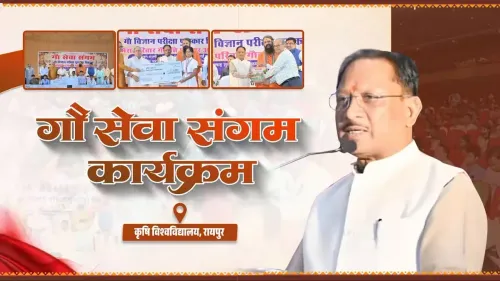
Chhattisgarh Chief Minister Vishnu Deo Sai on Sunday, 26 July 2026, outlined his government's commitment to strengthening the rural economy through cattle conservation, dairy sector development, and milk cooperative expansion, stating that creating new income avenues for livestock keepers and farmers remains a top priority.
Context
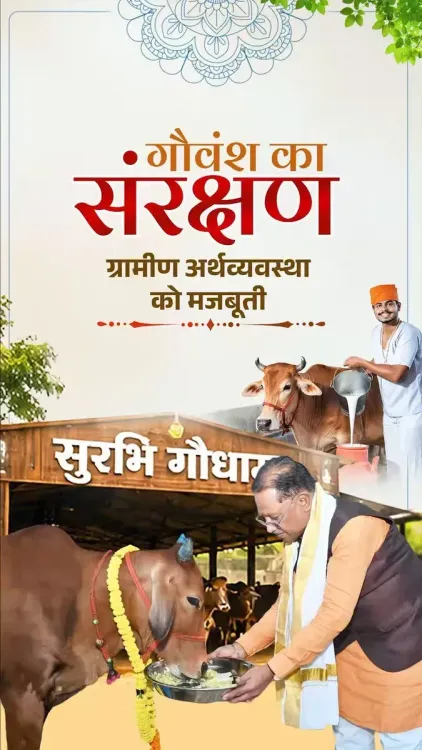
In the post, CM Sai stated — 'Gau-vansh sanrakshan evam samvardhan ke saath gramin arthavyavastha ko sashakt banana' ('Empowering the rural economy alongside cattle conservation and development') — framing animal husbandry not merely as a welfare measure but as a driver of sustainable farmer income. He specifically cited the expansion of Surabhi Gaudhams (state-run cow shelters), strengthening of the dairy sector, and consolidation of milk cooperative societies as the three pillars of this approach.
The Chief Minister added that the goal is to make animal husbandry a 'labhakar aajivika ka sashakt madhyam' ('a powerful medium of profitable livelihood'), laying the foundation for a self-reliant rural economy and a Viksit Chhattisgarh (Developed Chhattisgarh).
Policy Backdrop
The Surabhi Gaudham scheme is a Chhattisgarh state initiative for establishing and expanding cow shelters to support livestock protection and rural livelihoods. At the national level, the Rashtriya Gokul Mission, launched in 2014, provides the overarching framework for conserving indigenous bovine breeds and enhancing dairy productivity across states, with Chhattisgarh drawing on its provisions.
The dairy cooperative model itself has deep roots in India's Operation Flood, initiated in 1970, which built the national network of milk producers' societies. CM Sai's emphasis on strengthening such cooperatives in Chhattisgarh follows a well-established playbook that state governments have adapted for local conditions.
Across BJP-governed states such as Madhya Pradesh and Uttar Pradesh, similar linkages between gaushala networks and dairy cooperative infrastructure have been deployed as part of broader rural self-reliance strategies, and Chhattisgarh is aligning itself with that pattern.
Stakeholders and Impact
The primary beneficiaries of these measures are Chhattisgarh's dairy farmers, small and marginal cultivators, and pashupalaks (livestock keepers) — a large constituency in the state's predominantly agrarian districts. Milk cooperative societies, when strengthened, improve collection, processing, and marketing access for producers who otherwise depend on informal and often exploitative supply chains.
Cattle conservation through Surabhi Gaudhams also addresses the issue of stray cattle, which has been a source of crop damage and farmer distress in rural Chhattisgarh. By channelling these animals into productive shelter-based dairy units, the government aims to convert a liability into an income source for local communities.
What's Next
Attention will now turn to the rollout of new Surabhi Gaudham units across Chhattisgarh districts and the pace of dairy cooperative capacity-building at the grassroots level. State budget allocations for the animal husbandry department in upcoming fiscal cycles will be a key indicator of how seriously these commitments are backed by financial resources.
If the government succeeds in scaling both the shelter network and cooperative infrastructure simultaneously, Chhattisgarh could emerge as a model for integrating cattle welfare policy with measurable rural income growth — a template other BJP-ruled states may look to replicate.
Point of View
Lending the message a dual ideological and developmental appeal. The emphasis on milk cooperatives signals an intent to institutionalise gains rather than rely on ad-hoc shelter schemes alone. This fits into a wider BJP-governed-state pattern of treating animal husbandry as a second income stream for farmers, complementing crop-based agriculture. The real test will be whether budget outlays and on-ground cooperative capacity keep pace with the political rhetoric.
NationPress
26 Jul 2026
Frequently Asked Questions
What is the Surabhi Gaudham scheme in Chhattisgarh?
The Surabhi Gaudham scheme is a Chhattisgarh state initiative to establish and expand government-supported cow shelters that protect cattle and generate dairy-linked livelihoods for local communities.
What did Chhattisgarh CM Vishnu Deo Sai say about farmers on 26 July 2026?
CM Vishnu Deo Sai said his government's priority is to empower the rural economy through cattle conservation, dairy sector strengthening, and milk cooperative expansion to create new income opportunities for farmers and livestock keepers.
How does the Rashtriya Gokul Mission relate to Chhattisgarh's dairy policy?
The Rashtriya Gokul Mission, launched by the central government in 2014 for indigenous cattle conservation and dairy productivity, provides the national framework that Chhattisgarh's state-level schemes such as Surabhi Gaudhams draw upon.
How do milk cooperatives help dairy farmers in Chhattisgarh?
Milk cooperative societies improve access to collection, processing, and marketing channels for small dairy farmers and pashupalaks, reducing dependence on informal middlemen and helping ensure fairer returns.
Which other BJP states have similar cattle and dairy cooperative policies?
Madhya Pradesh and Uttar Pradesh have implemented comparable frameworks linking gaushala networks with dairy cooperative infrastructure as part of rural self-reliance strategies under BJP-led governments.