Bangladesh measles outbreak death toll hits 820 as four more children die
Synopsis
Bangladesh's measles crisis shows no sign of abating: 820 people — mostly children — have now died, over 1.23 lakh suspected cases have been recorded, and experts warn that a 40-lakh gap in vaccination coverage made this outcome 'inevitable'. Despite a government-declared vaccination push, unvaccinated patients keep arriving at hospitals daily.
Key Takeaways
Bangladesh's measles death toll reached 820 as of 26 July , with 725 suspected and 95 laboratory-confirmed fatalities.
Four children died in the 24 hours until 8 am on 26 July ; an average of nearly four children die every day .
Total suspected cases stand at 1,23,753 ; confirmed infections at 15,442 .
Over 1,06,239 patients have been hospitalised since 15 March ; more than 800 admissions occur daily.
Health experts say a vaccination gap of nearly 40 lakh children is the primary driver of the sustained outbreak.
Mahmudur Rahman of the National Verification Committee warned that the situation has not improved 'as much as expected' two months after the vaccination campaign.
Bangladesh's worsening measles outbreak claimed four more lives in the 24 hours until 8 am local time on Sunday, 26 July, pushing the cumulative toll of confirmed and suspected measles-related fatalities to 820, according to local media reports. The country's public health system is under severe strain as cases and hospitalisations continue at alarming rates.
Latest Figures
The four newest deaths have been classified as suspected measles fatalities by the Directorate General of Health Services (DGHS). With this update, the total number of suspected measles deaths has risen to 725, while laboratory-confirmed measles deaths remain unchanged at 95.
During the same period, 990 new suspected measles cases were reported, bringing the national total of suspected cases to 1,23,753. An additional 170 laboratory-confirmed infections were recorded, taking confirmed cases to 15,442.
Scale of Hospitalisation
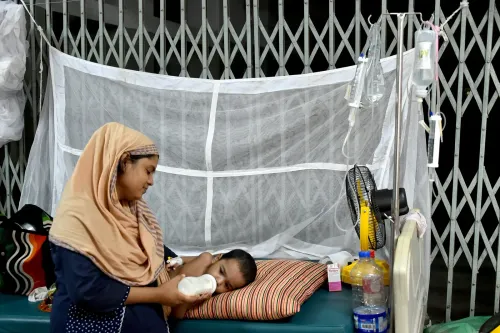
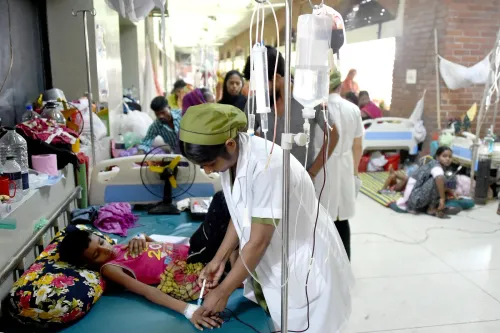
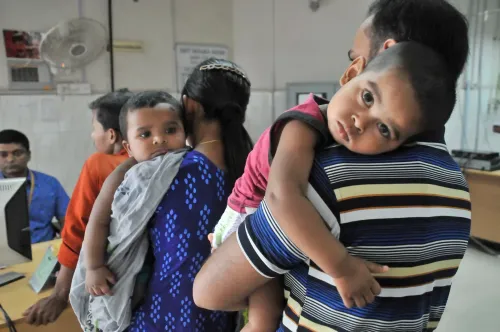
A total of 1,06,239 patients with suspected measles have been admitted to hospitals across Bangladesh since 15 March, according to DGHS data. Of these, 1,02,467 have recovered. However, the outbreak's pace has not meaningfully slowed — more than 800 people continue to be hospitalised daily, and an average of nearly four children die every day.
The first three weeks of July saw the DGHS record an average of 1,005 suspected and confirmed cases, 821 hospital admissions, and close to four deaths per day — figures that indicate no significant deceleration despite a government-led vaccination drive.
Experts Warn of Vaccination Gaps
Mahmudur Rahman, chair of the National Verification Committee for Measles and Rubella Elimination, was quoted by Dhaka-based newspaper The Daily Star as saying: 'The situation has improved, but not as much as expected two months after the vaccination campaign — the authorities do not appear to realise that.'
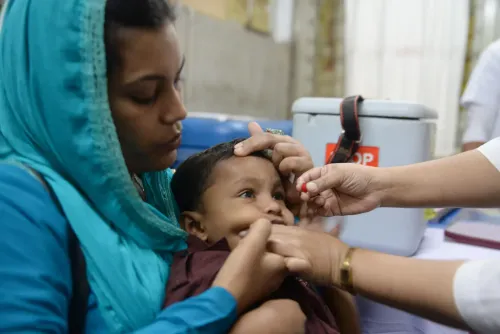
Health experts attribute the outbreak's persistence to vaccination gaps affecting nearly 40 lakh children, infections spreading among children outside the campaign's target age group, and weak infection prevention and control measures in healthcare settings.
Be-Nazir Ahmed, a health expert and former director of disease control at the DGHS, described the 40-lakh gap between the measles-rubella and Vitamin A campaigns as 'astonishing', warning it indicated a 'significantly low vaccination target'. He added: 'If the target itself was inaccurate, this outcome was inevitable.'
Government Response Under Scrutiny
Despite official claims that the government exceeded its emergency measles vaccination target, hospitals reportedly continue to receive an influx of unvaccinated patients — exposing what experts say are deep shortcomings in coverage. Ahmed noted that inadequate planning and limited public outreach meant many families remained unaware of the revised vaccination schedule.
This comes amid concerns that both government response and public attention appear to have weakened even as the outbreak remains severe. With tens of thousands of susceptible children still unvaccinated, health authorities face mounting pressure to close the immunisation gap before the crisis deepens further.
Point of View
Exceeding it means little. Four children dying every day, two months into a declared response, is not a success metric. What is missing from the official narrative is accountability for how the target was set, why public outreach failed, and whether infection control in hospitals — a known amplifier of measles transmission — has actually improved. The numbers are not a plateau; they are a slow-motion continuation of the same crisis.
NationPress
25 Oct 2026
Frequently Asked Questions
What is the current measles death toll in Bangladesh?
As of 26 July, the total number of confirmed and suspected measles-related deaths in Bangladesh has reached 820, comprising 95 laboratory-confirmed deaths and 725 suspected fatalities, according to the Directorate General of Health Services.
How many measles cases have been reported in Bangladesh?
Bangladesh has recorded 1,23,753 suspected measles cases and 15,442 laboratory-confirmed infections. More than 1,06,239 patients have been hospitalised since 15 March, of whom 1,02,467 have recovered.
Why has the Bangladesh measles outbreak not been controlled?
Health experts point to a vaccination coverage gap affecting nearly 40 lakh children, infections spreading among age groups outside the campaign's target, and weak infection prevention in healthcare settings. Inadequate planning and poor public outreach also left many families unaware of the revised vaccination schedule.
What did health experts say about the government's vaccination campaign?
Mahmudur Rahman, chair of the National Verification Committee for Measles and Rubella Elimination, said the situation had 'not improved as much as expected' two months after the campaign. Be-Nazir Ahmed, former DGHS director of disease control, called the 40-lakh coverage gap 'astonishing' and said an inaccurate target made the poor outcome 'inevitable'.
How many children are dying daily from measles in Bangladesh?
According to reports, an average of nearly four children die every day from measles in Bangladesh, while more than 800 people are hospitalised daily. The rate remained consistent through the first three weeks of July 2025.