Bangladesh measles outbreak: Death toll hits 677 as seven more children die
Synopsis
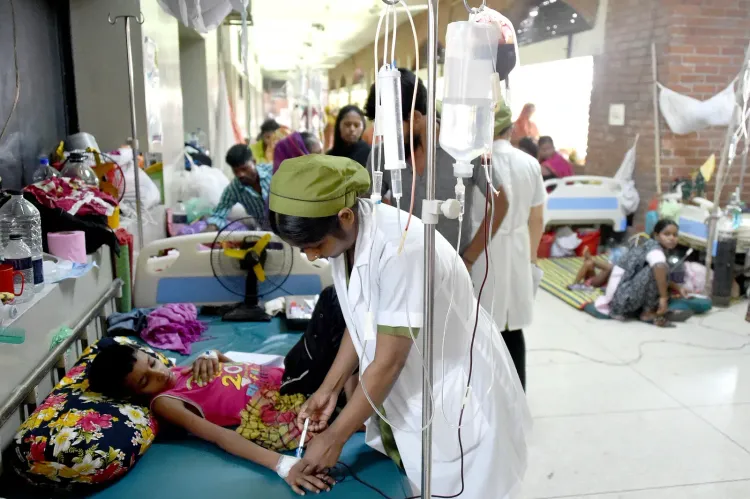
Bangladesh's measles crisis has now claimed at least 677 lives since mid-March, with seven more children dying in a single 24-hour window. Despite a vaccination drive covering 1.84 crore children, cases have crossed one lakh — and experts warn the approaching dengue season could make a dire situation dramatically worse.
Key Takeaways
Seven more children died from measles in Bangladesh on 20 June 2025 , raising the total death toll to 677 since 15 March 2025 .
Confirmed deaths stand at 93 ; suspected deaths have climbed to 584 , according to the DGHS .
Total suspected measles cases have crossed 91,789 ; confirmed cases reached 10,949 .
A vaccination drive covering 1.84 crore children a month ago has not halted transmission; experts cite coverage gaps below the 95% threshold .
Former PM Sheikh Hasina blamed the Muhammad Yunus -led interim government and the current BNP administration for disrupting the vaccination programme.
Health experts warn the onset of dengue season could severely worsen outcomes for measles-infected children.
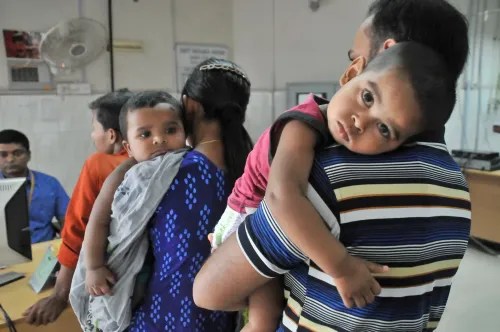
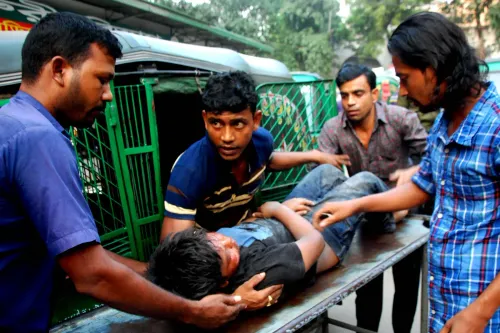
At least seven more children have died from the ongoing measles outbreak in Bangladesh on Saturday, 20 June, pushing the cumulative total of confirmed and suspected deaths to 677 since 15 March 2025, according to the country's Directorate General of Health Services (DGHS). The fatalities, recorded in the 24 hours leading up to Saturday morning, have been classified as suspected deaths, bringing the suspected death count to 584 while confirmed deaths remain at 93.
Scale of the Outbreak
The DGHS recorded 807 suspected measles cases in the latest 24-hour reporting window, lifting the overall suspected case tally to 91,789. A further 80 confirmed cases were logged in the same period, taking total confirmed cases to 10,949. Cumulatively, both confirmed and suspected cases have now crossed the one lakh mark, signalling the severity of the health emergency gripping the country.
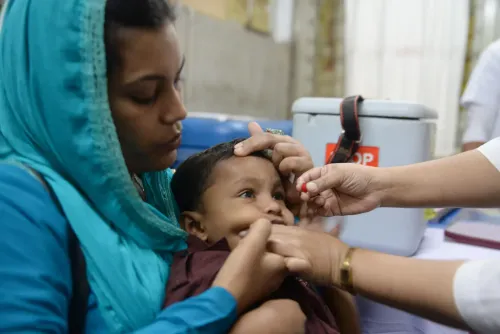
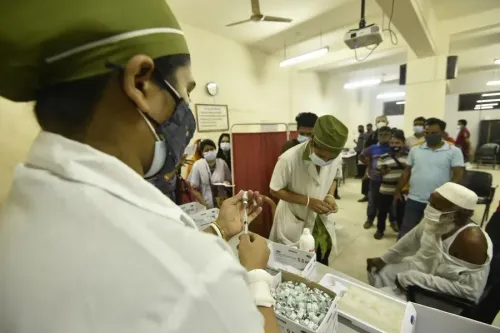
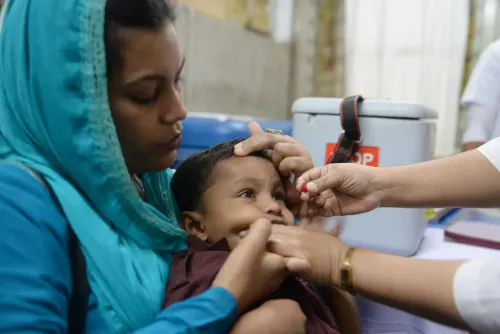
The outbreak has spread across 61 districts of Bangladesh, according to statements attributed to former Prime Minister Sheikh Hasina. Health authorities have been grappling with the crisis even as a vaccination drive conducted roughly a month ago reached 1.84 crore children — a figure that, experts note, has not been sufficient to curb transmission.
Why the Outbreak Is Not Slowing
Public health expert Mushtuq Husain identified two primary reasons for the failure to bring case numbers down: vaccination coverage has not reached the critical 95 percent threshold in all areas, and adherence to infection prevention and control measures in hospitals and communities remains inadequate, according to Bangladesh's The Daily Star.
Health experts have also warned that the imminent dengue season could compound the crisis, placing children already weakened by measles infection at significantly higher risk of severe complications. This intersection of two infectious disease burdens — measles and dengue — represents a particular concern for paediatric health services that are already under strain.
Political Blame and the Vaccination Programme Row
The outbreak has ignited a sharp political dispute. Former Prime Minister Sheikh Hasina this week issued a statement — posted on the Awami League's official account on social media platform X — squarely blaming the Muhammad Yunus-led interim government for disrupting the country's vaccination programme while attempting to introduce a new vaccine procurement system.
Hasina further alleged that the current Bangladesh Nationalist Party (BNP) government's 'incompetence and negligence' had allowed the disease to escalate into an epidemic. In her statement, she said: 'Out of ill intentions and personal interests, the illegitimate interim government disrupted the vaccination program while attempting to introduce a new system for vaccine procurement. And due to the incompetence and negligence of the current government, this disease has spread into an epidemic.'
She added: 'At present, nearly hundreds of thousands of children in 61 districts of the country are affected by this disease. According to official figures, more than six hundred children have died, although the actual number is much higher. The line of deaths is getting longer every day. This is not an accident; this is an administrative crime.'
What Happens Next
With cases continuing to rise despite an active vaccination drive, health authorities face mounting pressure to address coverage gaps at the district level and strengthen infection control protocols in healthcare facilities. The convergence of the measles crisis with the approaching dengue season makes the coming weeks a critical window for Bangladesh's public health response. International health bodies have not yet issued a formal emergency declaration, but the trajectory of the outbreak — nearly 677 deaths in just over three months — warrants close monitoring.
Point of View
But it risks distracting from the operational failures that matter most right now: cold-chain integrity, last-mile delivery, and hospital infection control. With dengue season approaching, Bangladesh does not have the luxury of a slow institutional response.
NationPress
19 Sept 2026
Frequently Asked Questions
What is the current death toll from the Bangladesh measles outbreak?
As of 20 June 2025, the total number of confirmed and suspected measles deaths in Bangladesh stands at 677 since the outbreak began on 15 March 2025. Of these, 93 are confirmed deaths and 584 are classified as suspected.
How many measles cases have been reported in Bangladesh?
The Directorate General of Health Services (DGHS) has recorded 10,949 confirmed measles cases and 91,789 suspected cases in Bangladesh, with both figures continuing to rise daily.
Why is the measles outbreak in Bangladesh not coming under control?
Public health expert Mushtuq Husain has cited two key reasons: vaccination coverage has not reached the critical 95% threshold in all areas, and infection prevention and control measures in hospitals and communities remain inadequate. A vaccination drive covering 1.84 crore children was conducted about a month ago but has not been sufficient to halt transmission.
What did Sheikh Hasina say about the measles outbreak?
Former Prime Minister Sheikh Hasina, in a statement posted on the Awami League's X account, blamed the Muhammad Yunus-led interim government for disrupting Bangladesh's vaccination programme while pursuing a new procurement system, and accused the current BNP administration of incompetence and negligence in allowing the disease to reach epidemic scale.
What additional health risk do measles-infected children in Bangladesh face?
Health experts warn that the approaching dengue season poses a serious compounding risk, as children already infected with measles are at significantly higher risk of severe complications if they also contract dengue. This dual disease burden could further overwhelm Bangladesh's paediatric health infrastructure.