CM Sai Initiates Uniform Prayer System in Chhattisgarh Schools
Synopsis
Chhattisgarh Chief Minister Vishnu Deo Sai announced plans for a uniform prayer system in state schools on 16 June 2026. The move aligns with NEP 2020 goals and mirrors similar steps taken by other BJP-governed states, with implementation details yet to be officially released.
Key Takeaways
Chief Minister Vishnu Deo Sai announced a uniform prayer system for Chhattisgarh schools on 16 June 2026 .
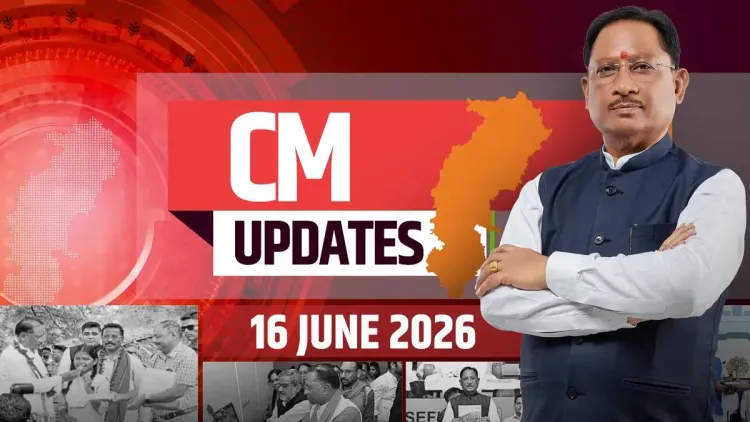
The initiative was shared as part of broader 'CM Updates' covering multiple governance actions.
The policy aligns with the National Education Policy 2020 's emphasis on value-based and culturally rooted education.
Similar uniform prayer or assembly formats have been introduced in Madhya Pradesh and Uttar Pradesh under BJP governments.
Exact wording, content, and implementation timeline of the prayer have not yet been officially disclosed.
Teachers' associations and parent bodies are expected to be key stakeholders as rollout details emerge.
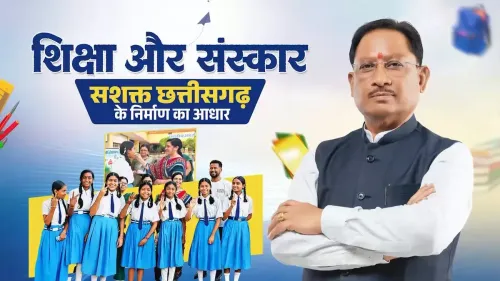
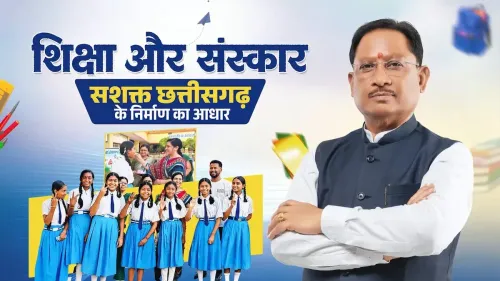
Chhattisgarh Chief Minister Vishnu Deo Sai announced on Tuesday, 16 June 2026 that the state government is moving to introduce a uniform prayer system across all schools, alongside other significant administrative updates. The announcement was made via a post on X, framing the prayer standardisation as a key initiative among several ongoing governance actions.
Context
The post, titled 'CM Updates' (CM अपडेट्स), highlighted the initiative of a 'vidyalayon mein ek samaan prarthana vyavastha' — a uniform prayer arrangement in schools — as a headline development. The move signals the Chhattisgarh government's intent to standardise the morning assembly experience across government and aided schools in the state. No specific wording or implementation date for the prayer has been officially disclosed yet.
Chief Minister Sai, who assumed office in December 2023 following the BJP's victory in the state assembly elections, has been progressively aligning state education policy with the broader framework set by the central government. Standardising school routines has been an area of stated interest since the new administration took charge.
Policy Backdrop
The initiative draws from the spirit of the National Education Policy 2020, which calls for holistic, value-based education and culturally rooted practices in schools, including structured morning assemblies. Several BJP-governed states have moved in a similar direction since 2014, with Madhya Pradesh and Uttar Pradesh among those that have introduced or revised uniform morning prayer and assembly formats in government schools.
These efforts are typically framed by state governments as measures to promote national integration, discipline, and value education. They have, however, also periodically prompted debate over the appropriate balance between cultural content and the secular character mandated for government institutions.
Stakeholders and Impact
The primary stakeholders are the estimated millions of students enrolled in government and government-aided schools across Chhattisgarh, along with teachers and school administrators who will be responsible for implementation. Teachers' associations and parent bodies are expected to be key voices as the rollout details emerge.
The broader education community will watch closely to assess whether the prescribed prayer content draws from a single religious tradition or adopts a composite, multi-faith or nationally integrative format — a distinction that has historically shaped public reception of such policies in other states.
What's Next
The state education department is expected to issue detailed guidelines specifying the content, format, and timeline for rolling out the uniform prayer system. Responses from teachers' unions, parent associations, and civil society groups are likely to shape the pace and form of implementation.
As the Chhattisgarh government moves forward, the policy will serve as a marker of how the state balances value-education goals under NEP 2020 with the diversity of its school-going population and constitutional obligations.
Point of View
Often building on NEP 2020 as policy cover. For Chief Minister Sai, still consolidating his administration's identity after the December 2023 election win, such moves serve both governance and political signalling purposes. The critical variable — whether the prescribed prayer is composite and secular or draws from a single tradition — will determine whether the policy passes without friction or triggers the kind of debate seen in peer states. Stakeholder responses, particularly from teachers' bodies, will be an early indicator of implementation feasibility.
NationPress
16 Sept 2026
Frequently Asked Questions
What is the uniform prayer system announced for Chhattisgarh schools?
Chief Minister Vishnu Deo Sai announced on 16 June 2026 that Chhattisgarh will introduce a standardised prayer arrangement across all schools. The exact content and wording of the prayer have not yet been officially released.
Why is Chhattisgarh introducing a uniform prayer in schools?
The initiative is framed as part of value-based and holistic education goals aligned with the National Education Policy 2020, which encourages structured morning assemblies and cultural rootedness in schools.
Which other states have introduced uniform school prayers?
Madhya Pradesh and Uttar Pradesh, both BJP-governed states, have previously introduced or revised uniform morning prayer and assembly formats in government schools, often citing national integration and value education.
Does a uniform school prayer conflict with India's secular principles?
The constitutional requirement that government schools maintain a secular character means the content of any prescribed prayer is subject to scrutiny. Policies in other states have prompted debate on this question, and the Chhattisgarh initiative is likely to face similar examination once details are released.
When will the uniform prayer be implemented in Chhattisgarh schools?
No official implementation date has been announced as of 16 June 2026. Detailed guidelines from the state education department are expected to follow the initial announcement.