CM Sai Launches Uniform Prayer Module in Chhattisgarh Schools
Synopsis
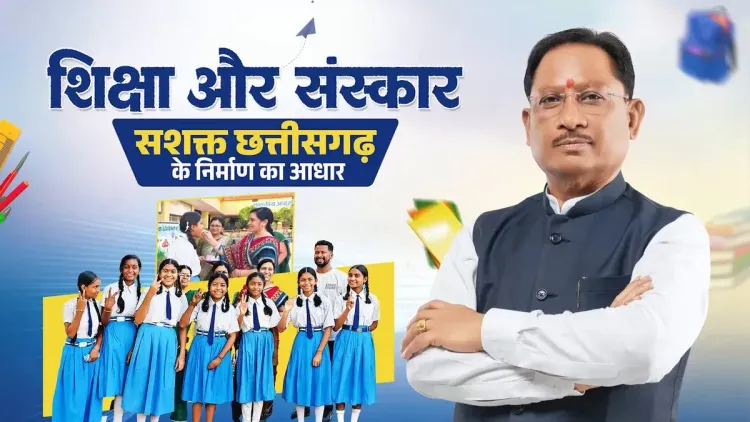
Chhattisgarh CM Vishnu Deo Sai announced a uniform prayer module across all state schools during Shala Praveshotsav 2026, integrating Sanskrit shlokas and moral values to connect students with Indian cultural roots while aligning with NEP 2020 directives on value education.
Key Takeaways
CM Vishnu Deo Sai announced a uniform prayer system across all Chhattisgarh government schools on June 16, 2026 .
The rollout was timed with the annual Shala Praveshotsav school enrollment festival marking the start of the academic session.
The new prayer module incorporates inspirational Sanskrit shlokas and moral values alongside conventional prayers.
The initiative aligns with National Education Policy 2020 directives on integrating Indian knowledge systems into school programmes.
Core academic curricula remain unchanged; the module affects daily morning assembly routines.
District-level rollout reports and state education department circulars are awaited to assess implementation uniformity.
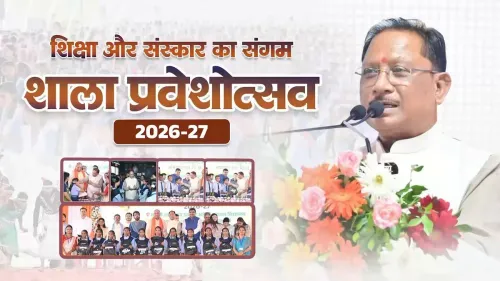
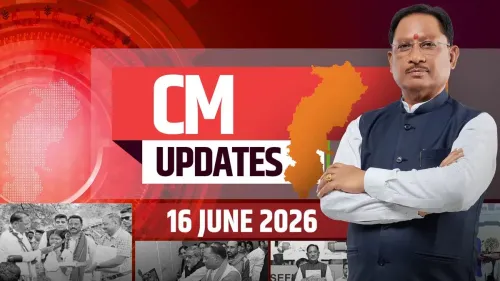
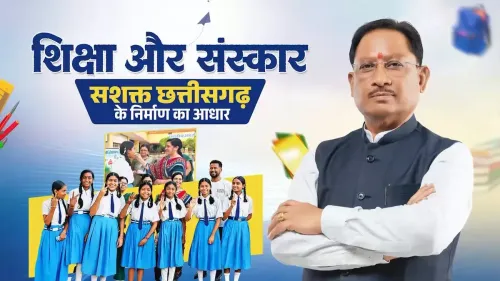
Chhattisgarh Chief Minister Vishnu Deo Sai on Tuesday, June 16, 2026, announced that a uniform prayer system has been introduced across all government schools in the state, coinciding with the annual Shala Praveshotsav (school enrollment festival). The new prayer module integrates inspirational Sanskrit verses and moral values aimed at connecting students with Indian cultural traditions.
Posting on X, CM Sai framed the initiative under the vision of a 'Viksit Chhattisgarh' (Developed Chhattisgarh), writing: 'जड़ों से जुड़ी सोच, भविष्य की ओर बढ़ते कदम' — 'Thinking rooted in our origins, steps advancing toward the future.' He stated that through the new prayer module, students are being connected to their culture, tradition, and Indian life values alongside modern education.
Context
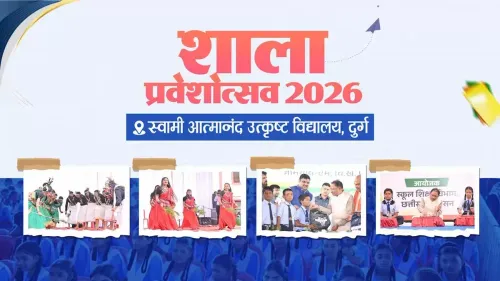
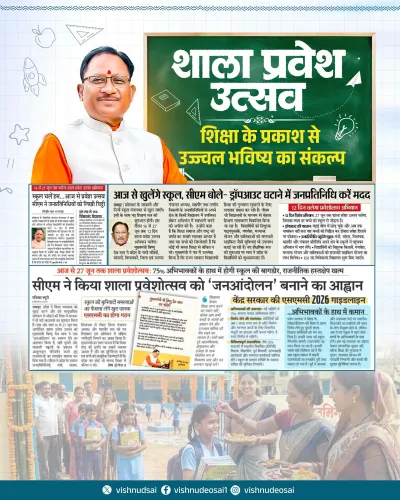
The Shala Praveshotsav is an annual school enrollment drive held at the start of each academic session across Chhattisgarh. State authorities use the event to launch education-sector initiatives, making it a symbolic moment for policy rollouts. This year, the uniform prayer module was introduced simultaneously across all state schools as part of the festival.
CM Sai declared the government's intent: 'We are building a generation that is equipped with modern education while also being deeply connected to its cultural roots.' The announcement signals a deliberate effort to embed cultural identity into the daily school routine without altering core academic curricula.
Policy Backdrop
The move draws from the National Education Policy (NEP) 2020, which directed states to integrate Indian knowledge systems, moral values, and cultural elements into school programmes. Chhattisgarh, under the BJP government led by CM Sai since December 2023, has positioned itself as an active implementer of NEP 2020 provisions at the grassroots level.
Several BJP-governed states have introduced similar value-education components since 2020, reflecting a broader national pattern of aligning state school practices with NEP's emphasis on cultural and ethical grounding. The prayer module — incorporating Sanskrit shlokas and moral instruction — fits within this framework without mandating changes to subject-level syllabi.
Stakeholders and Impact
The primary stakeholders are school students and teachers across Chhattisgarh's government school network. Students will encounter the new prayer format as part of their daily routine from the start of the 2026-27 academic session. Teachers will be responsible for conducting the revised morning assembly, which now includes structured recitation of inspirational verses alongside conventional prayers.
The initiative is designed to reinforce cultural familiarity at an early age, with the state government arguing that cultural grounding complements, rather than competes with, academic achievement. The impact on enrollment figures and classroom engagement will become clearer as district-level rollout reports emerge.
What's Next
Attention will now turn to the Chhattisgarh state education department's circulars detailing the exact content of the prayer module and any associated teacher-training programmes. District-level implementation reports will indicate how uniformly the new system has been adopted across urban and rural schools. The initiative may also serve as a reference point for other states evaluating similar cultural-integration measures under NEP 2020.
Point of View
One that has been gaining legislative and administrative traction across party-governed states since NEP 2020 provided a policy framework for it. By anchoring the launch to Shala Praveshotsav, CM Sai links a values-based intervention to a high-visibility enrollment drive, maximising symbolic reach at the start of the academic year. The move reflects a calculated effort to embed cultural identity into institutional routine at the earliest stage of formal education. Whether the initiative translates into measurable outcomes — or becomes a flashpoint for debate over the separation of cultural instruction and secular schooling — will depend heavily on how the module's content is received at the classroom level.
NationPress
15 Sept 2026
Frequently Asked Questions
What is the new prayer module introduced in Chhattisgarh schools?
The new prayer module is a uniform daily prayer system introduced across all Chhattisgarh government schools, incorporating Sanskrit shlokas, inspirational verses, and moral values to connect students with Indian cultural traditions.
What is Shala Praveshotsav in Chhattisgarh?
Shala Praveshotsav is an annual school enrollment festival held at the start of the academic session in Chhattisgarh, used by the state government to launch education initiatives and encourage student enrollment.
How does this relate to the National Education Policy 2020?
NEP 2020 directed states to integrate Indian knowledge systems and cultural values into school programmes. The Chhattisgarh prayer module is a state-level implementation of that directive.
Will the core school curriculum change under this initiative?
No. The uniform prayer module affects only the daily morning assembly routine. Core academic syllabi and subject curricula remain unchanged.
Who is Vishnu Deo Sai?
Vishnu Deo Sai is a BJP leader who has served as Chief Minister of Chhattisgarh since December 2023.