CM Sai Holds Joint Review of Five Districts Under Sushasan Tihar
Synopsis
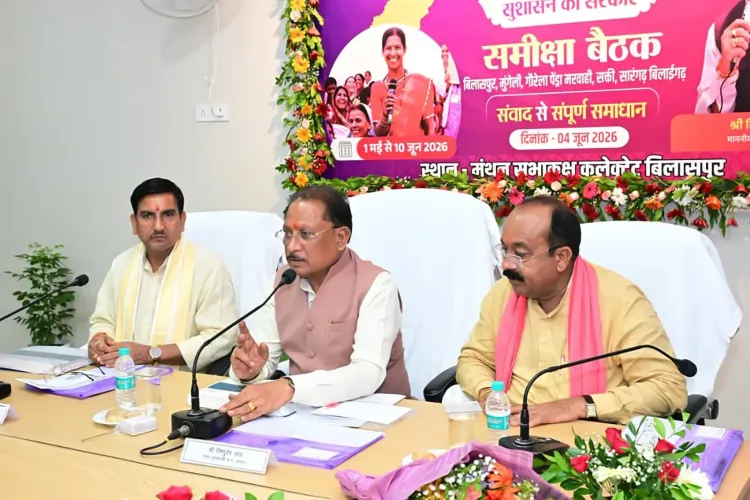
Chief Minister Vishnu Deo Sai chaired a joint review of five Chhattisgarh districts under Sushasan Tihar on 5 June 2026, covering development works, revenue cases, drinking water, health services and Kharif season readiness, and directed officials to prioritise accountability and time-bound delivery for all eligible beneficiaries.
Key Takeaways
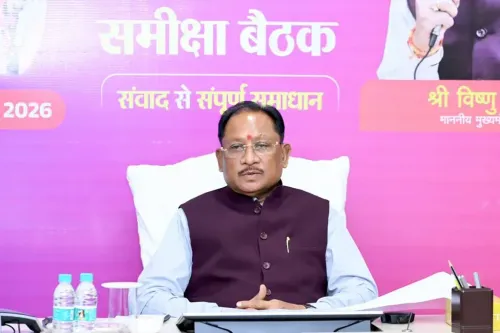
CM Vishnu Deo Sai held a joint review meeting of officials from Bilaspur, Mungeli, Gaurela-Pendra-Marwahi, Sakti and Sarangarh-Bilaigarh districts on 5 June 2026 .
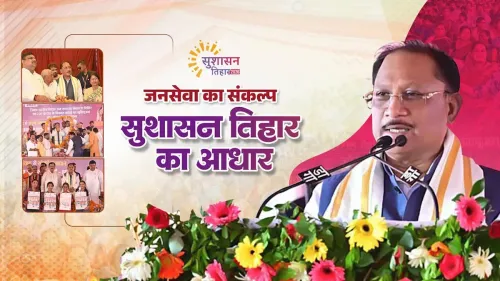
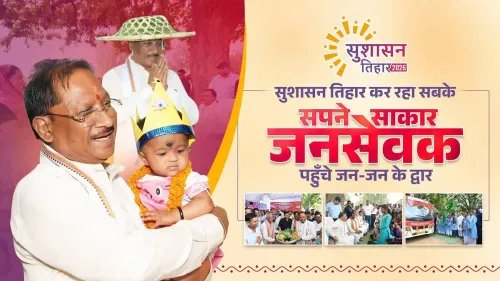
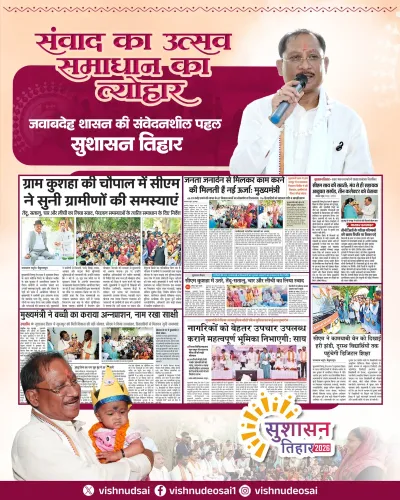
The meeting was conducted under Sushasan Tihar , Chhattisgarh's structured governance campaign launched after the BJP government took office in December 2023 .
The review covered development works progress, revenue case disposal, drinking water and health service availability, and Kharif season preparations.
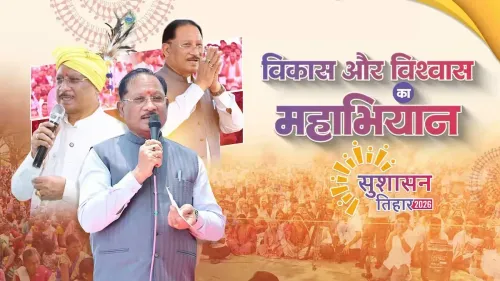
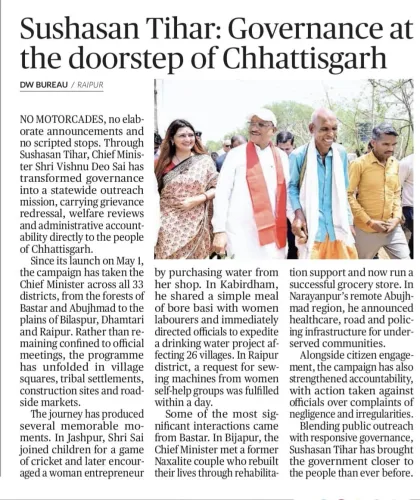
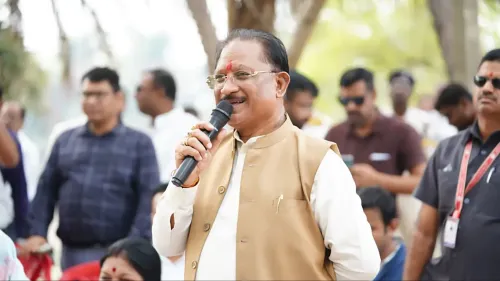
CM Sai described Sushasan Tihar as a medium to strengthen trust between the government and citizens, with its impact now visible at the village level.
Officials were directed to ensure sensitivity, accountability and time-bound action, with every eligible beneficiary receiving scheme benefits without inconvenience.
The Chief Minister's Office of Chhattisgarh announced on Friday, 5 June 2026 that Chief Minister Vishnu Deo Sai chaired a joint review meeting of officials from Bilaspur, Mungeli, Gaurela-Pendra-Marwahi, Sakti and Sarangarh-Bilaigarh districts under the state's ongoing Sushasan Tihar governance campaign, assessing development progress, revenue case disposal, drinking water and health services, and preparations for the upcoming Kharif agricultural season.
Context
The meeting was convened under Sushasan Tihar — literally 'good governance festival' — a structured statewide campaign through which the Chhattisgarh government conducts periodic district-level reviews to monitor the last-mile delivery of government schemes. CM Sai used the occasion to reinforce the campaign's purpose, stating that 'Sushasan Tihar kewal ek abhiyan nahin' ('Sushasan Tihar is not merely a campaign') but a means to strengthen trust between the government and the public. He noted that its positive impact is now visible across villages and among the people.
The five districts covered — Bilaspur, Mungeli, Gaurela-Pendra-Marwahi, Sakti and Sarangarh-Bilaigarh — span central and northern Chhattisgarh, a belt where access to public services and agricultural support directly shapes rural livelihoods. Bilaspur is the administrative and revenue hub of the region.
Policy Backdrop
Following the BJP government's formation in December 2023 after the state assembly elections, Chhattisgarh introduced structured administrative review mechanisms aimed at improving scheme delivery and accountability across its districts. Sushasan Tihar is a product of that post-election governance architecture, designed to create a direct feedback loop between field administration and the Chief Minister's office.
The agenda of the 5 June meeting — covering development works, revenue dispute resolution, drinking water, health infrastructure and Kharif season readiness — reflects the campaign's multi-sectoral approach. Revenue case disposal and access to potable water are perennial pressure points in Chhattisgarh's rural districts, while pre-Kharif reviews are critical to ensuring timely availability of seeds, fertilisers and irrigation support for farmers.
Stakeholders and Impact
The primary beneficiaries of the review's directives are residents of the five districts, particularly farmers preparing for the Kharif sowing season and rural households dependent on government-supplied drinking water and public health services. District officials were directed by CM Sai to treat sensitivity, accountability and time-bound action as the highest priorities in matters of public interest.
The Chief Minister specifically instructed that every eligible beneficiary must receive the benefits of government schemes and that the administration bears responsibility for ensuring no citizen faces inconvenience. This directive targets mid-level and field-level officials who are the operational link between policy and delivery. Similar CM-led joint district reviews have been used in several other Indian states as a tool to compress administrative delays and surface ground-level implementation gaps.
What's Next
The immediate focus will be on whether district administrations in the five reviewed districts translate the directives into measurable outcomes before the Kharif season peaks during the monsoon months. Progress on pending revenue cases and improvements in drinking water and health service coverage will serve as early indicators of the review's effectiveness.
The Chhattisgarh CMO is expected to issue follow-up assessments as Sushasan Tihar continues across other districts. The pattern of structured, CM-chaired multi-district reviews signals that the BJP government intends to use the campaign as a sustained accountability mechanism rather than a one-time exercise, with governance delivery outcomes likely to feature in the administration's political messaging ahead of future electoral cycles.
Point of View
Recurring accountability instrument rather than a symbolic gesture — a pattern that reflects the BJP's post-2023 effort to demonstrate administrative competence in a state it recaptured after a Congress tenure. By personally chairing multi-district reviews, CM Sai signals top-down pressure on the bureaucracy while simultaneously generating a public-facing governance narrative. The pre-Kharif timing of this particular review is politically astute: agricultural distress in central and northern Chhattisgarh has historically shaped electoral outcomes, and visible state attention to sowing-season readiness carries both administrative and political weight. Whether the directives translate into measurable service improvements will determine whether Sushasan Tihar becomes a durable governance brand or remains a campaign-cycle exercise.
NationPress
21 Oct 2026
Frequently Asked Questions
What is Sushasan Tihar in Chhattisgarh?
Sushasan Tihar is a statewide governance campaign run by the Chhattisgarh government involving periodic CM-chaired district review meetings to monitor scheme delivery, resolve revenue cases and improve public services. It was introduced after the BJP government took office in December 2023.
Which districts were reviewed under Sushasan Tihar on 5 June 2026?
The five districts reviewed were Bilaspur, Mungeli, Gaurela-Pendra-Marwahi, Sakti and Sarangarh-Bilaigarh, all located in central and northern Chhattisgarh.
What was discussed in CM Vishnu Deo Sai's district review meeting?
The meeting covered progress on development works, disposal of pending revenue cases, availability of drinking water and health services, and preparations for the upcoming Kharif agricultural season.
What did CM Sai instruct officials during the Sushasan Tihar review?
CM Sai directed officials to treat sensitivity, accountability and time-bound action as top priorities, and to ensure that every eligible beneficiary receives scheme benefits without inconvenience.
Why is a pre-Kharif review important for Chhattisgarh districts?
Pre-Kharif reviews help ensure timely availability of seeds, fertilisers and irrigation support for farmers before the monsoon sowing season, which is critical for agricultural output and rural livelihoods in Chhattisgarh.