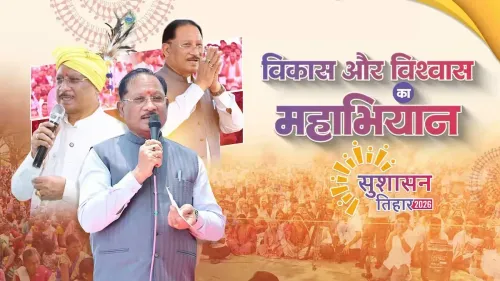
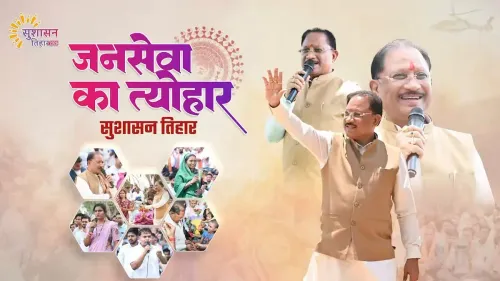
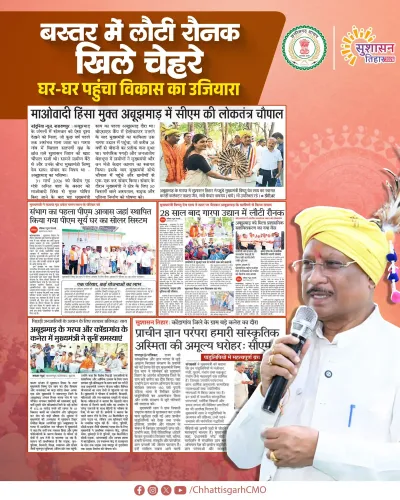
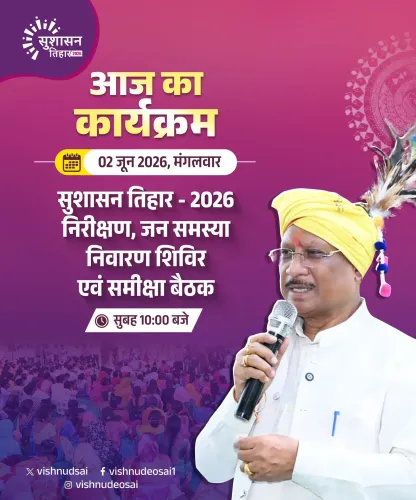
CM Sai Joins Sushasan Tihar Events in Surajpur, Koriya
Synopsis
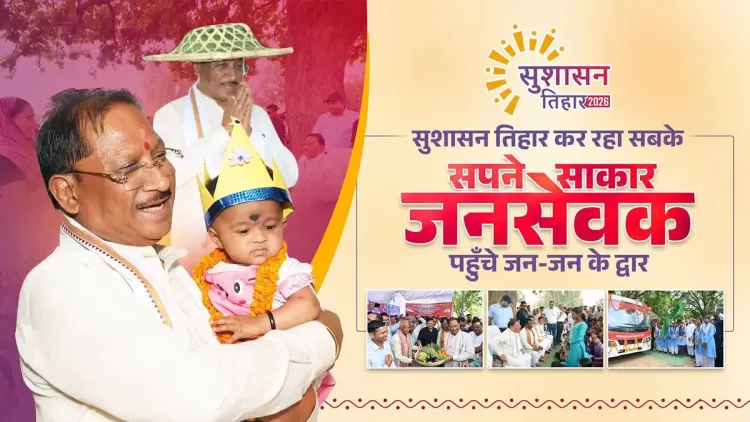
Chhattisgarh Chief Minister Vishnu Deo Sai joined Sushasan Tihar 2026 camps in Surajpur and Koriya on 22 May, meeting residents as 'family' and reaffirming his government's Antyodaya-driven governance agenda at the district level.
Key Takeaways
Chief Minister Vishnu Deo Sai participated in Sushasan Tihar 2026 events in Surajpur and Koriya districts on 22 May 2026 .
Sushasan Tihar is Chhattisgarh's periodic good-governance outreach initiative involving direct public interaction and grievance redressal at the district level.
The Chief Minister described connecting with residents 'like a member of the family' and called public satisfaction the government's 'highest priority.' The initiative explicitly invokes the Antyodaya principle — uplifting the poorest — as its guiding objective.
Surajpur and Koriya are northern Chhattisgarh districts with significant tribal and rural populations.
Further district-level phases of Sushasan Tihar 2026 are expected to follow across the state.
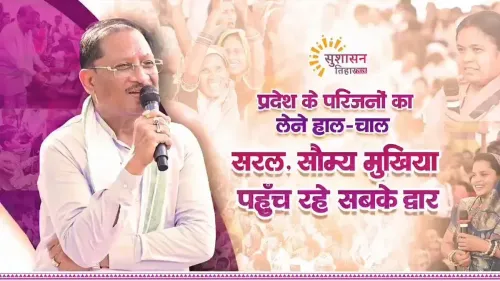
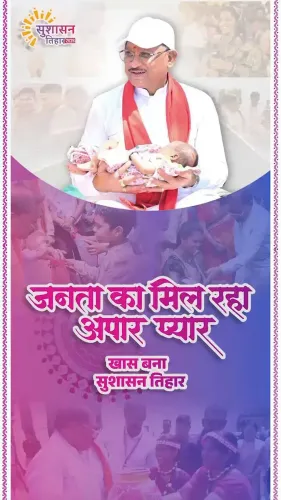
Chhattisgarh Chief Minister Vishnu Deo Sai on Friday, 22 May 2026 participated in multiple public outreach events under the Sushasan Tihar initiative in the districts of Surajpur and Koriya, describing the experience as an opportunity to connect with residents 'like a member of the family.'
Posting on X, the Chief Minister wrote: 'Sushasan Tihar ke antargat Surajpur aur Koriya mein aayojit vibhinn kaaryakramon mein sammilit hokar kshetra ke parijanon ke beech parivaar ke sadasy ki tarah unka haalchaal jaanne ka avsar mila' — ('Participating in various programmes held under Sushasan Tihar in Surajpur and Koriya, I got the opportunity to be among the people of the region and inquire about their well-being, like a member of the family.')
Context
Sushasan Tihar — translating roughly to 'Good Governance Festival' — is a periodic public grievance redressal and administrative outreach initiative run by the Chhattisgarh government. The 2026 edition, tagged #SushasanTihar2026, involves district-level camps where officials and elected representatives interact directly with citizens to hear complaints and oversee welfare delivery. Surajpur and Koriya, both located in northern Chhattisgarh, have significant tribal and rural populations who form the primary audience for such outreach drives.
Chief Minister Sai, who took office in December 2023 after the BJP's victory in the Chhattisgarh assembly elections, has consistently positioned direct public contact as a cornerstone of his administration's governance model.
Policy Backdrop
The Sushasan Tihar format draws on the BJP's long-standing emphasis on 'sushasan' (good governance) as both an administrative priority and a political message — a theme that has been central to the party's national communication since 2014. The initiative also explicitly invokes the Antyodaya principle, the ideological commitment to uplifting the poorest sections of society, which the Chief Minister cited directly in his post: 'Sushasan Tihar ke maadhyam se Antyodaya ka sankalp saakaar ho raha hai' — ('Through Sushasan Tihar, the resolve of Antyodaya is being realised.').
Similar recurring governance outreach formats have been deployed in other BJP-governed states, reflecting a broader party-wide strategy of using structured public contact programmes to strengthen administrative responsiveness and build visible proof of welfare delivery at the grassroots level.
Stakeholders and Impact
The primary beneficiaries of the Sushasan Tihar camps are rural and tribal communities across Chhattisgarh's districts, who use such events to raise local grievances directly with senior officials and the Chief Minister's office. Surajpur and Koriya districts are characterised by forest cover, mining activity, and substantial tribal populations, making direct administrative outreach particularly significant in areas where institutional access can be limited.
Chief Minister Sai framed the satisfaction visible on citizens' faces and the fulfilment of their aspirations as the 'highest priority' of his government, signalling that feedback gathered during these events is intended to feed back into policy and administrative decisions.
What's Next
Subsequent district-level phases of Sushasan Tihar 2026 are expected to continue across Chhattisgarh, with welfare announcements and grievance resolutions emerging from feedback collected at each event. The Chief Minister's framing of the initiative as 'no longer merely a medium for solving problems, but a symbol of public trust, sensitive governance, and rapid development' suggests the administration intends to expand both the reach and the narrative weight of the programme ahead of future electoral cycles.
Point of View
The administration simultaneously addresses a policy goal and reinforces a core ideological identity. The emphasis on 'public trust' and 'sensitive governance' in the Chief Minister's language suggests the programme is being calibrated not just as an administrative exercise but as a long-cycle political investment in tribal and rural constituencies. As Chhattisgarh approaches its next electoral horizon, the regularity and geographic spread of Sushasan Tihar will be a useful indicator of where the government perceives its outreach deficits.
NationPress
20 Sept 2026
Frequently Asked Questions
What is Sushasan Tihar in Chhattisgarh?
Sushasan Tihar, meaning 'Good Governance Festival,' is a periodic public outreach and grievance redressal initiative run by the Chhattisgarh government, where officials and senior leaders including the Chief Minister hold district-level camps to interact directly with citizens and address local complaints.
Where did CM Vishnu Deo Sai attend Sushasan Tihar 2026 events?
Chief Minister Vishnu Deo Sai attended Sushasan Tihar 2026 events in Surajpur and Koriya districts of northern Chhattisgarh on 22 May 2026.
What is the Antyodaya principle mentioned by CM Sai?
Antyodaya is a core BJP ideological principle focused on uplifting the poorest sections of society. Chief Minister Sai invoked it to describe Sushasan Tihar as a vehicle for realising this commitment through direct governance outreach.
When did Vishnu Deo Sai become Chief Minister of Chhattisgarh?
Vishnu Deo Sai became Chief Minister of Chhattisgarh in December 2023 following the BJP's victory in the state assembly elections.
Which districts are covered under Sushasan Tihar 2026?
The 2026 edition of Sushasan Tihar covers multiple districts across Chhattisgarh. The Chief Minister's 22 May engagements were held in Surajpur and Koriya, with further district-level phases expected to follow.