CM Vishnu Deo Sai brings Chhattisgarh's folk heritage to Bharat Mandapam
Synopsis
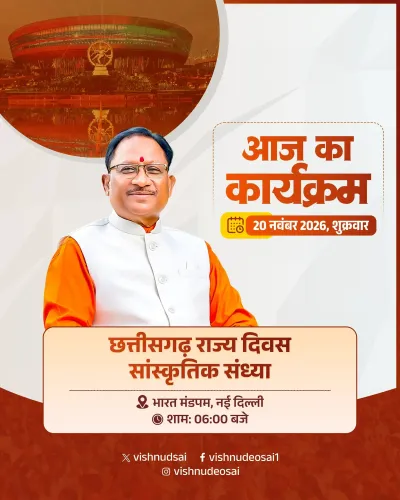
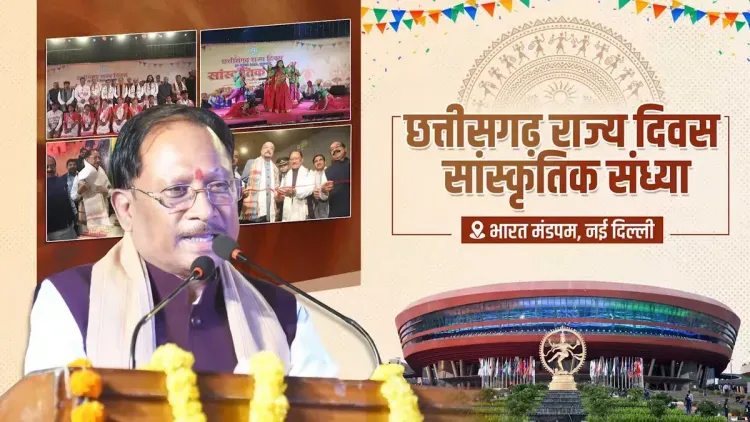
Chhattisgarh Chief Minister Vishnu Deo Sai celebrated the state's Rajya Divas with a cultural evening at New Delhi's Bharat Mandapam, showcasing folk art, age-old craft traditions, and the heritage of the state's artisan communities on 21 November 2026.
Key Takeaways
Chhattisgarh Rajya Divas - Sanskritik Sandhya was held at Bharat Mandapam, New Delhi on 21 November 2026 .
CM Vishnu Deo Sai described the event as a unique confluence of art, craft, and culture representing Chhattisgarh's rich heritage.
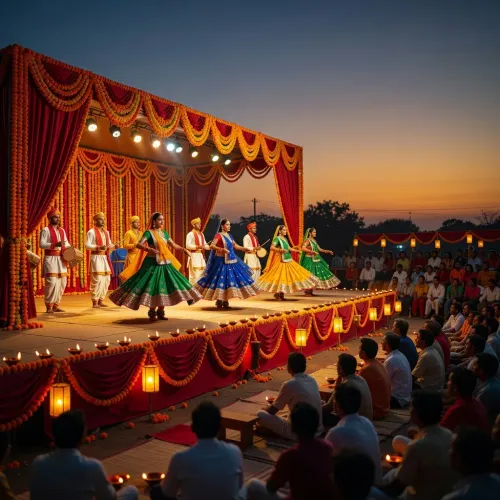
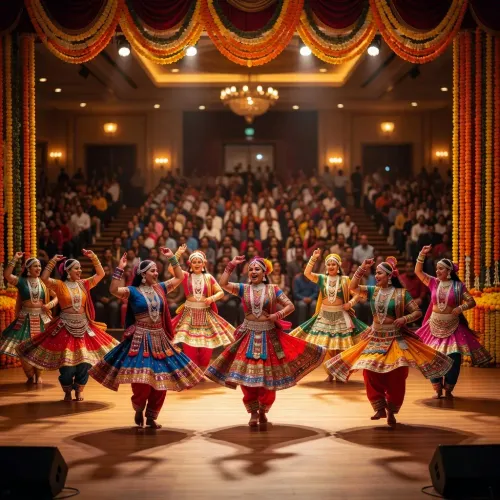
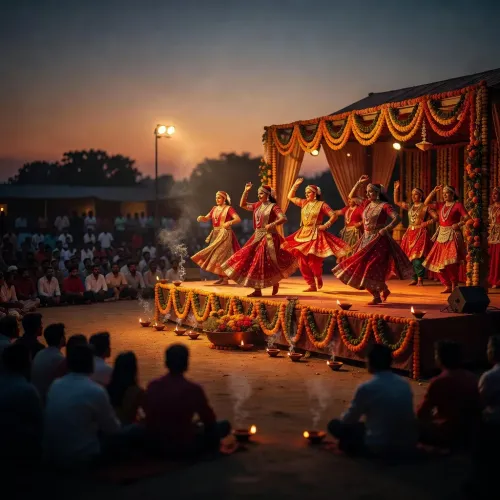
The event spotlighted Chhattisgarh's folk art, traditional performing arts, and generations-old artisan crafts .
Chhattisgarh was established as a state on 1 November 2000 , making 2026 its 26th foundation year .
CM Sai reaffirmed the government's commitment to giving the state's art and culture a new national identity alongside pursuing a prosperous and developed Chhattisgarh.
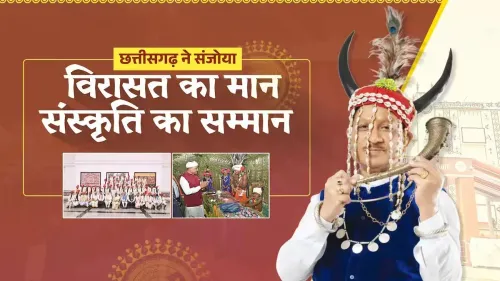
Folk art, master craftsmen, and generations of living tradition filled New Delhi's Bharat Mandapam on Saturday, 21 November 2026, as Chhattisgarh Chief Minister Vishnu Deo Sai led the state's cultural evening marking Chhattisgarh Rajya Divas — a celebration that turned one of the capital's grandest venues into a window onto Central India's rich tribal and artisan heritage.
Posting on X, CM Sai described the evening as 'kala, shilp aur sanskriti ka anootha sangam' — 'a unique confluence of art, craft and culture' — and called it a vivid showcase of the state's folk traditions and the age-old skills of its craftspeople passed down through generations. He reaffirmed the government's commitment to giving Chhattisgarh's art and culture a new national identity, even as it pursues a 'prosperous and developed Chhattisgarh.'
Twenty-six years of statehood, one capital stage
Chhattisgarh was carved out of Madhya Pradesh on 1 November 2000, making 2026 the state's 26th foundation year. The annual Rajya Divas has grown into a moment for Chhattisgarh to project its identity beyond its borders — and few stages carry more symbolic weight than Bharat Mandapam, the sprawling convention complex in Pragati Maidan, New Delhi, that has hosted G20 summits and national conclaves.
Choosing that venue signals an ambition: tribal Bastar art, Godna body-painting traditions, Panthi dance, and the lacquerware of generations-old artisan families deserve a national audience, not just a local fair. The event put Chhattisgarh's cultural economy — anchored in its artisan communities — directly in front of a Delhi crowd.
Artisans at the centre of a heritage push
Indian states routinely use Delhi cultural evenings as diplomatic soft power within the federal system — a way to build legislative goodwill, attract investment interest, and remind policymakers of a state's distinct identity. For CM Sai, who took office in December 2023, the event is also a signal about governance priorities: that cultural preservation sits alongside mineral-belt development in his vision for the state.
Chhattisgarh's artisan communities — weavers, iron-craft workers, Dhokra metal casters, and tribal painters — have long been a pillar of its rural economy. Giving them a national platform at Bharat Mandapam is a statement of intent, even if the specific artisan-support policies that might follow are yet to be announced.
The state's folk canvas is as wide as its geography: from the dense forests of Bastar in the south to the plains of Surguja in the north, every district carries its own craft lineage. A cultural evening in the capital cannot capture all of it — but it can start the conversation.
The question now is whether the spotlight at Bharat Mandapam translates into structural support — artisan welfare schemes, GI-tag pushes, export linkages — that lets these craftspeople sustain their craft well into the next generation.
Point of View
Foregrounding tribal art and artisan heritage is a rebranding exercise with long-term electoral and investment implications. The move also fits a broader BJP pattern of using cultural nationalism as a governance frame, though the real test will be whether it is followed by substantive artisan-support policies such as GI-tag expansions or rural craft-corridor funding. Until then, the event is powerful symbolism — and symbolism, deployed well, is itself a policy instrument.
NationPress
21 Nov 2026
Frequently Asked Questions
What is Chhattisgarh Rajya Divas and when is it celebrated?
Chhattisgarh Rajya Divas marks the founding of Chhattisgarh as a separate state on 1 November 2000 , when it was carved out of Madhya Pradesh. It is celebrated annually on 1 November to commemorate the state's formation.
What happened at Bharat Mandapam for Chhattisgarh's cultural evening in 2026?
A 'Chhattisgarh Rajya Divas - Sanskritik Sandhya' (cultural evening) was held at Bharat Mandapam in New Delhi on 21 November 2026 , featuring the state's folk art, performing arts traditions, and displays of artisan craftsmanship passed down through generations.
Who is Vishnu Deo Sai and what is his role?
Vishnu Deo Sai is a BJP leader who became the Chief Minister of Chhattisgarh in December 2023 . He is the first tribal Chief Minister of the state.
What is Bharat Mandapam in New Delhi?
Bharat Mandapam is a large convention and exhibition complex located at Pragati Maidan, New Delhi . It has hosted major national and international events including the G20 Summit.
What folk art forms is Chhattisgarh known for?
Chhattisgarh is known for a diverse range of tribal and folk art forms including Bastar iron craft, Dhokra metal casting, Godna body-painting, Panthi dance, and traditional weaving , with distinct craft traditions across its different regions from Bastar to Surguja.