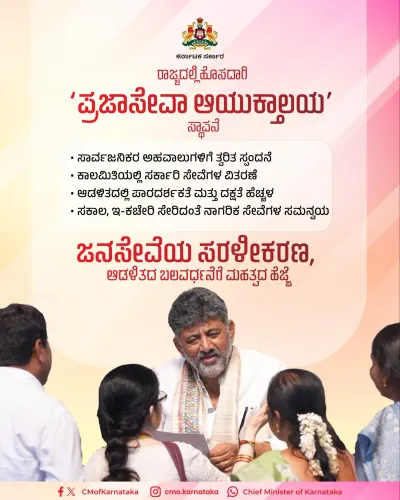
Karnataka renames all citizen centres 'Praja Seva Kendra'
Synopsis
Karnataka is merging Bangalore One, Karnataka One, and Grama One citizen-service networks under a single brand — Praja Seva Kendra — with uniform name, logo, and signage statewide to simplify service delivery for urban and rural residents alike.
Key Takeaways
The Karnataka government has renamed all citizen service centres statewide as Praja Seva Kendra , effective as of 21 November 2026 .
Bangalore One , Karnataka One , and Grama One — three previously separate networks — are all subsumed under the new unified brand.
Uniform name, emblem, colour scheme, and signage will be rolled out across every centre in both urban and rural Karnataka.
The goal is to eliminate citizen confusion about which centre to approach and to improve coordination across the service network.
The move extends Karnataka's e-governance lineage, which dates to the Bhoomi land-records digitisation project launched in 2000 .
Actual impact will be measured through changes in citizen footfall, grievance volumes, and speed of service delivery post-rollout.
Three separate names, three separate identities, three separate sets of signage — and a citizen in rural Karnataka never quite sure which counter to walk into. The Chief Minister's Office of Karnataka announced on Saturday, 21 November 2026 that the state government is unifying every public service touchpoint under a single brand: Praja Seva Kendra, or 'People's Service Centre.'
Bangalore One, Karnataka One, Grama One — all become one
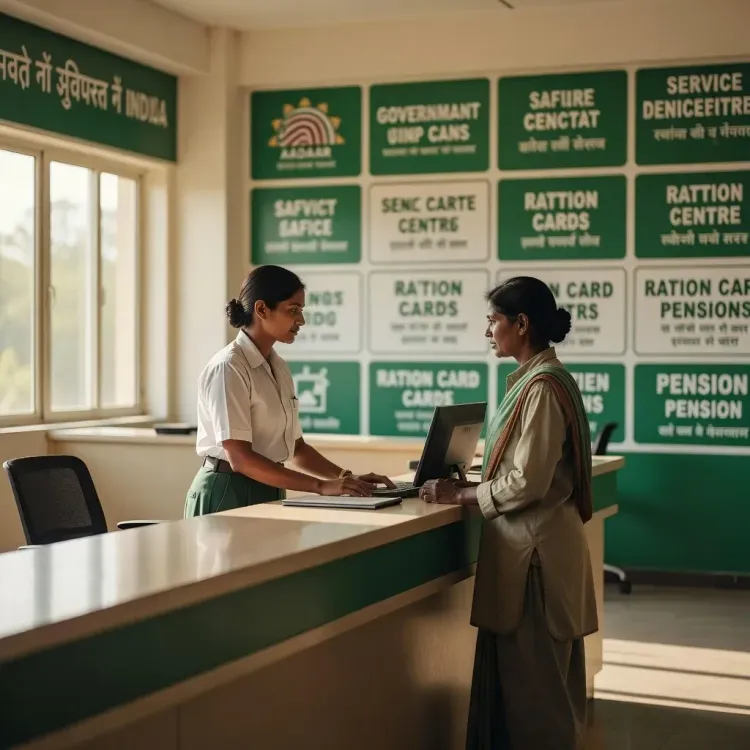
The rebranding consolidates three distinct citizen-service networks that had grown up separately over the years. Bangalore One served residents of the state capital, Karnataka One covered urban centres outside Bengaluru, and Grama One extended the reach into villages. Each carried its own colour scheme, logo, and signage — creating what the government itself called confusion among citizens trying to identify where to go for which service.
Under the new order, all three networks are renamed Praja Seva Kendra. The CMO's post states the goal plainly: 'uniform name, emblem, colour design, and nameplates across the state' — a single visual identity that a citizen in Bengaluru's busiest ward and a farmer in a remote district village can both recognise without hesitation.
Why uniform branding is a governance decision, not just an aesthetic one
The logic runs deeper than matching signboards. When three overlapping networks operate under different names, coordination between them is harder, grievance tracking is fragmented, and citizens — especially first-timers or migrants moving between urban and rural zones — lose time simply figuring out where to go. A single brand forces a single accountability chain.
Karnataka's e-governance history stretches back to 2000, when the state launched Bhoomi, one of India's first large-scale computerised land-records systems. The Praja Seva Kendra consolidation is a logical next chapter: having digitised records, the state now standardises the front-door through which citizens access them. The CMO's post frames the move as building a 'people-centric, simple, and smooth governance system.'
What changes on the ground — and what to watch next
The immediate visible change is signage and branding across all centres in both urban and rural areas. The government's stated aim is to eliminate any distinction in service delivery between city and village — meaning a certificate, a utility payment, or a welfare application should feel identical whether processed at a Praja Seva Kendra in Bengaluru or in a taluk headquarters in northern Karnataka.
The real test, however, lies in rollout speed and consistency: how quickly remaining centres are rebranded, whether the unified identity is backed by standardised service menus, and whether citizen footfall or grievance volumes shift once the confusion of multiple names is removed. Those numbers, when they arrive, will tell the fuller story of whether a name change translates into a service change.
Karnataka has set a clear governance direction — the question now is whether the signboard outside matches the experience within.
Point of View
Karnataka is betting that brand clarity will force operational clarity. It fits a pattern visible across Indian states where the second wave of e-governance reform moves from digitising back-end records — as Karnataka did with Bhoomi in 2000 — to standardising citizen-facing touchpoints. The political upside for the ruling dispensation is tangible: a single recognisable brand is easier to campaign on and easier for citizens to credit. The harder question is whether the unification is accompanied by genuine convergence of service menus and grievance mechanisms, or remains a signage exercise that leaves the underlying fragmentation intact.
NationPress
21 Nov 2026
Frequently Asked Questions
What is Praja Seva Kendra in Karnataka?
Praja Seva Kendra is the new unified name for all citizen service centres in Karnataka, replacing the earlier Bangalore One, Karnataka One, and Grama One brands to create a single, consistent identity statewide.
What happens to Bangalore One and Karnataka One centres?
Both Bangalore One and Karnataka One centres have been renamed Praja Seva Kendra. They continue to operate at the same locations but will carry new uniform signage, logos, and colour schemes under the consolidated brand.
What is Grama One and is it still running?
Grama One was a network of government service centres in rural Karnataka. It has now been renamed Praja Seva Kendra as part of the statewide rebranding, and continues to serve villagers under the new unified name.
Why did Karnataka rename its citizen service centres?
The government cited confusion among citizens navigating three different branded networks, and the need for uniform service delivery, simplified identification, and better coordination between urban and rural centres.
What services are available at Praja Seva Kendra?
Praja Seva Kendra centres offer a range of government services previously available at Bangalore One, Karnataka One, and Grama One outlets, including certificates, utility payments, and welfare scheme applications, in both urban and rural areas.