CM Karnataka: 3 Years of Nava Karnataka Built on Gram Swaraj
Synopsis
The Chief Minister's Office of Karnataka has marked three years of the Nava Karnataka government, citing rural road upgrades, universal household drinking water, pensions for transgender persons and former devadasis, and B-Khata to A-Khata conversion in Bengaluru as milestones toward Gandhi's Gram Swaraj ideal.
Key Takeaways
The Karnataka government has completed three years in office, marking the milestone under the Nava Karnataka brand.
The CMO invokes Mahatma Gandhi , Jawaharlal Nehru , and Rajiv Gandhi to frame rural development as a foundational national commitment.
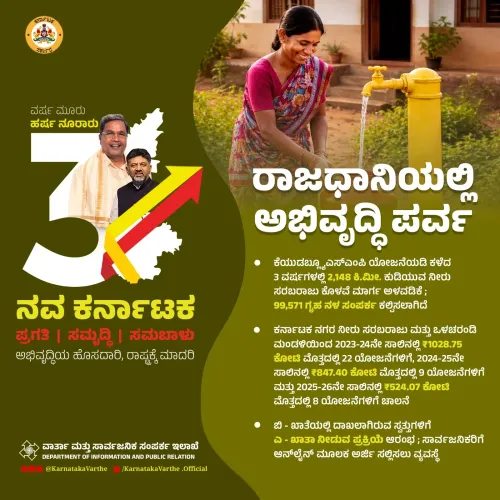
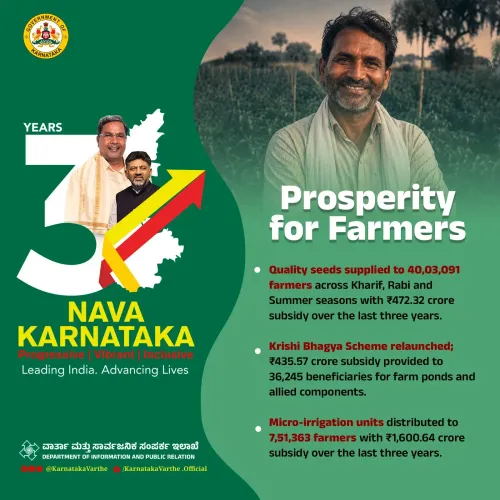
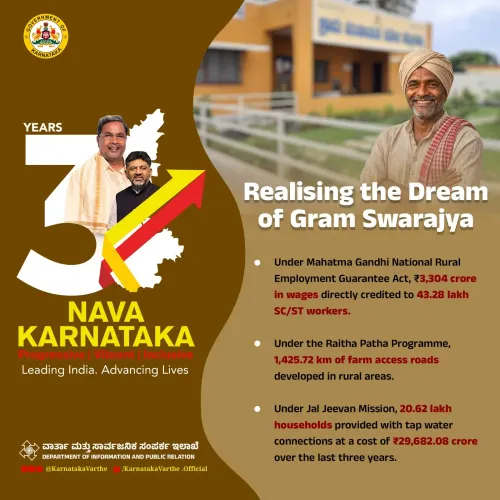
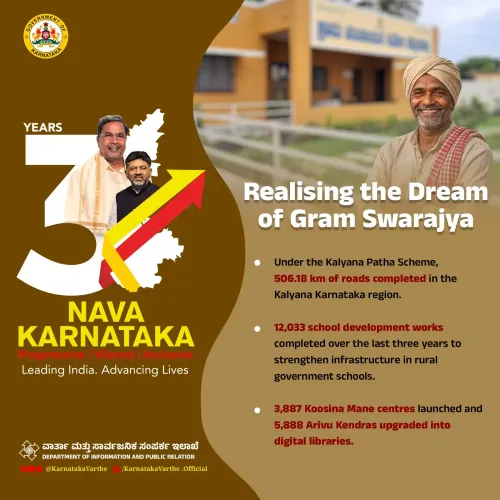
The government claims every road from rural lanes to state highways has been upgraded and drinking water provided to every household.
Monthly pensions have been extended to transgender persons and former devadasis to support self-reliant livelihoods.
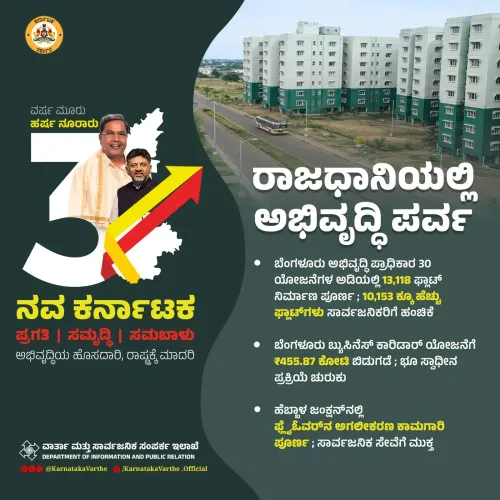
B-Khata to A-Khata conversion in Bengaluru removes barriers to property sale and formal credit access for urban residents.
Attention now shifts to 2026-27 budget allocations and possible expansion of the A-Khata drive to other municipal corporations.
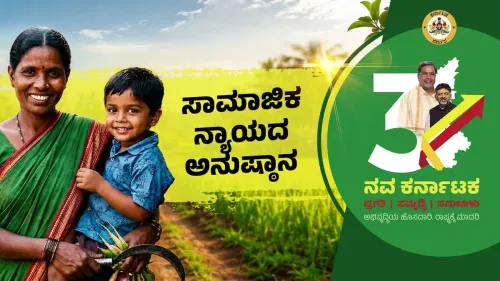
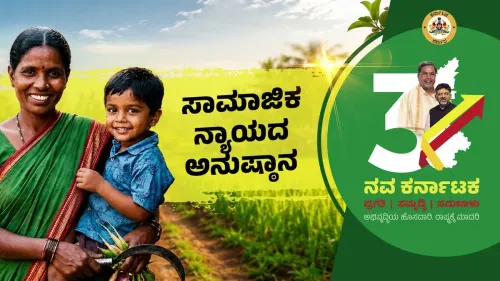
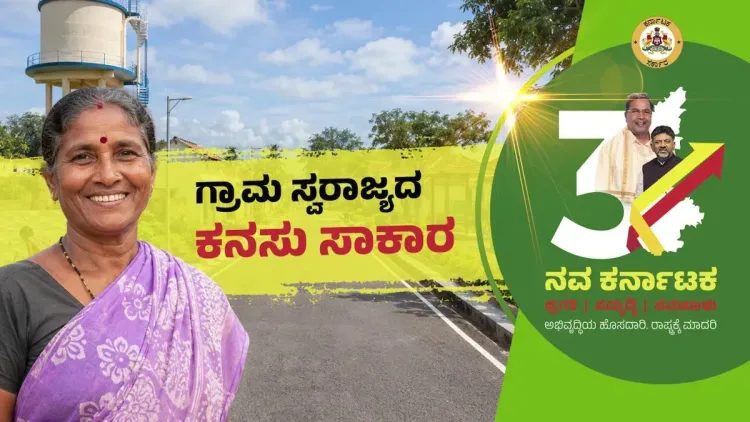
The Chief Minister's Office of Karnataka, on Tuesday, 26 May 2026, posted a sweeping account of the state government's rural and urban development milestones over the past three years, framing its record as a fulfilment of the Gandhian ideal of Gram Swaraj — village self-rule.
The post, written in Kannada under the hashtag #3YearsOfNavaKarnataka, opens with the declaration: 'Bharata gramgala desha' — 'India is a nation of villages' — and invokes Mahatma Gandhi, Jawaharlal Nehru, and Rajiv Gandhi as leaders who believed national progress was impossible without rural development. The government says Karnataka has taken 'giant strides' toward making Gandhi's Gram Swaraj dream a reality over the last three years.
Context
The post marks the third anniversary of the Congress government's tenure in Karnataka, branded as the Nava Karnataka (New Karnataka) era. The ruling dispensation has consistently used this framing to distinguish its welfare and infrastructure agenda since taking office in 2023. The invocation of Gandhi, Nehru, and Rajiv Gandhi places the government's work within the broader Congress ideological lineage of village-centric development. The 73rd Constitutional Amendment of 1992, championed during the Rajiv Gandhi era, devolved significant powers to panchayats and remains the legal backbone of Gram Swaraj in India. Karnataka's current government is positioning its three-year record as a continuation and deepening of that constitutional commitment.Policy Backdrop
The CMO's post outlines several distinct intervention areas. On infrastructure, it states that every road in Karnataka — from rural lanes to state highways — has been upgraded. On water, the government claims drinking water connectivity to every household. These claims echo the long-standing national framework of rural road and water programmes that Karnataka has participated in since the early 2000s. On social welfare, the government highlights monthly pensions for transgender persons and former devadasis, describing the support as enabling 'self-reliant lives.' Pension schemes for marginalised groups have been incrementally expanded by Karnataka governments across party lines since the 1990s, but the current administration is emphasising their extension to these specific communities. A significant urban measure cited is the conversion of B-Khata properties to A-Khata status in Bengaluru. B-Khata holders — typically residents of layouts not fully approved by the Bruhat Bengaluru Mahanagara Palike — have historically been unable to sell property or access formal bank loans. The regularisation drive removes that barrier, bringing thousands of urban-poor homeowners into the formal property economy.Stakeholders and Impact
The beneficiaries named or implied in the post span a wide demographic: rural households dependent on roads and drinking water, transgender persons and former devadasis receiving pensions, and Bengaluru's B-Khata property owners. Southern states have increasingly combined rural infrastructure investment with targeted social pensions and urban property regularisation — a pattern Karnataka appears to be following and amplifying. For the urban poor in Bengaluru, A-Khata status is transformative: it unlocks access to home loans, enables legal property transactions, and brings residents under the formal municipal services net. For marginalised communities receiving pensions, the monthly support represents a degree of economic security that was previously unavailable or inconsistent.What's Next
With the #3YearsOfNavaKarnataka milestone now publicly marked, attention will turn to the state's budget allocations for 2026-27 and whether the A-Khata regularisation drive will be extended to other municipal corporations beyond Bengaluru. The government's ability to sustain and scale these programmes — particularly rural water connectivity and social pensions — will be the practical test of the Nava Karnataka narrative heading into the second half of its term.Point of View
Water, pensions — to the moral authority of Gandhi and Nehru, giving Congress-era ideology a programmatic face. The B-Khata to A-Khata move is particularly significant: urban property regularisation addresses a long-festering grievance in Bengaluru and has the potential to generate visible, middle-income political goodwill ahead of the next electoral cycle. By branding the entire package as 'Nava Karnataka,' the government is building a coherent narrative that can be deployed in campaign messaging. The durability of this narrative will depend on whether budget commitments in 2026-27 back the claims made in this anniversary post.
NationPress
11 Oct 2026
Frequently Asked Questions
What is Nava Karnataka?
Nava Karnataka, meaning 'New Karnataka,' is the brand used by the Karnataka Congress government since 2023 to describe its development and welfare agenda, encompassing rural infrastructure, social pensions, and urban property reforms.
What is B-Khata to A-Khata conversion in Bengaluru?
B-Khata refers to properties in Bengaluru that are registered with the municipal corporation but are not fully approved layouts, restricting owners from selling property or accessing bank loans. The government's conversion drive grants these properties A-Khata status, bringing them into the formal property system.
Who are the beneficiaries of Karnataka's new pension scheme?
The Karnataka government has extended monthly pensions to transgender persons and former devadasis, two historically marginalised groups, to help them build financially self-reliant lives.
What is Gram Swaraj and why is Karnataka invoking it?
Gram Swaraj, or village self-rule, is a concept championed by Mahatma Gandhi that places the village at the centre of India's development. Karnataka's CMO is invoking it to frame the government's rural infrastructure and welfare work as a fulfilment of that founding national vision.
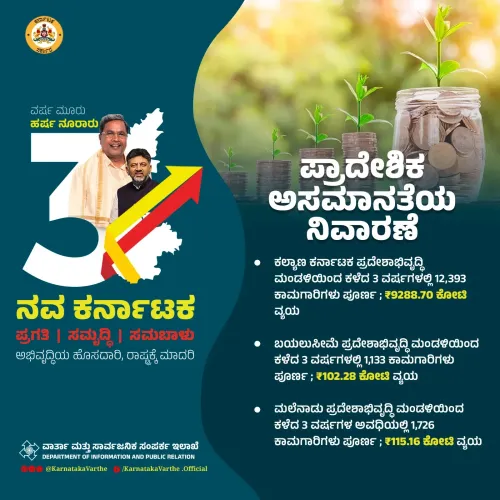
What rural development work has Karnataka done in three years?
According to the CMO's post, the Karnataka government has upgraded roads from rural lanes to state highways, ensured drinking water supply to every household, provided pensions to marginalised communities, and regularised B-Khata properties in Bengaluru over the past three years.