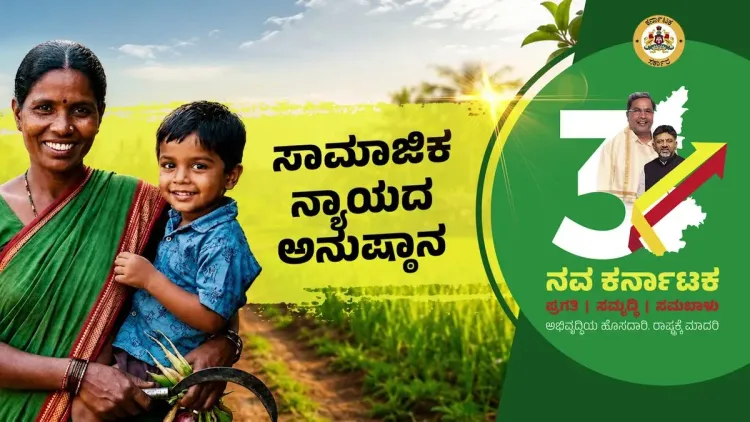
CM Karnataka marks 3 years with caste-equity welfare push
Synopsis
The Chief Minister's Office of Karnataka marked three years of Nava Karnataka on 23 May 2026, acknowledging the persistence of caste discrimination and asserting that the government's welfare laws and programmes for marginalised communities have set a national example, invoking Dr. B.R. Ambedkar's constitutional vision.
Key Takeaways
The Chief Minister's Office of Karnataka posted on 23 May 2026 to mark three years of the Nava Karnataka initiative.
The post openly acknowledges that caste discrimination remains alive in India seven decades after Independence.
The government claims it has provided education, employment, healthcare, and economic security to exploited communities in the spirit of Dr.
Ambedkar's constitutional vision.
Karnataka asserts its laws and programmes for marginalised communities have become a model for the entire nation .
The statement targets Scheduled Castes, Scheduled Tribes , and Other Backward Classes who have historically been denied access to education, power, and wealth.
The announcement coincides with growing national debate on a caste census and the future of affirmative action frameworks in India.
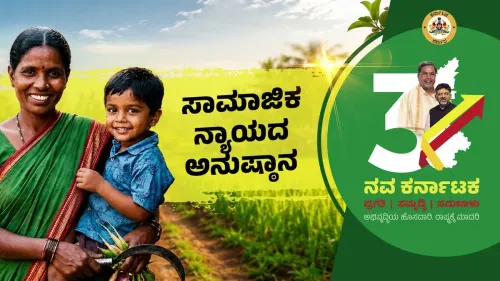
The Chief Minister's Office of Karnataka on Saturday, 23 May 2026 issued a wide-ranging statement acknowledging that caste discrimination persists in India even seven decades after Independence, and asserting that the state government has spent the past three years building welfare programmes to bring marginalised communities into the mainstream under the banner of #NavaKarnataka.
Context
The post, written in Kannada, opens with a frank admission: 'ದೇಶಕ್ಕೆ ಸ್ವಾತಂತ್ರ್ಯ ದೊರೆತು 7 ದಶಕಗಳು ಕಳೆದರೂ ನಮ್ಮ ನಡುವೆ ಇಂದಿಗೂ ಜಾತಿ ವ್ಯವಸ್ಥೆ ಜೀವಂತವಾಗಿದೆ' ('Even after 7 decades of Independence, the caste system is still alive among us — this must be acknowledged with great pain'). The statement goes on to note that a majority of the country's population has been denied access to education, power, and wealth on account of caste and religion, and that these communities continue to struggle to enter the mainstream.
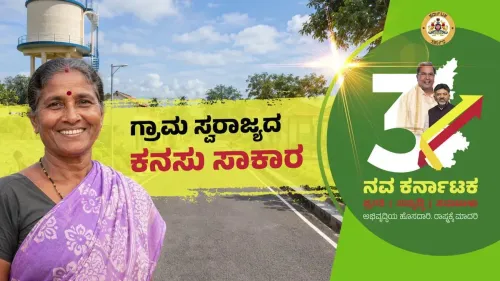
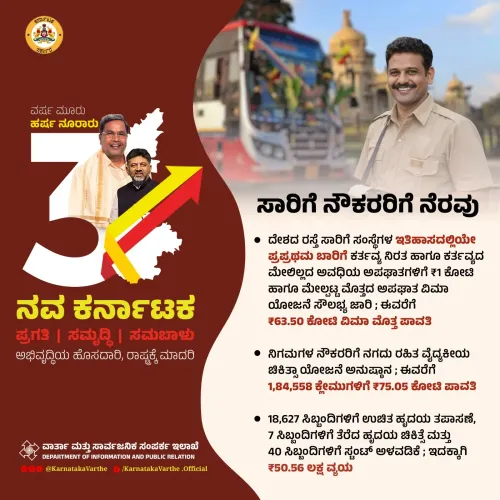
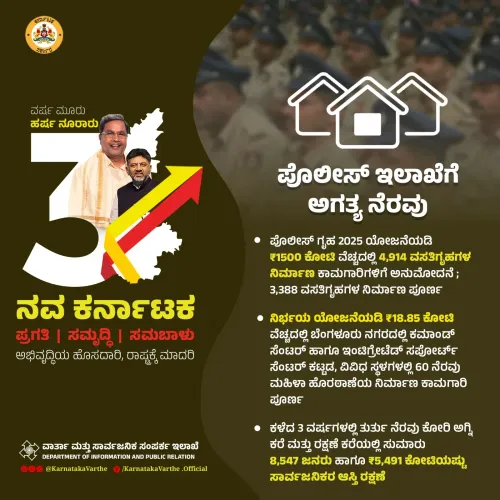
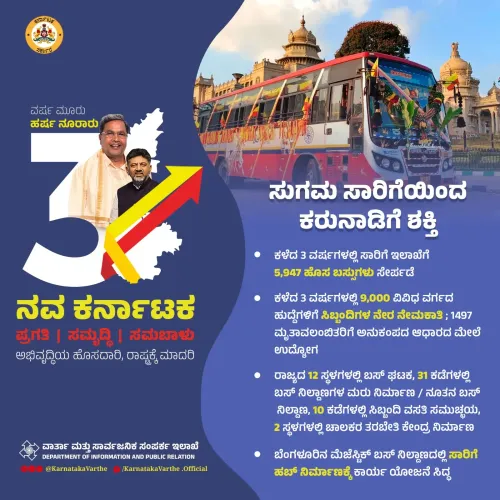
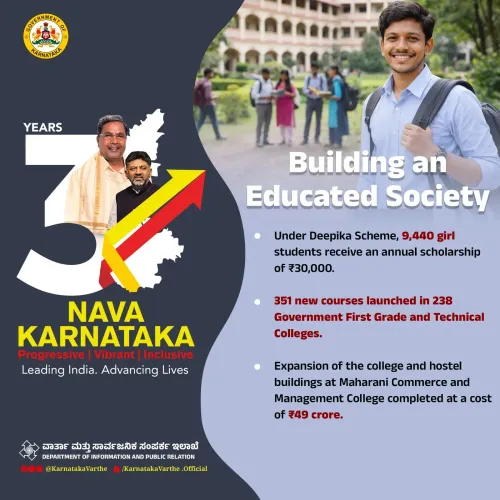
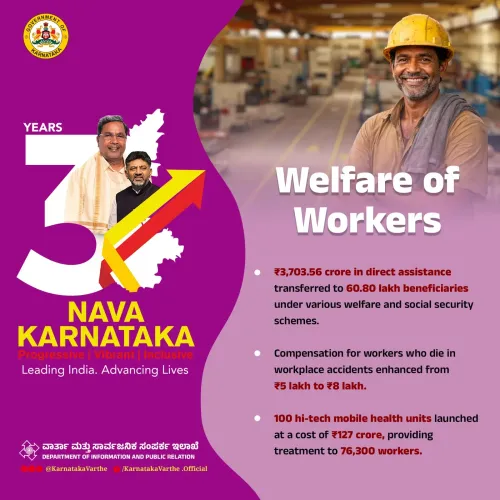
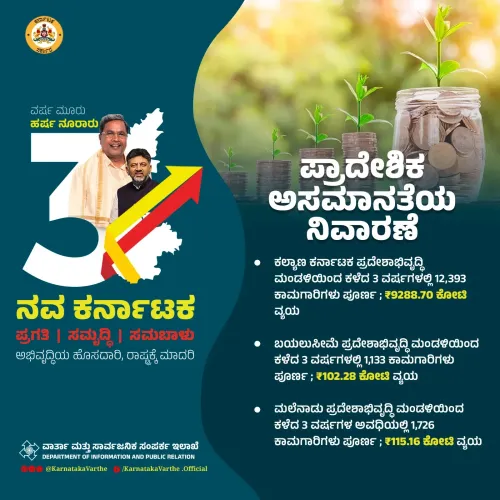
The statement was released on the occasion of the government's third anniversary, marked under the hashtag #3YearsOfNavaKarnataka. The timing signals an intent to frame the ruling dispensation's record on social justice as a defining achievement of its term.
Policy Backdrop
The post invokes Dr. B.R. Ambedkar, the principal architect of the Constitution of India (1950), who championed constitutional safeguards — including reservations in education and public employment — for Scheduled Castes, Scheduled Tribes, and other oppressed communities. The government states it has worked in the spirit of Ambedkar's vision to provide education, employment, healthcare, and social and economic security to exploited communities, enabling them to live with dignity.
Karnataka has a long history of state-level affirmative action, including backward-classes commissions dating to the 1970s and 1980s. The Mandal Commission recommendations, implemented nationally in 1990, extended reservations to Other Backward Classes, and Karnataka's own experiments with targeted welfare have at times served as reference points for broader national debates on social equity.
The Nava Karnataka initiative, launched around 2023, has been positioned by the government as an umbrella framework for inclusive development and social justice programmes spanning welfare, infrastructure, and economic opportunity for historically disadvantaged groups.
Stakeholders and Impact
The communities most directly addressed by the government's statement are Scheduled Castes, Scheduled Tribes, and Other Backward Classes — groups that, according to constitutional provisions and successive policy frameworks, have faced systemic exclusion from education and economic opportunity. The post claims that the laws enacted and programmes rolled out by the Karnataka government over the past three years have become a 'model for the entire nation' — a claim the government itself puts forward, though independent verification of specific programme outcomes is not available.
Welfare advocates and civil society groups tracking social equity in Karnataka have long called for stronger budget allocations and better implementation of existing schemes. The government's anniversary messaging appears aimed at reassuring these constituencies while also making a broader political case ahead of future electoral cycles.
What's Next
Attention will now turn to Karnataka's state budget allocations and programme rollout reports for education, employment, and health schemes targeting backward communities — the metrics by which the government's claims will be tested. At the national level, ongoing discussions around a caste census and the use of updated caste data to refine affirmative action frameworks could shape the policy environment in which Karnataka's model is evaluated. The government's assertion that its approach deserves national replication sets the stage for continued debate on whether state-level social justice experiments can and should inform central policy.
Point of View
Karnataka is positioning itself in a broader interstate competition on affirmative action credibility, particularly as the caste census debate intensifies at the centre. The candid admission that caste discrimination persists after seven decades of Independence is a rhetorical gambit: it simultaneously criticises the historical record and elevates the current government's efforts as a corrective. Whether the on-ground outcomes match the anniversary messaging is the question that civil society and opposition benches will press in the months ahead.
NationPress
20 Sept 2026
Frequently Asked Questions
What is Nava Karnataka and what does it aim to do?
Nava Karnataka is a Karnataka government initiative launched around 2023 focused on inclusive development and social justice, aiming to bring marginalised communities — including Scheduled Castes, Scheduled Tribes, and Other Backward Classes — into the economic and social mainstream through education, employment, healthcare, and welfare programmes.
Why did the Karnataka CMO post about caste discrimination in May 2026?
The post was made on 23 May 2026 to mark three years of the Nava Karnataka initiative. The government used the occasion to highlight its social justice record and acknowledge the persistence of caste-based exclusion in India even after seven decades of Independence.
What role does Dr. B.R. Ambedkar play in Karnataka's welfare policy?
Dr. B.R. Ambedkar, the principal architect of the Indian Constitution, is invoked as the guiding inspiration for the Karnataka government's welfare approach. His advocacy for reservations and constitutional safeguards for oppressed communities underpins the state's stated commitment to providing education, employment, and dignity to marginalised groups.
Which communities benefit from Karnataka's social welfare schemes?
The schemes primarily target Scheduled Castes, Scheduled Tribes, and Other Backward Classes — communities that have historically been denied access to education, economic power, and public resources due to caste and religious discrimination.
Is Karnataka's welfare model really a national example?
The Karnataka government itself claims its laws and programmes for marginalised communities serve as a model for the nation. Independent verification of specific programme outcomes and their national replicability is not available, and the claim remains the government's own assertion.