CM Siddaramaiah marks 3 years of Nava Karnataka youth push
Synopsis
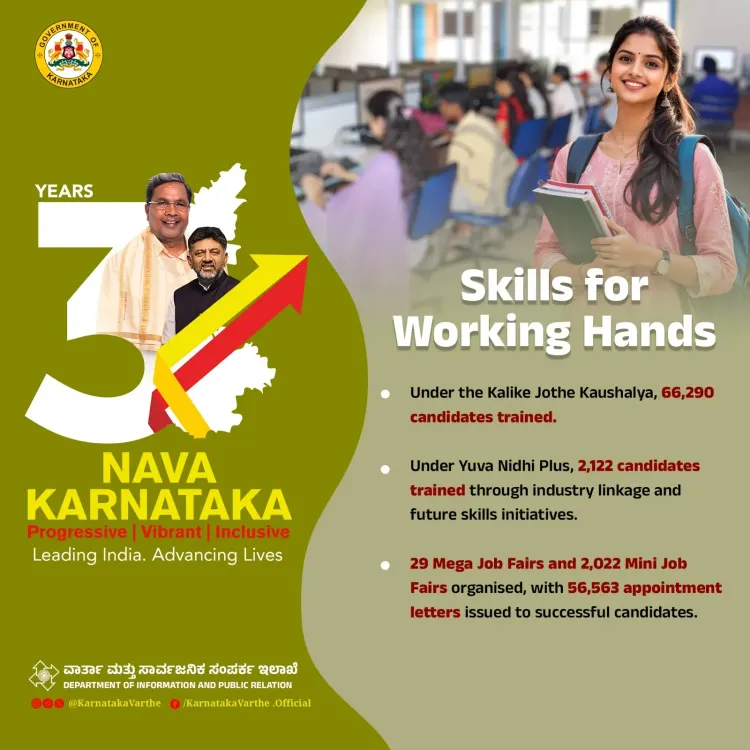
On the third anniversary of Nava Karnataka, Chief Minister Siddaramaiah highlighted skill programmes Kalike Jothe Kaushalya and Yuva Nidhi Plus, and large-scale job fairs, as the Congress government's core strategy for turning youth aspirations into employment across Karnataka.
Key Takeaways
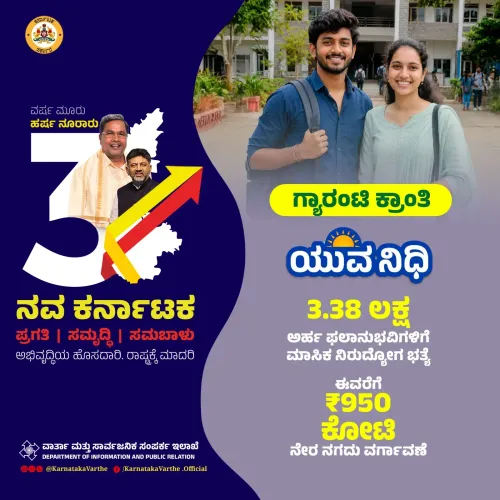
Nava Karnataka completes three years as the Karnataka Congress government's overarching development framework, launched after the May 2023 assembly election victory.
Kalike Jothe Kaushalya integrates formal education with industry-linked vocational training to improve graduate and student employability.
Yuva Nidhi Plus extends earlier youth unemployment relief by combining financial assistance with skill development support.
State-organised job fairs have been used to directly connect trained youth with employers, with thousands reportedly receiving appointment letters.
The government's stated goal is to ensure every young person in Karnataka has access to skills, dignity, and economic opportunity.
Formal outcome data and potential expansion to tier-2 and tier-3 districts are expected to feature in the next Karnataka budget session.
Karnataka Chief Minister Siddaramaiah on Friday, 22 May 2026, highlighted three years of the Nava Karnataka governance framework, pointing to skill development and large-scale job fairs as central pillars of the state government's youth employment strategy.
Context
Posting on the third anniversary of the Nava Karnataka initiative, Siddaramaiah said the government had focused on 'turning aspirations into opportunities by investing in skills, employability, and job creation for the youth of the state.' The post highlighted two flagship programmes — Kalike Jothe Kaushalya and Yuva Nidhi Plus — as vehicles for this agenda, alongside job fairs that the Chief Minister said had helped 'thousands secure appointment letters.'
The Nava Karnataka framework was launched after the Congress party's victory in the May 2023 Karnataka assembly elections. It serves as the state government's overarching development vision, with human capital and job creation as stated priorities.
Policy Backdrop
Kalike Jothe Kaushalya integrates formal education with industry-linked vocational training, aiming to improve the employability of students and graduates across Karnataka. The programme is designed to align training curricula with demand from sectors including IT, manufacturing, and services — industries in which the state has a significant footprint.
Yuva Nidhi Plus builds on earlier Karnataka youth unemployment relief measures, combining financial assistance with skill support for unemployed youth. The 2023-24 Karnataka budget introduced or expanded several such youth-focused schemes, including extensions of the original Yuva Nidhi programme aimed at graduate unemployment. Karnataka has a long history of running state-specific skill initiatives alongside national missions such as Skill India, tailoring programmes to local industry needs.
Stakeholders and Impact
The primary beneficiaries of these programmes are young people across Karnataka, particularly graduates and school-leavers seeking entry into the formal job market. Industry partners play a key role in both the design of training content under Kalike Jothe Kaushalya and as employers at state-organised job fairs.
Large-scale job fairs have been a visible delivery mechanism, connecting trained candidates directly with prospective employers and providing on-the-spot appointment letters. The government's framing — 'a stronger Karnataka is built when every working hand is empowered with skills, dignity, and opportunity' — positions the initiative as both an economic and a social equity measure.
What's Next
Analysts and stakeholders will look to the next Karnataka budget session for formal impact assessments, including verified data on placements, enrolments, and scheme coverage. A potential expansion of job fair formats to tier-2 and tier-3 districts has been flagged as a likely next step to ensure the programmes reach youth beyond major urban centres.
With the three-year mark now passed, pressure will grow on the administration to publish outcome-linked metrics that go beyond the number of training slots or fair participants, and demonstrate measurable improvement in employment rates among Karnataka's youth.
Point of View
Arriving at a point when the Congress government in Bengaluru needs to demonstrate tangible governance outcomes ahead of future electoral cycles. By anchoring the narrative in named schemes — Kalike Jothe Kaushalya and Yuva Nidhi Plus — rather than aggregate statistics, the Chief Minister sidesteps the scrutiny that verified numbers would invite while keeping the welfare-state brand intact. The emphasis on job fairs and 'appointment letters' signals a preference for visible, event-driven delivery over systemic labour-market reform. Whether the administration follows through with independently verifiable placement data in the next budget session will determine how credible the three-year record ultimately appears to Karnataka's large and aspirational young electorate.
NationPress
7 Oct 2026
Frequently Asked Questions
What is Nava Karnataka?
Nava Karnataka is the Karnataka state government's multi-year development framework launched after the Congress party's 2023 assembly election win, focusing on inclusive growth, human capital, and job creation across the state.
What is Kalike Jothe Kaushalya?
Kalike Jothe Kaushalya is a Karnataka state scheme that integrates formal education with industry-linked vocational training to improve the employability of students and graduates, particularly in sectors like IT, manufacturing, and services.
What is Yuva Nidhi Plus?
Yuva Nidhi Plus is an enhanced Karnataka government scheme that provides financial assistance and skill development support to unemployed youth, building on earlier iterations of the Yuva Nidhi unemployment relief programme.
What has Siddaramaiah said about youth employment in Karnataka?
Chief Minister Siddaramaiah stated that over three years, the Nava Karnataka framework has focused on turning youth aspirations into opportunities through skill training and large-scale job fairs that have helped thousands secure appointment letters.
When did the Nava Karnataka framework begin?
The Nava Karnataka framework was launched following the Karnataka Congress government taking office in May 2023 after winning the state assembly elections.