CM Siddaramaiah marks 3 years of Karnataka transport growth
Synopsis
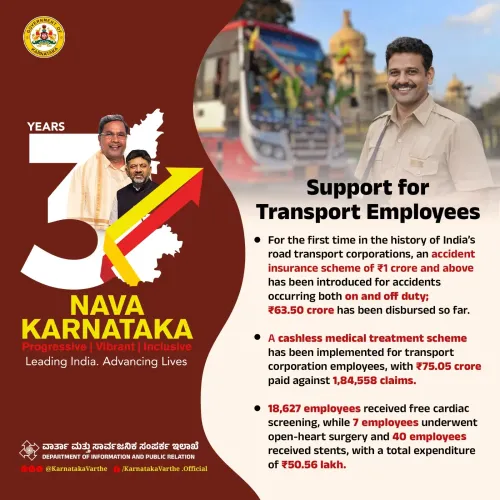
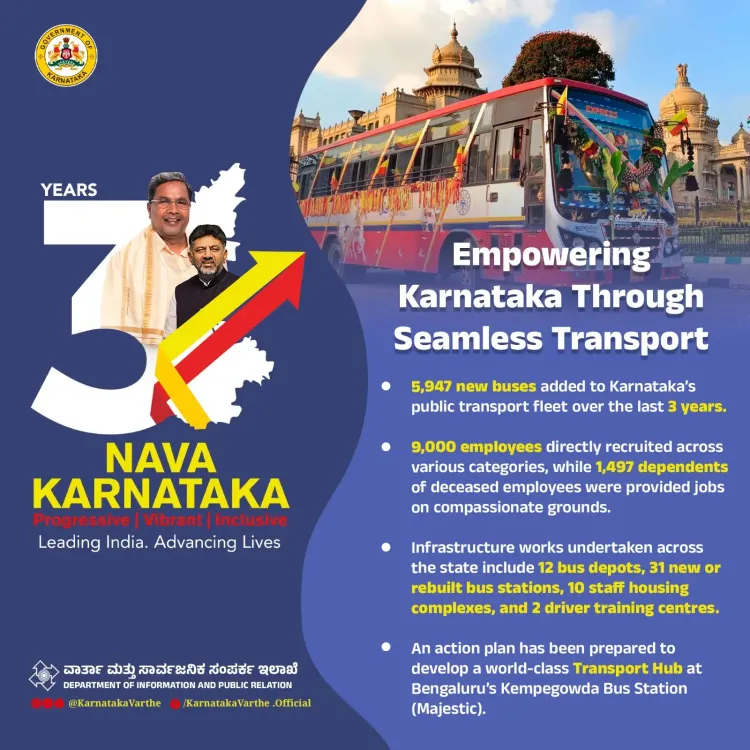
Karnataka Chief Minister Siddaramaiah has marked three years of his government's public transport push, citing fleet additions, depot expansion, staff recruitment, and driver training infrastructure as pillars of a people-centric mobility vision for the state.
Key Takeaways
Karnataka CM Siddaramaiah on 22 May 2026 marked three years of the Congress government's public transport initiatives.
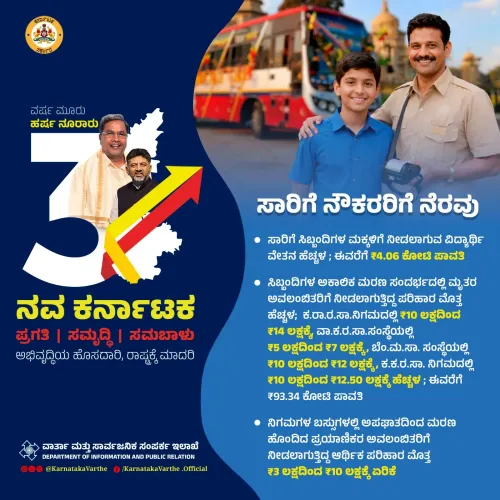
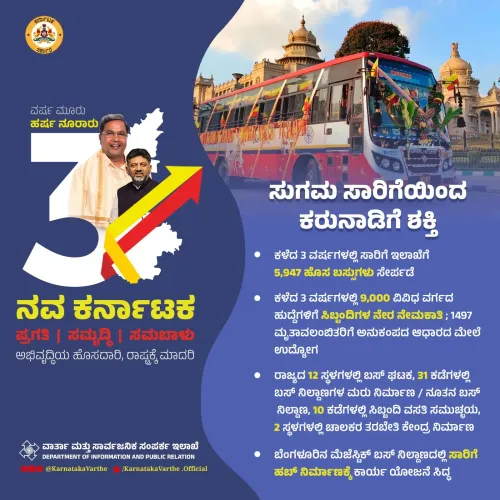
The government claims to have added thousands of new buses and recruited staff across multiple transport corporations, though exact figures are unverified.
Infrastructure upgrades include expanded depots, bus stations, staff housing, and driver training centres.
The Shakti scheme , launched in 2023 , provides free bus travel to women and remains a flagship element of the transport agenda.
KSRTC and BMTC are the primary corporations targeted by the modernisation drive.
Electric bus rollout and new inter-district routes are the next milestones to watch in Karnataka's transport roadmap.
Karnataka Chief Minister Siddaramaiah on Friday, 22 May 2026, marked three years of his government's public transport initiatives, highlighting fleet expansion, infrastructure upgrades, and workforce development across the state's transport corporations.
Context
Posting under the hashtags #3YearsOfNavaKarnataka and #GuaranteeSarkara, Siddaramaiah described the past three years as a period of 'strengthening Karnataka's public transport network with better connectivity, stronger infrastructure, and greater opportunities for employees.' The post marks the third anniversary of the Congress government's return to power in Karnataka following its assembly election victory in May 2023.
The chief minister framed the government's record around a broad vision: 'A connected Karnataka is a stronger Karnataka — where mobility drives growth, opportunity, and inclusive development.'
Policy Backdrop
The Congress government came to office in May 2023 on the back of five flagship guarantee schemes, one of which was the Shakti scheme — providing free travel to women on state-run buses. The scheme was designed to boost female ridership and widen access to public transport across urban and rural areas of the state.
Karnataka State Road Transport Corporation (KSRTC), the primary inter-district and rural bus operator, along with other state transport corporations, has been at the centre of the government's modernisation push. The chief minister cited additions of 'thousands of new buses,' fresh staff recruitment across transport corporations, and expansion of depots, bus stations, staff housing, and driver training centres as markers of progress. Exact figures for buses added or staff recruited have not been independently confirmed from public records.
State governments across India have increasingly prioritised fleet expansion and depot upgrades to address urban congestion and rural connectivity gaps. Karnataka's current approach continues earlier efforts to modernise KSRTC and the Bengaluru Metropolitan Transport Corporation (BMTC) through capital investment in rolling stock and employee facilities.
Stakeholders and Impact
The beneficiaries of the transport push span a wide cross-section: daily bus commuters — including women who travel free under the Shakti scheme — rural residents dependent on inter-district connectivity, and transport corporation employees who gain from improved housing and training infrastructure.
Driver training centres and staff housing, highlighted by Siddaramaiah, address a longstanding concern within transport corporations about workforce welfare and operational readiness. Improved depot infrastructure also has a direct bearing on fleet maintenance and service reliability for commuters.
What's Next
Attention will now turn to upcoming state budget presentations and whether further allocations are earmarked for transport infrastructure. The rollout of electric buses and the expansion of new inter-district routes remain closely watched indicators of how aggressively Karnataka pursues its next phase of public transport modernisation.
With the three-year milestone serving as a political benchmark, the government is expected to intensify its communication around guarantee-scheme outcomes ahead of future electoral cycles in the state.
Point of View
Timed to coincide with the Congress government's third year in office. By anchoring the narrative around workforce welfare — housing, training, recruitment — alongside commuter-facing metrics, the government is attempting to build a dual constituency of employees and riders ahead of future elections. The invocation of 'Nava Karnataka' and 'Guarantee Sarkara' branding signals that the Congress intends to keep its five-guarantee framework at the centre of its political identity through the remainder of its term. The absence of verified figures, however, leaves the claims open to scrutiny from opposition benches.
NationPress
7 Oct 2026
Frequently Asked Questions
What has the Karnataka government done for public transport in three years?
The Karnataka government, under CM Siddaramaiah, claims to have added thousands of new buses, recruited staff across transport corporations, and expanded depots, bus stations, staff housing, and driver training centres since May 2023. Exact figures have not been independently verified.
What is the Shakti scheme in Karnataka?
The Shakti scheme is a flagship Congress government guarantee launched in 2023 that provides free travel to women on state-run buses in Karnataka, aimed at boosting female ridership and improving access to public transport.
What is KSRTC and how is it being modernised?
KSRTC, the Karnataka State Road Transport Corporation, is the primary state-run bus operator for inter-district and rural routes. The current government has focused on fleet expansion and depot upgrades as part of a broader modernisation drive.
What is the Nava Karnataka vision?
'Nava Karnataka' is the Congress government's branding framework for its governance agenda in Karnataka, encompassing its five guarantee schemes and development initiatives aimed at inclusive growth and public welfare.
Will Karnataka get electric buses?
The rollout of electric buses is among the key milestones being watched in Karnataka's public transport roadmap, though no specific timeline or confirmed numbers have been announced by the government as of May 2026.