India demolishes structures outside Pakistan HC in 'proportionate action'
Synopsis
India's demolition of structures outside the Pakistan High Commission in New Delhi isn't a routine civic action — it's a calibrated diplomatic signal. By invoking 'proportionate action' publicly through the MEA, New Delhi has formalised reciprocity as policy, turning a lane-level dispute into a visible marker of where bilateral ties now stand.
Key Takeaways
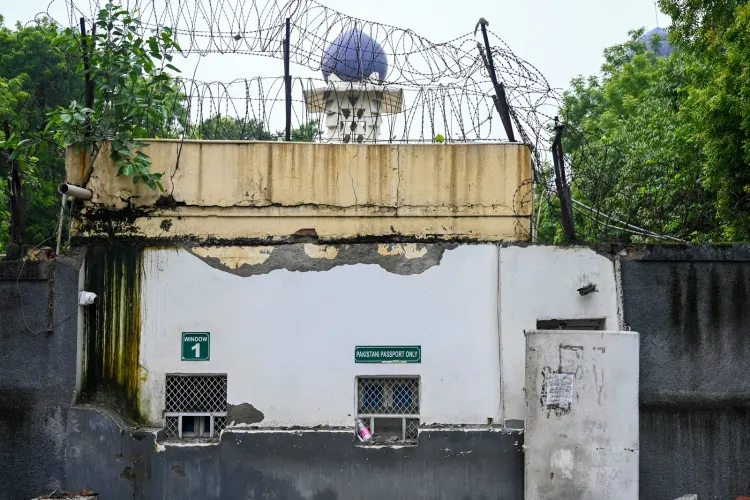
India on 21 August demolished unauthorised structures outside the Pakistan High Commission in New Delhi using a JCB machine .
MEA spokesperson Randhir Jaiswal described the move as 'proportionate action' after Pakistan removed parking-facilitation structures outside the Indian High Commission in Islamabad .
Removed items included queue-management installations near the visa section, traffic bollards, and barricades forming the mission's external security perimeter.
The demolition came three days after Pakistani authorities reportedly removed barricades outside the Indian mission in Islamabad despite India's formal request not to.
US Ambassador Sergio Gor visited Jammu and Kashmir on Wednesday and called it 'an important part of India'; Pakistan subsequently summoned the US Charge d'Affaires in Islamabad and lodged a formal demarche.
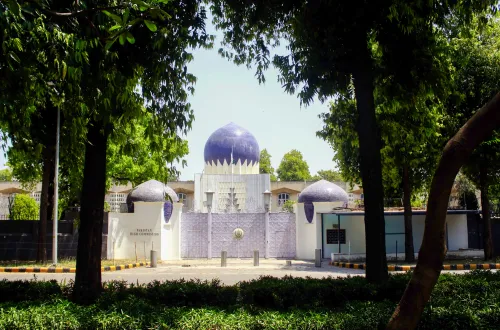
India on Friday, 21 August demolished unauthorised structures outside the Pakistan High Commission in New Delhi, with the Ministry of External Affairs (MEA) describing the move as a 'proportionate action' in direct response to Pakistan's removal of parking-facilitation structures outside the Indian High Commission in Islamabad. The tit-for-tat measure marks a fresh flashpoint in already strained bilateral ties between the two nations.
What India Did and Why
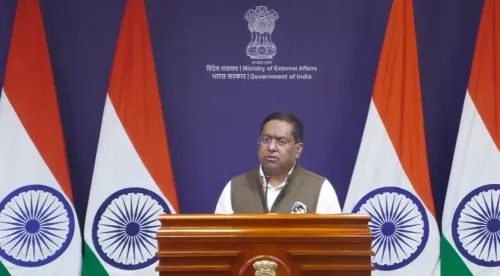
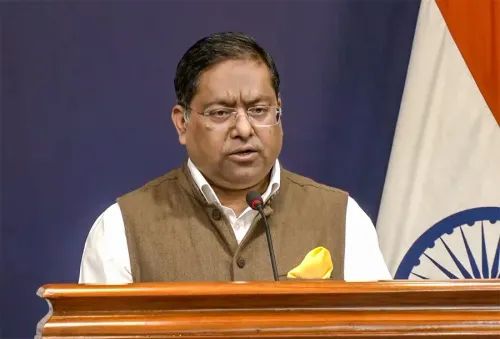
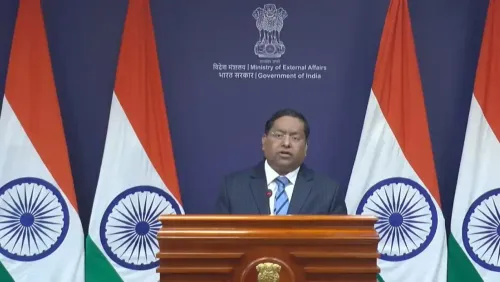
MEA spokesperson Randhir Jaiswal, addressing the bi-weekly media briefing in New Delhi, confirmed the action and laid out India's rationale. 'In Pakistan, some structures in front of the Indian High Commission, which were meant to facilitate parking, were removed. Despite our request to them not to do so, they went ahead with it. In response, we took what could be described as a proportionate action. There were some temporary structures in the lane where the Pakistani High Commission is located here, and we removed them,' Jaiswal said.
Authorities cited the structures' location beyond the mission's approved boundary as the official justification for the demolition. The operation was carried out using a JCB machine by the concerned agencies.
Scope of the Demolition
The removal extended beyond simple barricades. Queue-management installations near the visa section of the Pakistan High Commission were dismantled, as were traffic bollards and barricades that had formed the external security perimeter around the mission, according to reports. The action effectively stripped away the visible outer security envelope of the diplomatic compound on that lane.
The demolition came three days after Pakistani authorities reportedly removed protective security barricades positioned outside the Indian High Commission in Islamabad, despite a formal request from India to refrain from doing so.
The Broader Diplomatic Context
The episode coincides with a period of heightened diplomatic friction. On Wednesday, US Ambassador to India Sergio Gor made his maiden visit to Jammu and Kashmir, during which he stated that the United States would reconsider its travel advisories on the Union Territory and described it as 'an important part of India.' After meeting Chief Minister Omar Abdullah, Gor said: 'It's a pleasure to be here. US will reconsider its advisories on travel to Jammu and Kashmir. This is an important part of India.'
On the same evening, Pakistan summoned the US Charge d'Affaires in Islamabad and lodged a formal demarche over Gor's remarks — underscoring how sensitive the Jammu and Kashmir question remains in the regional diplomatic calculus.
India's Position on Jammu and Kashmir
India has consistently maintained that the whole of Jammu, Kashmir and Ladakh are its integral and inalienable parts. The MEA has previously stated: 'The issues that should concern the international community are the atrocities currently being perpetrated in the illegal Pakistan occupied Kashmir and the use of Pakistan occupied Kashmir for cross-border terrorism.' That position has not changed, and the diplomatic signalling around the High Commission structures appears consistent with India's broader policy of reciprocal responses to Pakistani actions.
What Happens Next
With both nations having now removed structures outside each other's diplomatic missions, the situation risks a further downward spiral in bilateral ties unless back-channel communication intervenes. Diplomatic observers will watch whether either side seeks to de-escalate through formal channels or allows the standoff to harden into a prolonged protocol dispute. The timing — amid active US diplomatic engagement on Jammu and Kashmir — adds another layer of complexity to an already fraught relationship.
Point of View
Not an administrative footnote. India is publicly codifying reciprocity as the operating principle in its Pakistan relationship — a posture that leaves little room for quiet de-escalation. What is striking is the timing: the action lands in the same week that a US envoy called Jammu and Kashmir 'an important part of India,' drawing a Pakistani demarche. New Delhi appears willing to let multiple pressure points accumulate simultaneously, betting that international opinion — particularly Washington's — is shifting in its favour. The risk is that a protocol dispute over barricades and bollards can harden into a structural freeze on diplomatic engagement, with no obvious off-ramp for either side.
NationPress
5 Oct 2026
Frequently Asked Questions
Why did India demolish structures outside the Pakistan High Commission in New Delhi?
India demolished the structures on 21 August as a 'proportionate action' after Pakistan removed parking-facilitation structures outside the Indian High Commission in Islamabad, despite India's formal request not to do so. MEA spokesperson Randhir Jaiswal confirmed the rationale at a media briefing in New Delhi.
What exactly was removed outside the Pakistan High Commission?
Authorities removed temporary structures and barricades along the lane outside the Pakistan High Commission compound, including queue-management installations near the visa section and traffic bollards that formed the mission's external security perimeter. The operation was carried out using a JCB machine.
What did Pakistan do that triggered India's response?
Pakistani authorities reportedly removed protective security barricades positioned outside the Indian High Commission in Islamabad approximately three days before India's retaliatory action. India had formally requested Pakistan not to remove the structures, but Pakistan proceeded regardless.
How does the US Ambassador's visit to Jammu and Kashmir connect to this episode?
US Ambassador to India Sergio Gor visited Jammu and Kashmir on Wednesday and described it as 'an important part of India,' adding that the US would reconsider its travel advisories on the Union Territory. Pakistan summoned the US Charge d'Affaires in Islamabad the same evening and lodged a formal demarche over those remarks, adding to the diplomatic tensions that frame the High Commission standoff.
What is India's official position on Jammu and Kashmir?
India maintains that the whole of Jammu, Kashmir and Ladakh are its integral and inalienable parts. The MEA has also stated that the international community's attention should be directed at what it describes as atrocities in Pakistan-occupied Kashmir and the use of that territory for cross-border terrorism.