CM Siddaramaiah Marks 3 Years, Cites 5 Guarantees Delivery
Synopsis
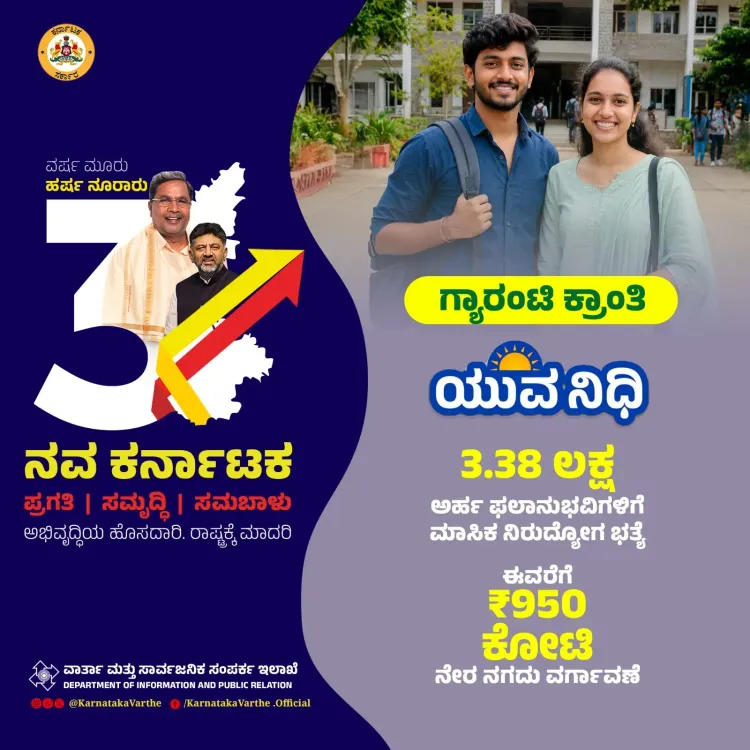
Karnataka Chief Minister Siddaramaiah has marked three years in office, crediting all Kannadigas for the government's record and highlighting delivery of all five Congress guarantee schemes. Over 3.38 lakh youth have received unemployment aid worth ₹950 crore under the YuvaNidhi scheme.
Key Takeaways
Karnataka Chief Minister Siddaramaiah completed three years in office on 27 May 2026 , marking the occasion with a Kannada post on X.
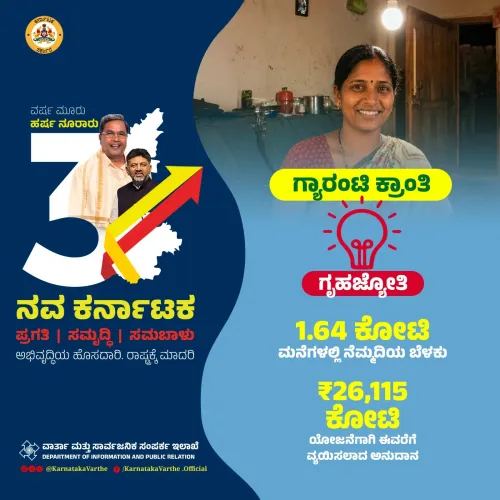
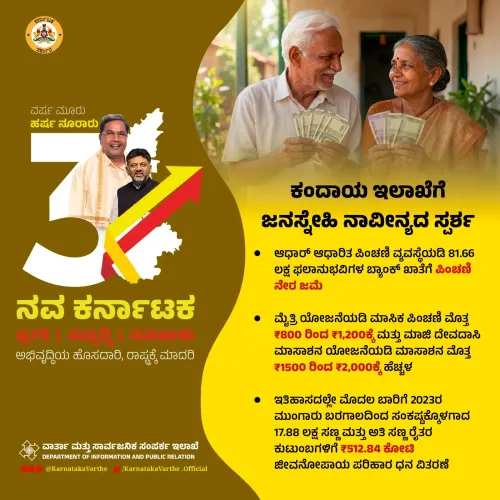
The government claims all five Congress guarantee schemes pledged before the May 2023 elections have been implemented and reached every household in the state.
The YuvaNidhi unemployment allowance scheme has benefited 3.38 lakh eligible graduates and diploma holders so far.
Total expenditure under YuvaNidhi stands at ₹950 crore , according to the Chief Minister's post.
The anniversary campaign is being promoted under the hashtags #3YearsOfNavaKarnataka and #NavaKarnataka .
Karnataka's direct-benefit welfare model is part of a broader pattern of guarantee-based governance among Congress-ruled Indian states since 2021.
Karnataka Chief Minister Siddaramaiah on Wednesday, 27 May 2026 marked the completion of three years in office, crediting every Kannadiga for the government's achievements and reaffirming that his administration honoured each pre-election promise made to the people of the state.
Context
Posting in Kannada on the occasion of the ruling Congress government's third anniversary, Siddaramaiah wrote: 'ರಾಜ್ಯದ ಜನರ ಆಶೀರ್ವಾದದೊಂದಿಗೆ ನಾವು ಅಧಿಕಾರಕ್ಕೆ ಬಂದು ಮೂರು ವರ್ಷಗಳು ಪೂರೈಸಿರುವ ಈ ಸಾರ್ಥಕ ಸಂದರ್ಭದಲ್ಲಿ' ['On this meaningful occasion of completing three years in power with the blessings of the people of the state']. He dedicated all credit for the government's accomplishments to the citizens of Karnataka. The post was accompanied by the hashtags #3YearsOfNavaKarnataka and #NavaKarnataka, signalling a coordinated anniversary communication campaign by the ruling party.
Policy Backdrop
The Congress party swept the Karnataka assembly elections in May 2023, riding on a manifesto that centred on five guarantee schemes targeting women, youth, farmers, and the poor. These guarantees — covering free electricity units, cash transfers for women, and unemployment support among other benefits — were the centrepiece of the party's campaign and were promised to be rolled out within the first year of government. Siddaramaiah stated that all five have since been implemented and reached every household in the state. Karnataka's model has drawn attention as part of a broader trend of direct-benefit welfare competition among state governments across India, particularly in Congress-ruled states since 2021.
The YuvaNidhi scheme, the government's flagship unemployment allowance programme for eligible graduates and diploma holders, received specific mention. According to the post, 3.38 lakh eligible beneficiaries have so far received a monthly unemployment allowance, with a total expenditure of ₹950 crore incurred under the scheme.
Stakeholders and Impact
The primary beneficiaries of the government's three-year welfare push are Karnataka's unemployed youth and low-income households. The YuvaNidhi programme specifically targets degree and diploma holders who have not secured employment, providing them a monthly financial cushion while they seek work. Broader household-level schemes under the five guarantees have aimed at women's financial autonomy and energy affordability. The scale of the YuvaNidhi rollout — reaching over 3.38 lakh individuals at a cost of ₹950 crore — underscores the fiscal commitment the state government has made to sustaining direct cash-transfer welfare in a competitive political environment.
Karnataka's approach mirrors earlier guarantee-style programmes piloted in Rajasthan and Chhattisgarh when Congress governed those states, and it has been closely watched by opposition parties and rival state administrations assessing the political and fiscal sustainability of such models.
What's Next
With the government entering its fourth year, attention will turn to the next quarterly utilisation report for YuvaNidhi and any mid-term revisions or expansions announced in the 2026–27 budget session of the Karnataka legislature. The anniversary messaging under #NavaKarnataka also sets the political tone for the Congress party as it seeks to consolidate its welfare-delivery narrative ahead of future electoral cycles. How the government balances fiscal sustainability with expanding guarantee commitments will be the defining question of its remaining term.
Frequently Asked Questions
What are the 5 guarantee schemes of the Karnataka Congress government?
The five guarantee schemes promised by the Karnataka Congress before the 2023 elections cover free electricity units for households, a monthly cash transfer for women, unemployment support for youth under YuvaNidhi , free bus travel for women, and food security support — together designed to benefit women, youth, farmers, and low-income families across the state.
What is the YuvaNidhi scheme in Karnataka?
YuvaNidhi is a Karnataka government scheme that provides a monthly unemployment allowance to eligible graduates and diploma holders who have not yet found employment. As of May 2026 , over 3.38 lakh beneficiaries have received support under the scheme, with total spending reaching ₹950 crore .
How long has Siddaramaiah been Chief Minister of Karnataka?
Siddaramaiah has been Chief Minister of Karnataka for three years as of 27 May 2026 , having taken office after the Congress party's victory in the May 2023 Karnataka assembly elections .
What is Nava Karnataka?
Nava Karnataka ('New Karnataka') is the branding used by the Siddaramaiah-led Congress government to describe its governance vision and welfare agenda for the state, prominently used in official communications and social media campaigns including the three-year anniversary in May 2026 .
How much has Karnataka spent on YuvaNidhi so far?
According to a post by Chief Minister Siddaramaiah on 27 May 2026 , the Karnataka government has spent ₹950 crore on the YuvaNidhi unemployment allowance scheme, benefiting 3.38 lakh eligible young people across the state.