CM Karnataka Marks 3 Years, Highlights Temple Grants
Synopsis
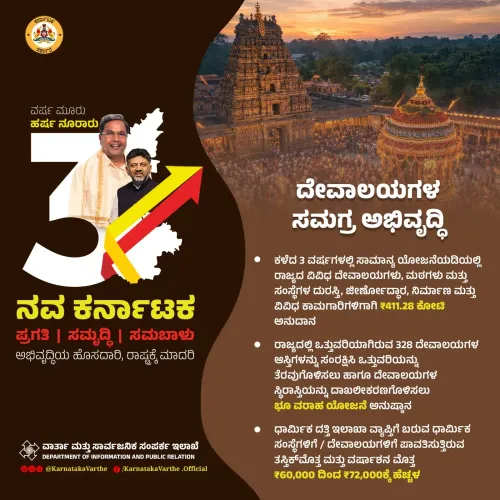
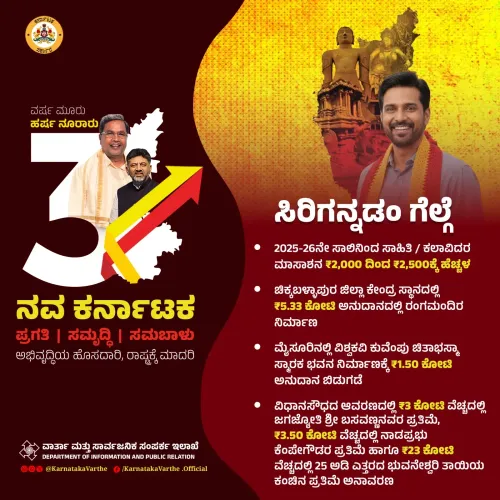
The Chief Minister's Office of Karnataka marked three years in power on 24 May 2026, crediting every Kannadiga for the government's achievements. Key highlights include ₹411.28 crore in temple grants, the Bhumi Varaha Yojane for clearing encroachments on 328 temple properties, and a hike in religious institution allowances from ₹60,000 to ₹72,000.
Key Takeaways
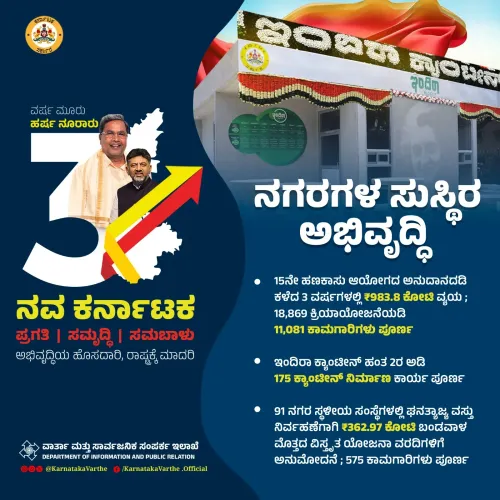
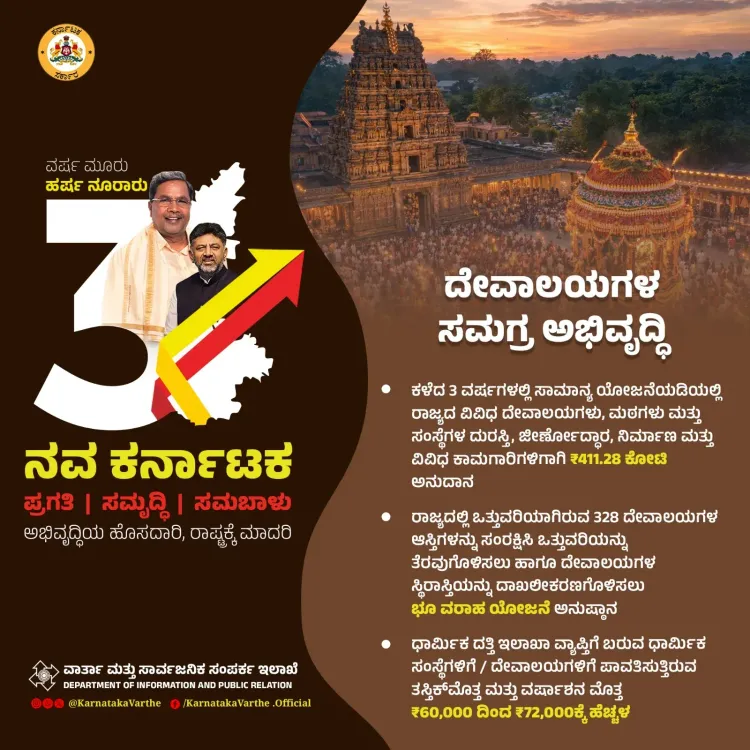
The Karnataka government completed three years in office on 24 May 2026 , marking the occasion under the Nava Karnataka branding. ₹411.28 crore has been granted over three years for repair, renovation and construction of temples, mutts and religious institutions across the state.
The Bhumi Varaha Yojane was implemented to clear encroachments and document immovable properties of 328 temples whose assets had been encroached upon.
Annual maintenance allowances ( tastik ) for religious institutions under the Religious Endowments Department were raised from ₹60,000 to ₹72,000 .
The government pledged that its development efforts would be 'faster and more effective' in the years ahead.
The Chief Minister's Office of Karnataka marked the completion of three years in office on Sunday, 24 May 2026, crediting the state's people for the government's achievements and reaffirming its commitment to pre-election promises. The post, shared on the government's official X account, highlighted key deliverables under the Nava Karnataka governance agenda, with a focus on religious endowment administration.
Context
The Kannada-language post reads: 'ರಾಜ್ಯದ ಜನರ ಆಶೀರ್ವಾದದೊಂದಿಗೆ ನಾವು ಅಧಿಕಾರಕ್ಕೆ ಬಂದು ಮೂರು ವರ್ಷಗಳು ಪೂರೈಸಿರುವ ಈ ಸಾರ್ಥಕ ಸಂದರ್ಭದಲ್ಲಿ' ('On this meaningful occasion of completing three years in power with the blessings of the people of the state'). The office dedicated all achievements of the government to 'every Kannadiga,' framing the anniversary as a public milestone rather than a partisan celebration.
Chief Minister Siddaramaiah led the Congress party to victory in the May 2023 Karnataka assembly elections, forming the government with a promise of welfare delivery and protection of religious endowments. The three-year mark falls as the government enters the second half of its term, making governance reporting politically significant.
Policy Backdrop
The post lists three specific deliverables under religious endowment administration. First, a grant of ₹411.28 crore has been allocated over the past three years under the general scheme for repair, renovation, construction and related works at temples, mutts and religious institutions across the state. Second, the government implemented the Bhumi Varaha Yojane, a scheme designed to survey, document and clear encroachments on properties belonging to 328 temples whose assets had been encroached upon, while also formalising documentation of immovable temple properties.
Third, the tastik (maintenance allowance) and annual grant amounts paid to religious institutions and temples under the Religious Endowments Department have been revised upward — from ₹60,000 to ₹72,000. Karnataka has a long administrative tradition of state-managed religious endowments, and successive governments have allocated funds for temple infrastructure and land protection.
Stakeholders and Impact
The primary beneficiaries of these measures are Hindu temples, mutts and religious trusts that fall under the jurisdiction of the Karnataka Religious Endowments Department. Temple priests, administrative staff and devotees who rely on state-supported institutions stand to benefit from the increased grant amounts and infrastructure investment. The encroachment clearance drive under Bhumi Varaha Yojane directly affects landholders and local communities adjacent to the 328 identified temple properties.
Broader civic interest lies in the documentation exercise, which aims to create formal records of temple immovable assets — a measure that administrators argue provides long-term legal protection to endowment lands. The pattern of reporting such milestones at the three-year mark reflects a standard governance-communication cycle observed across Indian states.
What's Next
The post signals that the government intends to accelerate its agenda, stating the effort will be 'faster and more effective going forward.' Observers will watch the next Karnataka state budget for further allocations to the Religious Endowments Department, as well as independent progress reports on encroachment clearances completed under Bhumi Varaha Yojane. The remaining tenure of the Siddaramaiah government will be a test of whether the pace of implementation matches the stated ambition of a 'strong, prosperous and self-respecting Karnataka.'
Point of View
The CMO is building a record that complicates the binary framing of Congress as indifferent to religious heritage. This follows a broader pattern across Indian states where ruling parties, regardless of ideology, use endowment governance as a politically low-risk demonstration of administrative competence. With roughly two years remaining in the term, the pace of Bhumi Varaha Yojane implementation will be a concrete metric by which the government's claims can be tested.
NationPress
9 Oct 2026
Frequently Asked Questions
How many years has the Karnataka government completed in office in 2026?
The Karnataka government completed three years in office as of May 2026 , having come to power after the May 2023 state assembly elections.
What is Bhumi Varaha Yojane in Karnataka?
Bhumi Varaha Yojane is a Karnataka state scheme to survey, clear encroachments on, and formally document the immovable properties of temples under the Religious Endowments Department. It targets 328 temples whose lands had been encroached upon.
How much has the Karnataka government given for temple renovation in three years?
The Karnataka government has allocated ₹411.28 crore over three years under the general scheme for repair, renovation, construction and other works at temples, mutts and religious institutions across the state.
What is the tastik amount increase for temples in Karnataka?
The Karnataka government has increased the tastik (maintenance allowance) and annual grant for religious institutions under the Religious Endowments Department from ₹60,000 to ₹72,000 .
What is Nava Karnataka?
Nava Karnataka ('New Karnataka') is the political and governance branding used by the current Karnataka government, led by CM Siddaramaiah , to communicate its development and welfare agenda since taking office in May 2023.