CM Siddaramaiah marks 3 years of caste-equity welfare push
Synopsis
On the third anniversary of his government, Karnataka Chief Minister Siddaramaiah acknowledged that caste discrimination persists seven decades after independence and asserted that his Nava Karnataka administration has delivered education, jobs, healthcare, and economic security to oppressed communities in the spirit of B.R. Ambedkar.
Key Takeaways
Siddaramaiah posted on 23 May 2026 marking three years of his Nava Karnataka government.
He stated that the caste system remains alive in India more than seven decades after independence, denying the majority access to education, power, and wealth.
The government claims to have provided education, employment, healthcare, and social and economic security to historically excluded communities.
The post invokes B.R.
Ambedkar's vision as the guiding principle for the administration's welfare agenda.
Laws and programmes enacted for 'opportunity-deprived people' are described as a potential national model, though independent verification is pending.
The announcement comes amid similar caste-welfare debates in Bihar and Tamil Nadu , reflecting a nationwide policy conversation.
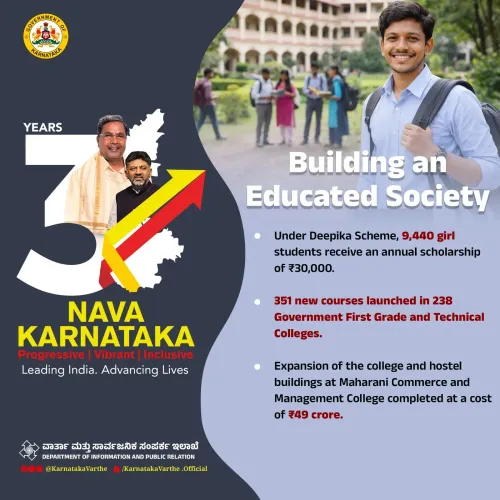
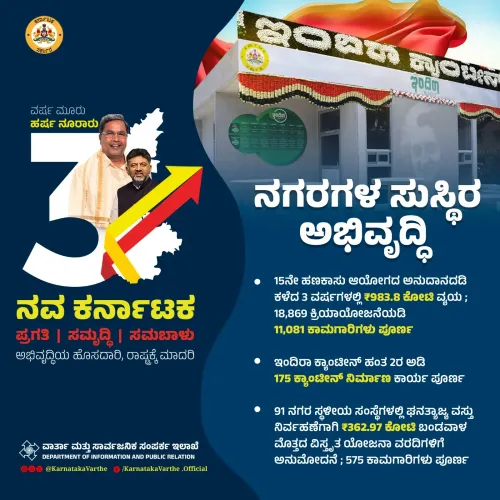
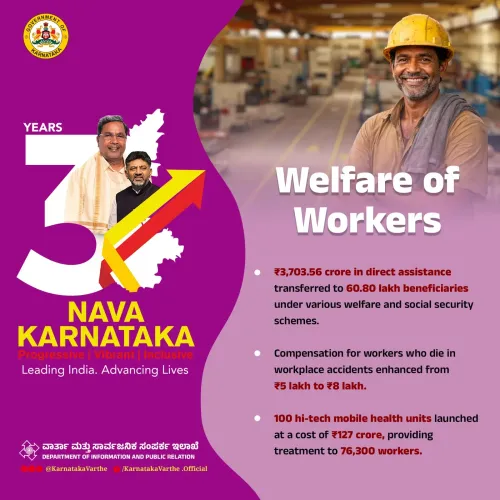
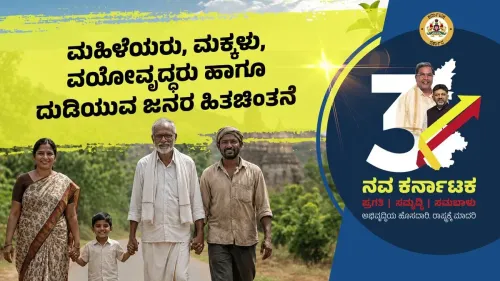
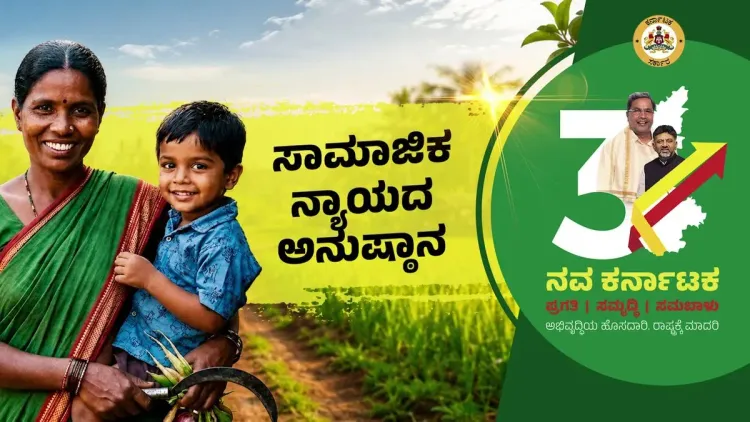
Karnataka Chief Minister Siddaramaiah on Saturday, 23 May 2026, used the third anniversary of his government's 'Nava Karnataka' initiative to assert that caste discrimination remains a living reality in India even seven decades after independence, and that his administration has spent three years delivering education, employment, healthcare, and economic security to historically excluded communities in line with the vision of B.R. Ambedkar.
Context
Posting in Kannada on X, Siddaramaiah acknowledged with 'great pain' — ಅತ್ಯಂತ ನೋವಿಂದ ('atyanta novinda') — that the caste system is still alive in Indian society. He said the majority of the country's people have been denied access to education, power, and wealth because of caste and religion, and that those communities continue to struggle to enter the mainstream. The post was tagged #3YearsOfNavaKarnataka and #NavaKarnataka, marking three years since the Congress government took office in Karnataka in May 2023.
Policy Backdrop
The Nava Karnataka brand was adopted by the Siddaramaiah administration to umbrella its social-justice and inclusive-growth agenda. The government has pointed to Ambedkarite principles — constitutional guarantees of equality, reservations in education and public employment, and targeted welfare for Scheduled Castes (SC), Scheduled Tribes (ST), and Other Backward Classes — as the philosophical foundation of its programmes. Karnataka has a long history of affirmative action, having implemented backward-class reservations following the Mandal Commission recommendations accepted nationally in 1990, and earlier Congress governments in the state ran Ambedkar-centric scholarship, housing, and skill-development schemes in the 2010s.
In his post, Siddaramaiah claimed that the laws enacted and programmes implemented by his government for 'opportunity-deprived people' have become a model for the entire nation — though the extent of national replicability remains a matter of ongoing policy debate.
Stakeholders and Impact
The communities most directly addressed are SC/ST groups and backward classes, which together constitute a substantial share of Karnataka's population. The Chief Minister framed their continued exclusion from education, economic resources, and political power as a structural failure that requires special state attention. Similar caste-survey and welfare drives are underway or being debated in states such as Bihar and Tamil Nadu, placing Karnataka's approach within a broader national conversation about affirmative action. The Congress government has consistently positioned these interventions in contrast to the BJP's emphasis on economic rather than caste-specific welfare delivery.
What's Next
Attention will now turn to whether the government releases independent evaluations of its welfare schemes or detailed 2026-27 budget allocations that substantiate the claims of transformative impact. Any central government response — or endorsement by other state administrations — to Karnataka's claimed model programmes will be a key indicator of how far the state's approach travels beyond its own borders. The anniversary framing also signals that Siddaramaiah intends social justice to remain a central electoral and governance theme for the remainder of his term.
Point of View
' the Chief Minister is staking a claim in the broader debate over how Indian federalism should address structural inequality — a debate that is intensifying ahead of state and general election cycles. The move mirrors the Congress strategy in other states of using caste surveys and targeted welfare to consolidate backward-class and Dalit constituencies. Whether the rhetoric translates into independently audited outcomes will determine its durability as a political asset.
NationPress
22 Sept 2026
Frequently Asked Questions
What is Nava Karnataka?
Nava Karnataka is the branding adopted by Chief Minister Siddaramaiah's Congress government in Karnataka for its development and social-welfare agenda launched after the party came to power in May 2023, focusing on inclusive growth and social justice.
What did Siddaramaiah say about caste on 23 May 2026?
Siddaramaiah said it is painful to acknowledge that the caste system is still alive in India even seven decades after independence, and that the majority of people have been denied education, power, and wealth because of caste and religion.
What welfare measures has the Karnataka government taken for SC/ST communities?
The Siddaramaiah government says it has provided education, employment, healthcare, and social and economic security to Scheduled Caste, Scheduled Tribe, and backward-class communities, describing these programmes as being in line with B.R. Ambedkar's vision.
How does Karnataka's approach to caste welfare compare to other states?
Karnataka's Congress government has positioned its caste-specific welfare programmes as an Ambedkarite model, contrasting with the BJP's emphasis on economic welfare. Similar debates and caste-survey drives are underway in Bihar and Tamil Nadu.
What is the significance of the #3YearsOfNavaKarnataka hashtag?
The hashtag marks the third anniversary of the Siddaramaiah-led Congress government in Karnataka, which took office in May 2023, and is being used to highlight the administration's social-justice and welfare record.