CM Bhajan Lal: Rajasthan tops mineral block auctions
Synopsis
Rajasthan CM Bhajan Lal Sharma has declared the state first in India in mineral block auctions, calling it proof of effective mineral resource use and committing his government to turning that ranking into industrial jobs and investment.
Key Takeaways
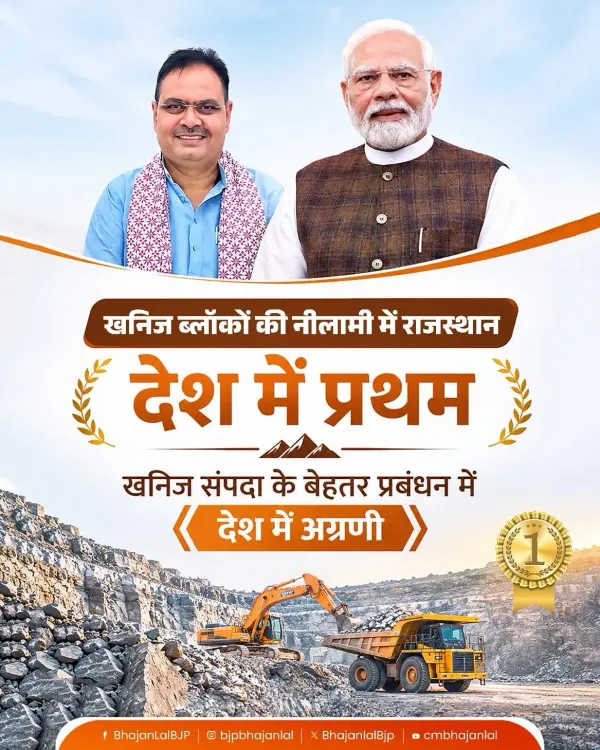
Rajasthan has ranked first in India in the auction of mineral blocks, according to CM Bhajan Lal Sharma's post on 21 November 2026 .
The state holds major deposits of limestone, marble, gypsum, zinc and lead , underpinning its cement, marble and metals industries.
Mandatory competitive e-auctions for mineral blocks were introduced nationally by the Mines and Minerals (Development and Regulation) Amendment Act, 2015 .
CM Bhajan Lal Sharma took office in December 2023 and has positioned mining modernisation as central to Rajasthan's economic agenda.
The government has committed to linking auction proceeds to industrial development and employment generation across the state.
Official auction results and revenue data from the state mining department are awaited to substantiate the first-place ranking.
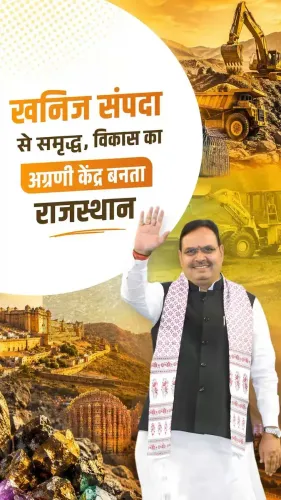
Rajasthan has claimed the top spot among all Indian states in the auction of mineral blocks — a milestone that Chief Minister Bhajan Lal Sharma says reflects both the state's vast mineral wealth and its government's push to channel that wealth into industrial growth and jobs. The announcement, made on Saturday, 21 November 2026, signals Jaipur's intent to position Rajasthan as the country's leading destination for mining investment.
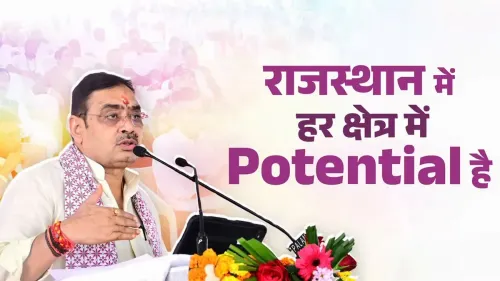
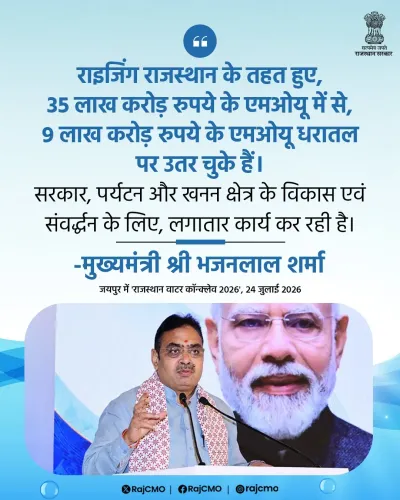
Posting on X, CM Sharma wrote: 'खनिज ब्लॉकों की नीलामी में राजस्थान का देश में प्रथम स्थान' — 'Rajasthan's first place in the country in the auction of mineral blocks reflects better utilisation of the state's mineral wealth and growing opportunities in the mining sector. Our government is committed to giving new momentum to industrial development and employment generation alongside effective use of mineral resources.'Why Rajasthan is built for this race
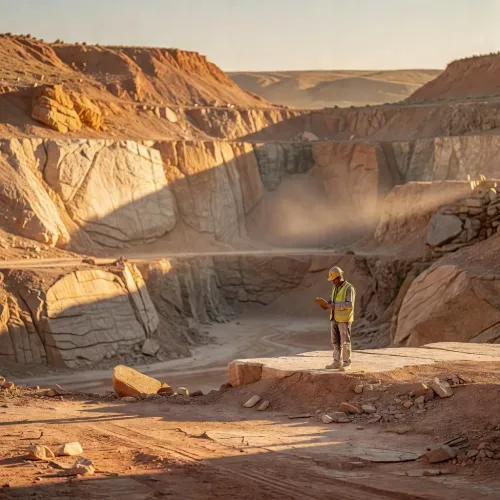
Rajasthan is not competing from scratch. The state sits atop one of India's richest mineral endowments — limestone, marble, gypsum, zinc and lead deposits that have long anchored its cement, marble-processing and metal industries. That geological fortune, however, was historically managed through discretionary allocations that left revenue on the table and invited opacity.
The pivot came with the Mines and Minerals (Development and Regulation) Amendment Act, 2015, which made competitive e-auctions mandatory for mineral block allocation across all states. The reform replaced back-room deals with open bidding, forcing states to get their regulatory house in order if they wanted to attract serious mining investors. Rajasthan, which entered the post-2015 auction era with a natural advantage in mineral variety, has been building its auction pipeline ever since.
The auction race among states — and what first place means
Since the 2015 reforms kicked in, states have competed fiercely to auction the most blocks, knowing each successful bid translates into upfront premiums, annual royalties and downstream industrial activity. Topping that national ranking is not merely symbolic: it signals to mining companies, cement majors, and industrial investors that Rajasthan offers the fastest route from bid to operation.
For the state's finances, more auctions mean higher non-tax revenue at a time when every state government is hunting for fiscal headroom. For the workforce, every new mining lease carries the promise of direct mining jobs and an extended chain of construction, logistics and processing employment across districts.
Sharma government's industrial push since December 2023
Bhajan Lal Sharma took charge as Chief Minister in December 2023 after the BJP's return to power in Rajasthan. His administration has repeatedly flagged mineral-sector modernisation as a pillar of its economic strategy, linking auction proceeds to a broader goal of making Rajasthan an investor-friendly industrial state. Saturday's claim of a national first in block auctions is the most concrete metric yet to emerge from that push.
The state mining department is expected to release detailed auction results and revenue figures that will allow investors and industry to benchmark Rajasthan's performance against competing mineral-rich states such as Odisha, Chhattisgarh and Jharkhand.
If the numbers hold up to scrutiny, Rajasthan will have turned its geological luck into a governance story — and that is a much harder thing to replicate.Point of View
Which needs a tangible economic win to consolidate its post-2023 mandate. Within the broader arc of India's post-2015 auction reforms, states that move fast on transparent bidding attract both royalty revenue and downstream industrial clusters — a virtuous cycle Rajasthan is trying to trigger. The real test will come when official revenue and job-creation figures are published, since rival mineral states like Odisha and Chhattisgarh have deep auction experience of their own. If the numbers are verified, Rajasthan will have converted its geological advantage into a governance advantage — a distinction that matters to serious long-term investors.
NationPress
21 Nov 2026
Frequently Asked Questions
Why has Rajasthan ranked first in mineral block auctions in India?
CM Bhajan Lal Sharma attributes the ranking to better utilisation of the state's rich mineral resources and an active government push to open blocks for competitive bidding. Rajasthan's natural endowments — limestone, marble, gypsum, zinc — give it a large pipeline of leaseable blocks, and the current administration has prioritised clearing and auctioning them.
What are the main minerals found in Rajasthan?
Rajasthan is rich in limestone, marble, gypsum, zinc and lead, which form the backbone of its cement, marble-processing and metal industries.
What is the Mines and Minerals Amendment Act 2015 and how does it affect Rajasthan?
The 2015 amendment made competitive e-auctions mandatory for all mineral block allocations, replacing discretionary grants. This forced states including Rajasthan to run transparent bidding processes, boosting state revenues and investor confidence.
When did Bhajan Lal Sharma become Chief Minister of Rajasthan?
Bhajan Lal Sharma assumed office as Chief Minister of Rajasthan in December 2023 after the BJP won the state assembly elections.
How do mineral block auctions create jobs in Rajasthan?
Each successfully auctioned mineral block generates direct employment in mining operations and creates downstream jobs in construction, logistics, mineral processing and related manufacturing industries across the state.