CM Sai signs PM Setu Yojana MoU in Nava Raipur
Synopsis
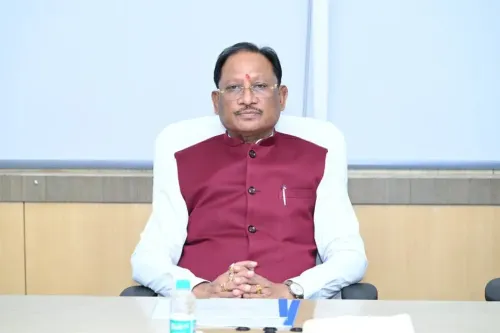
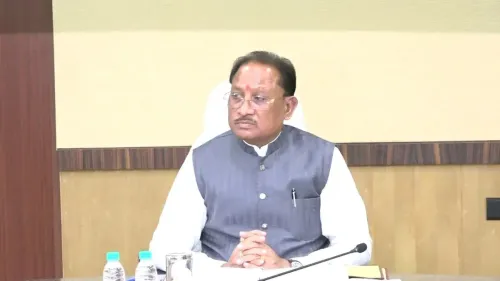
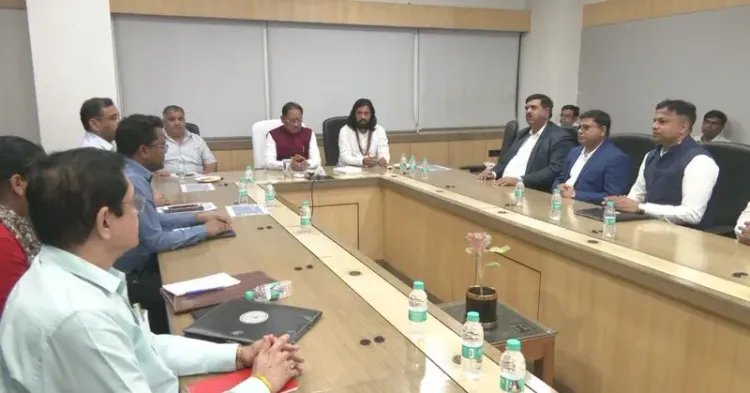
Chhattisgarh CM Vishnu Deo Sai oversaw the signing of a PM Setu Yojana MoU at Mahanadi Bhawan, Nava Raipur on 13 October 2026, formally enabling central bridge infrastructure funding to flow into the state.
Key Takeaways
CM Vishnu Deo Sai witnessed the MoU signing for PM Setu Yojana on 13 October 2026 .
The event was held at Mahanadi Bhawan, Nava Raipur Atal Nagar , Chhattisgarh's administrative capital complex.
The MoU is the formal gateway step that allows project identification and central fund disbursement to begin under the scheme.
PM Setu Yojana targets bridge connectivity, particularly relevant to Chhattisgarh's river-dense geography.
Indian states routinely execute such ministry-level MoUs to operationalise centrally sponsored infrastructure schemes.
A formal agreement now ties Chhattisgarh to one of India's central bridge-building initiatives. Chhattisgarh Chief Minister Vishnu Deo Sai witnessed the execution of a Memorandum of Understanding for the implementation of the PM Setu Yojana at Mahanadi Bhawan, Nava Raipur Atal Nagar, on Tuesday, 13 October 2026.
What the MoU unlocks in Chhattisgarh
The signing — carried out at the state's seat of government in its planned capital — marks the administrative step that formally brings Chhattisgarh into the PM Setu Yojana framework. Indian states must execute such ministry-level MoUs before project identification, contractor empanelment, and central fund disbursement can begin under a centrally sponsored scheme. Without this document, the pipeline simply does not open.
The venue itself underscores the moment's institutional weight. Mahanadi Bhawan in Nava Raipur Atal Nagar is the nerve centre of Chhattisgarh's administration — a purpose-built complex in the state's planned capital that was developed to consolidate government functions away from the older, congested city of Raipur.
PM Setu Yojana and the centre-state bridge compact
The PM Setu Yojana is a central scheme focused on bridge infrastructure, designed to improve connectivity — particularly in regions where rivers, ravines, or difficult terrain interrupt road networks. Chhattisgarh, with its dense river systems anchored by the Mahanadi and its tributaries, represents precisely the kind of geography the scheme targets.
State governments across India have been executing similar MoUs to operationalise centrally sponsored connectivity programmes — a routine but consequential act of centre-state coordination. For Chhattisgarh, the agreement signals that bridge projects under the scheme can now move from planning registers to ground-level execution.
Progress will be measured in the months ahead by how quickly project lists are finalised and whether disbursement follows at pace — the two checkpoints where many infrastructure MoUs have historically stalled. The ink is dry. Now comes the concrete.
Point of View
But procedural milestones are where national schemes live or die at the state level. For the BJP government in Chhattisgarh, aligning visibly with a centrally branded infrastructure programme like PM Setu Yojana carries a dual advantage: it accelerates real connectivity investment in a state with challenging terrain, while reinforcing the political narrative of seamless centre-state coordination under a BJP dispensation at both levels. The true test — and the story to watch — is whether project identification and disbursement follow swiftly, or whether the MoU becomes another entry in a long list of signed-but-stalled agreements.
NationPress
13 Oct 2026
Frequently Asked Questions
What is PM Setu Yojana?
PM Setu Yojana is a central government scheme focused on building and improving bridge infrastructure across India, aimed at enhancing connectivity in areas where rivers or difficult terrain disrupt road networks.
What happened at Mahanadi Bhawan on 13 October 2026?
Chhattisgarh Chief Minister Vishnu Deo Sai oversaw the signing of a formal MoU for the implementation of the PM Setu Yojana at Mahanadi Bhawan, Nava Raipur Atal Nagar, on 13 October 2026.
Why is the MoU important for Chhattisgarh?
The MoU is the required administrative step that formally brings Chhattisgarh under the PM Setu Yojana framework, enabling project identification, contractor empanelment, and central fund disbursement to begin.
Where is Nava Raipur Atal Nagar?
Nava Raipur Atal Nagar is the planned capital city of Chhattisgarh, developed to consolidate state government offices and functions, and is the location of Mahanadi Bhawan, the state's administrative hub.
Which ministry is involved in the PM Setu Yojana MoU with Chhattisgarh?
The post references a central ministry-level MoU for PM Setu Yojana, consistent with standard centre-state coordination for centrally sponsored infrastructure schemes, though the specific ministry is not named in the post.