CM Sai to Pay Tribute to Rani Durgavati in Raipur
Synopsis
Chhattisgarh Chief Minister Vishnu Deo Sai will attend a garland-offering ceremony in Raipur on 24 June 2026 to honour Rani Durgavati on her martyrdom anniversary, calling the 16th-century Gond queen an eternal inspiration for valour, self-respect, and national devotion.
Key Takeaways
CM Vishnu Deo Sai announced his attendance at a floral tribute event in Raipur on 24 June 2026 for Rani Durgavati's martyrdom anniversary.
Rani Durgavati was a 16th-century Gond queen who died in battle against Mughal forces in 1564 near present-day Jabalpur .
The BJP -led Chhattisgarh government has made tributes to Gond and tribal historical figures a formal part of its cultural agenda since December 2023 .
Annual martyrdom-day observances for Rani Durgavati have been held in Chhattisgarh and Madhya Pradesh since state formation in 2000 .
Gond tribal communities — among the largest tribal groups in Chhattisgarh — regard Rani Durgavati as a central cultural figure.
Observers will watch for heritage-related policy announcements linked to the commemoration.
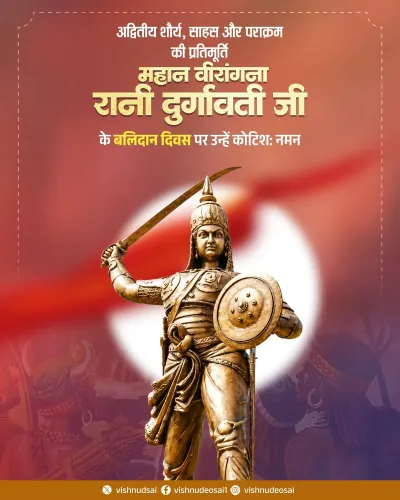
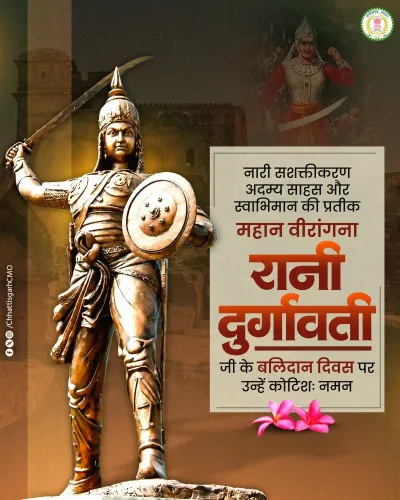
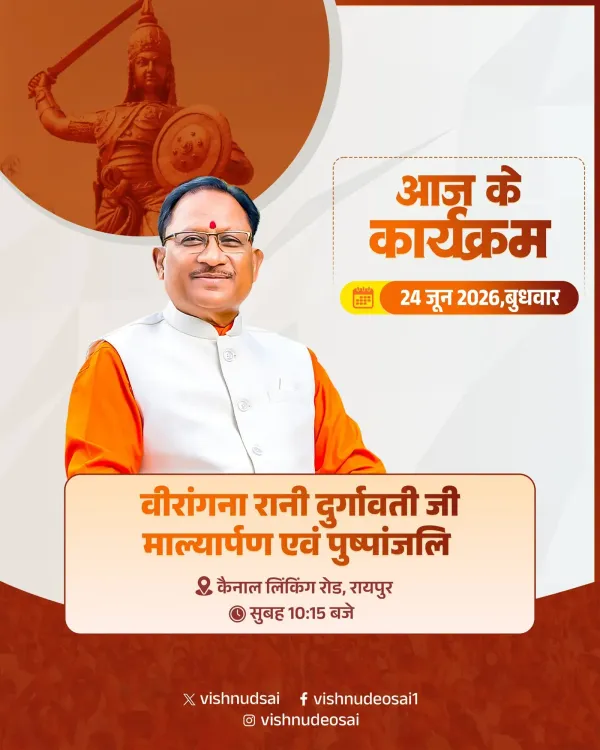
Chhattisgarh Chief Minister Vishnu Deo Sai announced on Wednesday, 24 June 2026 that he would attend a garland-offering and floral tribute ceremony in Raipur to mark the martyrdom anniversary of Rani Durgavati, the 16th-century Gond queen who died resisting Mughal forces.
Posting in Hindi, CM Sai wrote: 'महान वीरांगना रानी दुर्गावती जी के बलिदान दिवस पर आज रायपुर में आयोजित माल्यार्पण एवं पुष्पांजलि कार्यक्रम में सम्मिलित होकर उन्हें श्रद्धासुमन अर्पित करूंगा।' ('On the martyrdom day of the great warrior queen Rani Durgavati, I will participate in the garland-offering and floral tribute programme organised today in Raipur and pay my respects to her.') He added that her 'sacrifice and martyrdom are an eternal source of inspiration for all of us' — a symbol of 'valour, self-respect, and devotion to the nation.'
Context
Rani Durgavati ruled the Gond kingdom — a pre-colonial tribal-governed territory spanning parts of present-day Chhattisgarh and Madhya Pradesh — in the 16th century. She led her forces against the advancing Mughal army under Emperor Akbar and fell in battle in 1564 near present-day Jabalpur, choosing death over surrender. Her martyrdom anniversary is observed each year on 24 June.
She is revered across central India, particularly among Gond tribal communities, as an emblem of armed resistance against imperial domination. State governments in the region have formally commemorated the date since the formation of Chhattisgarh as a separate state in 2000.
Policy Backdrop
The BJP-led government in Chhattisgarh, which took office in December 2023 under CM Sai, has made state-sponsored tributes to Gond and other tribal historical figures a visible part of its cultural heritage agenda. Annual martyrdom-day events for Rani Durgavati have been held at divisional headquarters in both Chhattisgarh and Madhya Pradesh for over two decades.
Across BJP-governed states in central India, such commemorations are used to foreground themes of pre-colonial valour and self-rule, embedding regional warrior figures into a broader national heritage narrative. The events typically take place at prominent government venues in state capitals and are attended by senior elected leaders.
Stakeholders and Impact
Gond tribal communities — one of the largest tribal groups in Chhattisgarh — hold Rani Durgavati as a central cultural and historical figure. State-level observances signal official recognition of tribal heritage and carry symbolic weight for these communities ahead of local governance and electoral cycles.
Residents of Raipur and the broader state are the immediate audience for such public ceremonies, which reinforce a shared regional identity rooted in resistance and sacrifice. The programme also draws participation from civil society, cultural organisations, and educational institutions.
What's Next
Observers will watch for any announcements by the Chhattisgarh government on new memorials, museums, or school curriculum additions related to Rani Durgavati and other Gond rulers in the current fiscal year. State administrations have in the past used martyrdom-day events as platforms to unveil heritage projects. Whether today's ceremony produces any such policy signal will become clear in the hours and days following the programme.
Point of View
The event is elevated beyond routine ceremony into a visible political signal to Gond and broader tribal constituencies. This approach mirrors similar heritage-promotion moves in neighbouring Madhya Pradesh and reflects a wider BJP strategy of reclaiming regional warrior figures as part of a national cultural canon. The coming months will reveal whether the symbolism translates into concrete policy — memorials, curriculum changes, or dedicated heritage funds.
NationPress
24 Jun 2026
Frequently Asked Questions
Who was Rani Durgavati?
Rani Durgavati was a 16th-century queen of the Gond kingdom in central India who led her army against Mughal forces under Emperor Akbar and was martyred in battle in 1564 near present-day Jabalpur. She is revered as a symbol of valour and resistance, particularly among Gond tribal communities in Chhattisgarh and Madhya Pradesh.
When is Rani Durgavati's martyrdom day observed?
Rani Durgavati's martyrdom day is observed every year on 24 June, the date on which she fell in battle in 1564. State governments in Chhattisgarh and Madhya Pradesh have held formal commemorations on this date since 2000.
What did Chhattisgarh CM Vishnu Deo Sai say about Rani Durgavati?
CM Vishnu Deo Sai called Rani Durgavati an 'eternal source of inspiration' and described her as a symbol of 'valour, self-respect, and devotion to the nation.' He announced he would attend a garland-offering and floral tribute ceremony in Raipur on 24 June 2026 to honour her.
Why does the BJP government in Chhattisgarh commemorate Rani Durgavati?
The BJP-led Chhattisgarh government has made state-sponsored tributes to Gond and tribal historical figures part of its cultural heritage agenda since taking office in December 2023. Such events reinforce regional identity, highlight pre-colonial resistance narratives, and carry symbolic significance for Gond tribal communities in the state.
Where is the Rani Durgavati tribute event being held in 2026?
The 2026 martyrdom-day tribute event is being held in Raipur, the capital of Chhattisgarh, where annual floral tribute programmes for regional historical figures are routinely organised at government venues.