Jal Shakti Minister Paatil backs storm water mgmt for cities
Synopsis
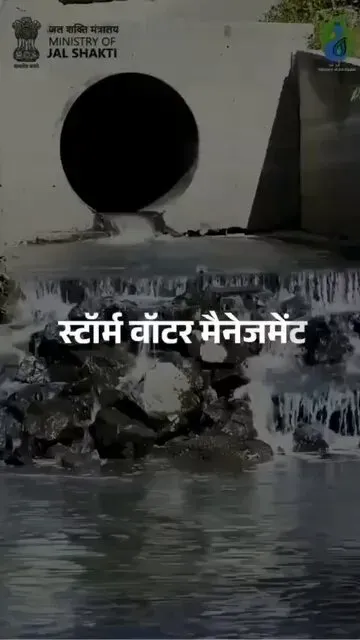
Union Jal Shakti Minister C. R. Paatil has called storm water management a visionary, sustainable solution for Indian cities, linking scientific rainwater handling to groundwater recharge and the Viksit Bharat development vision under PM Modi.
Key Takeaways
Paatil , Union Minister of Jal Shakti, on 24 June 2026 publicly endorsed storm water management as a long-term urban water solution.
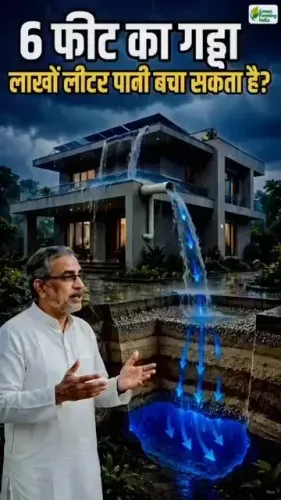
He stated that scientific rainwater management promotes groundwater recharge and strengthens water availability in cities.
The minister framed every conserved raindrop as foundational to the Viksit Bharat water future.
AMRUT 2.0 , relaunched in 2021 , already includes stormwater drainage and aquifer recharge components across 500 cities .
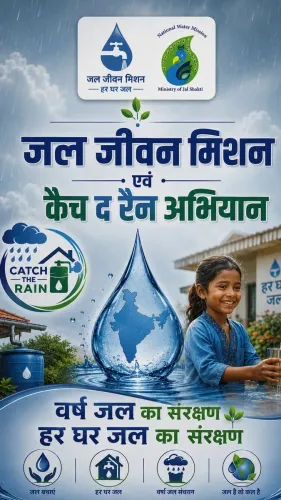
Jal Jeevan Mission (2019) and Atal Bhujal Yojana (2019) form the broader federal framework underpinning this urban water push.
Urban local bodies are the key implementing agencies; rollout of sanctioned stormwater projects under state action plans remains the critical next step.
Union Jal Shakti Minister C. R. Paatil on Wednesday, 24 June 2026 called storm water management a 'visionary and sustainable solution' for Indian cities, framing scientific rainwater handling as central to long-term urban water self-reliance under Prime Minister Narendra Modi's leadership.
Posting in Hindi on X, Paatil wrote: 'वर्षा जल का वैज्ञानिक प्रबंधन भूजल पुनर्भरण को बढ़ावा देता है' ('Scientific management of rainwater promotes groundwater recharge'), adding that 'every drop of rainwater conserved today is a strong foundation for the safe and prosperous water future of a Viksit Bharat [Developed India].'
Context
The statement arrives as urban India faces a dual water crisis: seasonal flooding caused by impermeable surfaces and chronic groundwater depletion driven by unplanned extraction. Paatil, who oversees the Ministry of Jal Shakti, has consistently positioned water conservation as a national security issue rather than a routine civic function. The post explicitly credits PM Modi's leadership for elevating water conservation and water security to a 'national priority with strong momentum.'
Policy Backdrop
The remarks align with a decade-long federal push to integrate stormwater infrastructure with groundwater recharge. The AMRUT 2.0 mission, relaunched in 2021, explicitly incorporates stormwater drainage and aquifer recharge components across 500 cities. The Jal Jeevan Mission, launched in 2019, added source sustainability and greywater management targets alongside its headline goal of functional household tap connections.
The Atal Bhujal Yojana, also launched in 2019, targets water-stressed blocks with community-led conservation measures, while the Jal Shakti Abhiyan campaign runs as an annual water conservation drive across states. Together, these programmes represent the Union government's strategy of reframing water — constitutionally a state subject — into a nationally coordinated priority.
Stakeholders and Impact
Urban local bodies are the primary implementing agencies for stormwater infrastructure under AMRUT 2.0 state action plans. City residents in water-stressed and flood-prone urban centres stand to benefit most directly if sanctioned projects translate into on-ground infrastructure. The minister's framing of storm water management as a route to making cities 'more self-reliant in water over the long term' signals continued federal pressure on municipalities to treat rainwater as a resource rather than a drainage problem.
The linkage to the Viksit Bharat development narrative also suggests that urban water security is being positioned as a visible deliverable of the current administration's broader growth agenda, connecting civic infrastructure to national aspiration.
What's Next
Observers will watch for the rollout of stormwater projects sanctioned under AMRUT 2.0 in state action plans and any dedicated urban water provisions in the next Union Budget or parliamentary session. Paatil's statement, while framed as a policy perspective rather than an announcement, reinforces the ministry's public communication around urban water resilience and could precede formal scheme updates or target revisions.
Point of View
Reinforcing the Modi government's decade-long effort to brand water conservation as a federal achievement rather than a state-level function. By invoking 'Viksit Bharat,' the ministry ties urban stormwater infrastructure to the administration's signature development narrative ahead of potential budget or scheme announcements. The emphasis on groundwater recharge through storm water management signals that the Centre is attempting to address urban flooding and scarcity simultaneously under one policy umbrella. Whether this rhetoric translates into accelerated AMRUT 2.0 project delivery or new fiscal commitments will determine its real-world weight.
NationPress
22 Sept 2026
Frequently Asked Questions
What is storm water management and why is India focusing on it?
Storm water management refers to the scientific collection, treatment and reuse of rainwater runoff in urban areas. India is focusing on it because cities face both seasonal flooding from unmanaged runoff and chronic groundwater depletion, and schemes like AMRUT 2.0 now integrate stormwater drainage with aquifer recharge to address both problems together.
What did Jal Shakti Minister C. R. Paatil say about urban water management?
Paatil said storm water management is a 'visionary and sustainable solution' for cities, arguing that scientific rainwater management promotes groundwater recharge, strengthens water availability, and helps cities become more self-reliant in water over the long term.
How does AMRUT 2.0 support stormwater management in Indian cities?
AMRUT 2.0, relaunched in 2021, explicitly includes stormwater drainage and aquifer recharge components as part of its urban infrastructure mandate covering 500 cities, making it the primary federal vehicle for funding such projects through state action plans.
What is the Jal Jeevan Mission and how is it related to water conservation?
Jal Jeevan Mission, launched in 2019, aimed primarily at providing functional household tap connections but also added source sustainability and greywater management targets, linking rural water supply to broader conservation goals.
What is Viksit Bharat and how does it connect to water policy?
Viksit Bharat, meaning 'Developed India,' is the Modi government's overarching development vision for the country. The Jal Shakti Ministry has increasingly framed urban water security and conservation milestones as visible deliverables within this national aspiration.