Owaisi questions Modi govt on India's China concessions
Synopsis
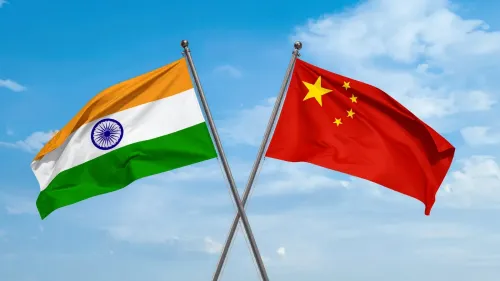
AIMIM president Asaduddin Owaisi on June 24 accused the Modi government of making one-sided concessions to China — including a possible early harvest on the border — while Beijing continues military support to Pakistan and withholds Brahmaputra flood data from India, demanding a public explanation from New Delhi.
Key Takeaways
Owaisi posted on June 24, 2026 , accusing China of demanding India set aside the border dispute for normalcy while offering nothing in return.
China continues to provide close operational military support to Pakistan , a point Owaisi cited as evidence of Beijing 's unwillingness to reciprocate goodwill.
China has refused to share hydrological data on the Brahmaputra river with India , affecting flood-warning systems in downstream states.
India is reportedly considering an 'early harvest' agreement on the border issue, a move Owaisi says has not been publicly explained by the government.
The post directly calls out the @narendramodi government for providing no explanation for the concessions being made to China .
The India-China boundary dispute has remained unresolved since the June 2020 Galwan Valley clash, with multiple rounds of corps commander talks yielding only partial disengagement.
AIMIM president Asaduddin Owaisi on Wednesday, June 24, 2026, sharply questioned the Narendra Modi government over what he called a one-sided approach to normalising ties with China, alleging that India is making concessions without receiving anything in return from Beijing.
Context
Owaisi, in a post on X, argued that the central issue in India-China relations is Beijing's demand that New Delhi set aside the border dispute as a precondition for bilateral normalcy. He wrote: 'The issue is not this, the issue is that China wants India to keep the border issue aside in pursuit of normalcy in bilateral ties. But Beijing is unwilling to do anything in return.'
The Hyderabad MP pointed to two specific grievances: China's continued close operational military support to Pakistan, and its refusal to share hydrological data on the Brahmaputra river with India. He also flagged that India is reportedly considering an 'early harvest' agreement on the border issue — a diplomatic term for resolving less contentious areas first — without a clear public rationale from the government.
Policy Backdrop
The India-China boundary dispute escalated sharply after the June 2020 Galwan Valley clash, which resulted in casualties on both sides and triggered a prolonged freeze in bilateral ties. Since then, the two countries have held multiple rounds of corps commander-level talks aimed at disengagement along the Line of Actual Control (LAC), with phased pullbacks in certain friction points.
India and China had a standing arrangement, formalised in 2002, for Beijing to share hydrological data on the Brahmaputra during the flood season — data critical for downstream flood warnings in Assam and Arunachal Pradesh. That data-sharing arrangement has been affected by bilateral tensions in the post-2020 period. Meanwhile, China has deepened its military and strategic partnership with Pakistan, including nuclear and conventional defence cooperation, a dynamic that Indian strategic analysts have long flagged as a two-front challenge.
The concept of an 'early harvest' on the border — resolving mutually agreeable LAC sectors while leaving harder disputes for later — has been discussed in Indian policy circles as a way to rebuild momentum in the relationship. Owaisi's post challenges the government to publicly justify why India would offer such concessions without equivalent gestures from China.
Stakeholders and Impact
The Indian Armed Forces, particularly formations deployed along the LAC in Ladakh, Uttarakhand, Himachal Pradesh, and Arunachal Pradesh, are the most direct stakeholders in any border arrangement. Border communities in these states, as well as downstream populations in Assam who depend on Brahmaputra flood-warning data, also have a material stake in the bilateral relationship.
Opposition parties, including AIMIM and the Indian National Congress, have repeatedly pressed the government for greater transparency on the terms of any LAC disengagement or diplomatic accommodation with China. Owaisi's post reflects a broader demand from opposition quarters for the Modi government to explain the strategic logic of its China engagement on the floor of Parliament and in public discourse.
What's Next
Attention will now turn to whether the Modi government responds to the opposition's demand for an explanation, and whether any 'early harvest' framework on the LAC is formally announced or discussed at upcoming multilateral forums such as the SCO or BRICS summits. The resumption of Brahmaputra hydrological data sharing will also serve as a key indicator of whether India-China ties are genuinely moving toward normalcy or whether the concessions Owaisi describes remain unreciprocated. Parliamentary sessions will likely become the arena where the government is pressed hardest to articulate its China policy in detail.
Point of View
The Hyderabad MP is constructing a triangular argument: that India faces a two-front strategic challenge that is being managed through unilateral accommodation rather than reciprocal diplomacy. The 'early harvest' framing is particularly pointed, as it suggests the government may be disaggregating the border dispute in ways that could lock in asymmetric outcomes. If the government does not respond with a coherent public rationale, this line of criticism is likely to intensify in the next parliamentary session.
NationPress
24 Jun 2026
Frequently Asked Questions
What is Owaisi's objection to India's China policy?
Owaisi argues that India is making concessions — including potentially agreeing to an 'early harvest' on the border — while China gives nothing in return, continues arming Pakistan , and withholds Brahmaputra flood data from India .
What is the 'early harvest' on the India-China border issue?
An 'early harvest' refers to resolving less contentious sectors of the Line of Actual Control first, as a confidence-building measure, while leaving harder disputes for later rounds of negotiations.
Why is the Brahmaputra hydrological data important for India?
China shares water-level and flow data on the Brahmaputra during the monsoon season, which India uses to issue flood warnings in Assam and Arunachal Pradesh ; a refusal to share this data puts downstream communities at risk.
What is China's military relationship with Pakistan?
China is Pakistan 's largest arms supplier and has provided support across conventional and strategic military domains; this relationship is a persistent concern in Indian strategic planning.
What triggered the current India-China border tensions?
The June 2020 Galwan Valley clash in Ladakh resulted in fatalities on both sides and triggered a prolonged freeze in India-China relations, leading to multiple rounds of disengagement talks that have only partially resolved friction points along the LAC .