CM Sai Wishes Dalai Lama on Birthday, Hails Peace Legacy
Synopsis
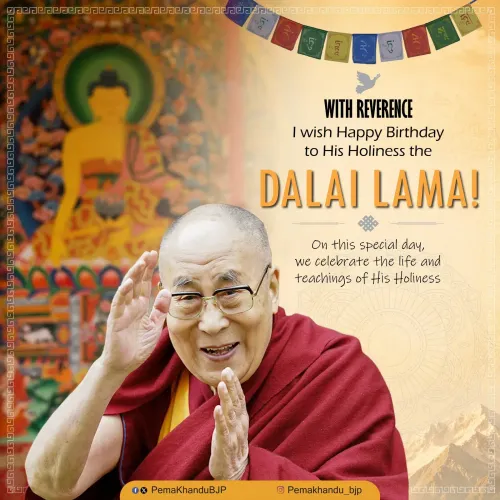
Chhattisgarh Chief Minister Vishnu Deo Sai on 6 July 2026 wished the Dalai Lama a happy birthday on X, praising the Nobel laureate's lifelong commitment to peace, compassion, and non-violence as an inspiration to the world.
Key Takeaways
CM Vishnu Deo Sai posted birthday greetings to the Dalai Lama on 6 July 2026 via X.
He described the Dalai Lama's life as an inspiration for the world in peace, compassion, and non-violence.
The 14th Dalai Lama, Tenzin Gyatso , has lived in exile in India since 1959 and won the Nobel Peace Prize in 1989 .
Indian political leaders across parties routinely issue such greetings, reflecting India 's decades-long hospitality to the Tibetan exile community.
BJP -led governments have balanced public acknowledgement of the Dalai Lama with diplomatic caution toward China .
The Dalai Lama's succession remains a sensitive geopolitical issue between India and China .
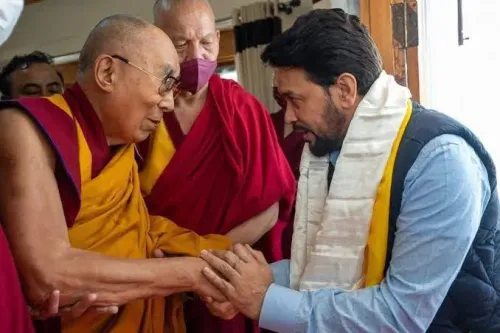
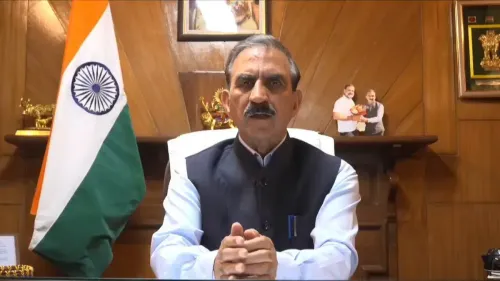
Chhattisgarh Chief Minister Vishnu Deo Sai on Monday, 6 July 2026, extended birthday greetings to Tibetan spiritual leader the Dalai Lama, describing his life as an inspiration to the entire world for its dedication to peace, compassion, non-violence, and human values.
Posting on X, CM Sai wrote in Hindi: 'Baudh dharmguru Dalai Lama ji ko janmdin ki hardik badhai evam shubhkamnayein' ['Heartfelt birthday greetings and best wishes to Buddhist spiritual leader Dalai Lama ji']. He expressed the wish that the Dalai Lama continue to guide humanity's 'sacred campaign for human welfare' in good health and with a long, illustrious life.
Context
The 14th Dalai Lama, Tenzin Gyatso, is the spiritual head of Tibetan Buddhism and a 1989 Nobel Peace Prize laureate. He has lived in exile in India since 1959, when he fled Tibet following an uprising against Chinese rule, and has since been based primarily in Dharamshala, Himachal Pradesh. India granted him political asylum that year, a decision that has shaped the contours of India-China relations for decades.
Indian political leaders across party lines routinely issue public birthday greetings to the Dalai Lama each year, acknowledging his spiritual stature and India's long-standing role as host to the Tibetan exile community. Such gestures carry symbolic weight against the backdrop of persistent India-China border tensions and Beijing's objections to any Indian engagement with the Tibetan leader.
Policy Backdrop
BJP-led governments at the centre since 2014 have permitted public events and statements honouring the Dalai Lama while stopping short of official political endorsement of the Tibetan cause. This calibrated approach allows Indian leaders to affirm cultural and spiritual ties with Tibetan Buddhism without formally escalating diplomatic friction with China.
Chhattisgarh, the central Indian state CM Sai governs, holds historical Buddhist sites and has seen a growing focus on cultural and heritage tourism. The BJP has more broadly highlighted Buddhist heritage as part of its cultural diplomacy, drawing on India's identity as the birthplace of Buddhism.
Stakeholders and Impact
The message resonates most directly with India's Tibetan diaspora and Buddhist communities spread across the country, particularly in states such as Himachal Pradesh, Uttarakhand, Sikkim, Arunachal Pradesh, and Ladakh. For these communities, public affirmations from state leaders carry both emotional and political significance.
More broadly, the post is part of a pattern in which senior Indian politicians use social media to signal solidarity with the Dalai Lama's values of peace and non-violence — a framing that sidesteps the geopolitical dimension while reinforcing India's self-image as a civilisational home for Buddhist thought.
What's Next
Attention in coming months is likely to focus on the question of the Dalai Lama's eventual succession and reincarnation — a matter on which China and the Tibetan leadership hold sharply opposed positions, and on which India's stance will be closely watched. Any future statements from Chhattisgarh leaders at Tibetan Buddhist events in the state could further illuminate how the state government navigates this sensitive terrain.
Point of View
The gesture also fits a broader party narrative that positions India as the civilisational guardian of Buddhism. The timing is notable given ongoing India-China friction, as even routine tributes to the Dalai Lama carry implicit diplomatic undertones that Beijing monitors closely. The post signals continuity in how state-level BJP leaders engage with the Tibetan issue: warm in tone, anchored in spirituality, and carefully distanced from formal political claims.
NationPress
5 Oct 2026
Frequently Asked Questions
Why did Chhattisgarh CM Vishnu Deo Sai wish the Dalai Lama?
CM Sai extended birthday greetings to mark the Dalai Lama's birthday on 6 July 2026, praising his dedication to peace, compassion, and non-violence as a global inspiration.
When is the Dalai Lama's birthday?
The 14th Dalai Lama, Tenzin Gyatso, was born on 6 July 1935 , and his birthday is marked annually by well-wishers across India and the world.
Where does the Dalai Lama live in India?
The Dalai Lama has been based in Dharamshala, Himachal Pradesh , since he was granted political asylum by India in 1959 after fleeing Tibet.
What is India's official stance on the Dalai Lama?
India has hosted the Dalai Lama as a guest since 1959 and permits public events in his honour, but successive governments have avoided formally endorsing Tibetan political claims so as not to escalate tensions with China.
Is wishing the Dalai Lama politically significant in India?
Yes — while framed as a spiritual tribute, public birthday messages to the Dalai Lama by Indian politicians carry diplomatic undertones given China's objections to any Indian engagement with the Tibetan leader.