Haryana CM Saini audits 7,988 announcements at 17 tables
Synopsis
Haryana CM Nayab Singh Saini said ministers and MLAs took a direct account of development works at 17 tables at the CM residence. He listed 7,988 announcements, with 5,743 completed, 1,101 underway, 805 pending and 339 unviable, and warned officers against delay.
Key Takeaways
Haryana CM Nayab Singh Saini said ministers and MLAs reviewed area works at 17 tables at the Chief Minister's residence.
He reported 7,988 total announcements: 5,743 completed, 1,101 ongoing, 805 pending and 339 unviable.
He described announcements as the hopes of Haryana's families, not promises on paper.
Officers were told to clear obstacles and finish pending works in the stipulated time.
He warned that carelessness or unnecessary delay in public work would not be tolerated.
The drill follows the BJP government's post- 2024 focus on tracking poll-related announcements.
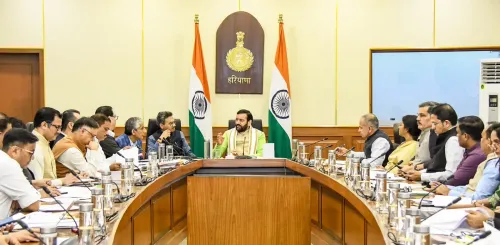
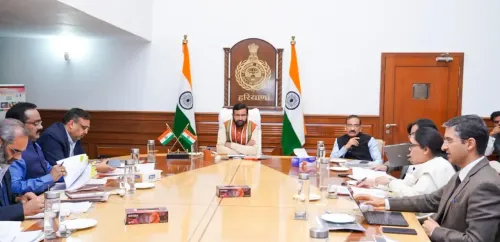
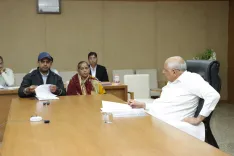
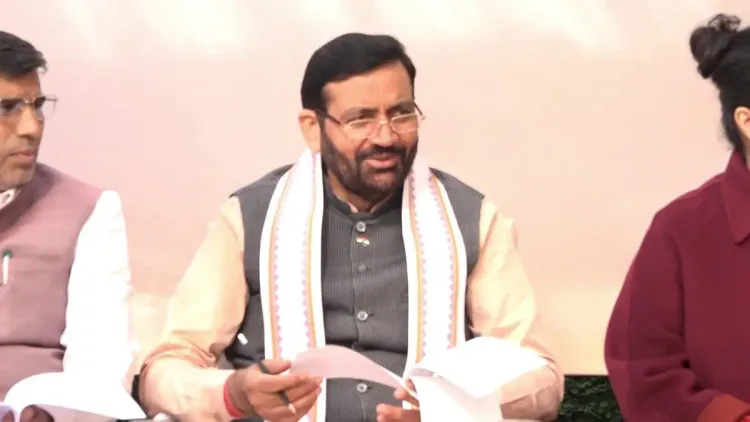
Haryana Chief Minister Nayab Singh Saini says this was not a meeting. It was seedha hisab-kitab (direct accounting). On 26 November 2026, he described how ministers and MLAs of Team Haryana sat across 17 tables at the Chief Minister's residence, taking a live account of development works from departmental officers.
Family hopes, not paper promises
Saini framed the exercise as a duty to households, not a bureaucratic ritual. Announcements, he wrote, are not merely promises written on paper. They are the hopes of the state's families.
That is why, he said, Team Haryana's ministers and legislators were given a chance at the Chief Minister's residence to confront officers of the related departments over works in their own areas, table by table. In his words, the point was a direct settlement of accounts, not another round of files and speeches.
7,988 announcements on the ledger
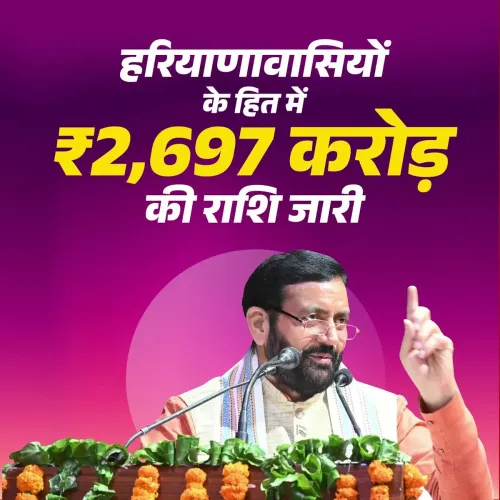
The Chief Minister published a running tally. Of 7,988 total announcements, he said 5,743 have been completed. Work continues on 1,101. 805 remain pending. 339 were listed as unviable.
Completed works already dominate the list. The unfinished slice is smaller, but it is the slice that now carries political weight. Unviable items have been separated from the live pipeline rather than left to drift as eternal pending files.
805 pending works and a warning to officers
Officers, Saini said, were given clear instructions: remove the obstacles sitting on pending works and finish them in the stipulated time. Carelessness or unnecessary delay in the public's work would not be tolerated at all.
The format itself is the pressure. Ministers and MLAs were not briefed in a single hall. They were parked at 17 tables with the officers who actually move the files for their regions. After the 2024 Haryana Assembly elections, the BJP government led by Saini, who took office after Manohar Lal Khattar, has leaned on such structured reviews to track poll-related announcements. State governments across India use similar high-level monitoring to squeeze timelines. Few put elected representatives and executing officers in the same room, constituency by constituency, and then post the scoreboard in public.
The next test is not another slogan. It is whether those 805 pending announcements move, and how soon the Chief Minister's Office calls the next round of hisab.
Point of View
Haryana's BJP government has turned election-promise tracking into a visible administrative drill. Saini's 17-table format puts elected representatives and the file-moving machinery in the same room, shrinking the usual gap between announcement and execution. The published split, thousands done, hundreds pending, some labelled unviable, is both a progress claim and a pressure tool. The political test is whether the 805 pending items get deadlines in the next CMO review.
NationPress
26 Nov 2026
Frequently Asked Questions
What did Haryana CM Nayab Singh Saini say about the 17-table review?
Haryana Chief Minister Nayab Singh Saini said ministers and MLAs took a direct account of development works from department officers at 17 tables at the Chief Minister's residence. He called it direct accounting rather than a meeting, and posted a tally of 7,988 announcements.
How many Haryana announcements has CM Saini said are completed?
He said 5,743 of 7,988 announcements have been completed. He also listed 1,101 as underway, 805 as pending and 339 as unviable.
What is the 17-table exercise at the Haryana Chief Minister's residence?
It is an accountability drill in which Team Haryana ministers and MLAs sat across 17 tables with officers of related departments to review development works in their areas. Saini said the aim was a direct settlement of accounts on those works.
Who is Nayab Singh Saini?
Nayab Singh Saini is a BJP leader and the Chief Minister of Haryana. He took office in 2024 after Manohar Lal Khattar.
What did Saini say about delay in public works in Haryana?
He said officers were instructed to remove obstacles to pending works and complete them in the stipulated time. He added that carelessness or unnecessary delay in public work would not be tolerated at all.