CM Saini Hails 91 Super-100 Students Clearing IIT-JEE Advanced 2026
Synopsis
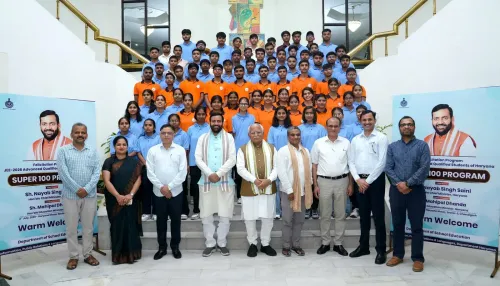
Haryana Chief Minister Nayab Singh Saini announced on 1 June 2026 that 91 students enrolled in the state government's Super-100 coaching programme have cleared IIT-JEE Advanced 2026, marking a significant outcome for the scheme that targets meritorious students from government schools.
Key Takeaways
91 students from Haryana's government-run Super-100 programme cleared IIT-JEE Advanced 2026 .
CM Nayab Singh Saini made the announcement on 1 June 2026 via a post on X in Hindi.
The Super-100 programme provides free residential coaching to meritorious students, primarily from government schools in Haryana.
The initiative is part of a national trend of state-run Super-30 or Super-100 style programmes in states like Bihar , Rajasthan , and Uttar Pradesh .
Haryana has been running targeted JEE coaching schemes for government-school students since at least 2019 .
Future focus is on potential expansion of the programme and possible extension to NEET aspirants.
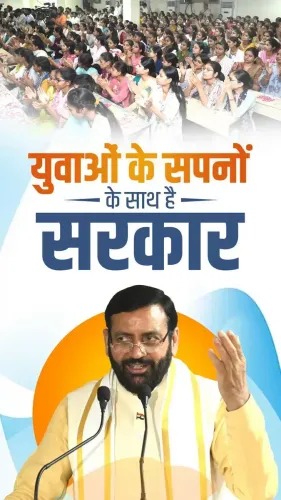
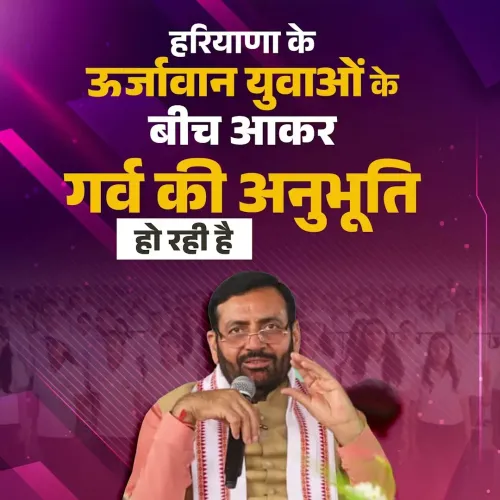
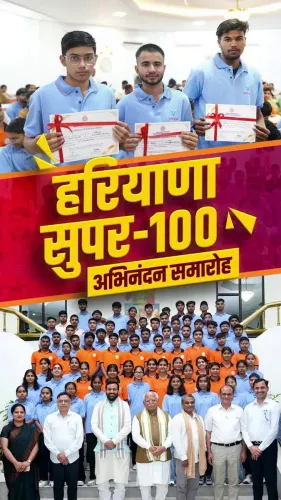
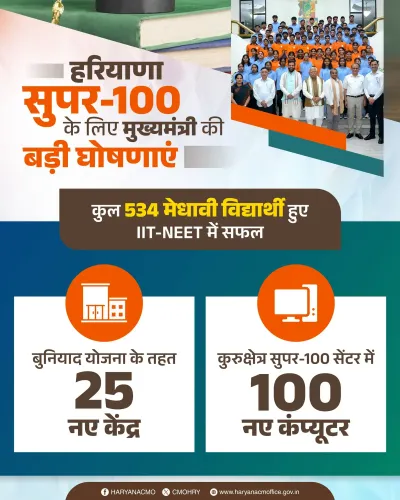
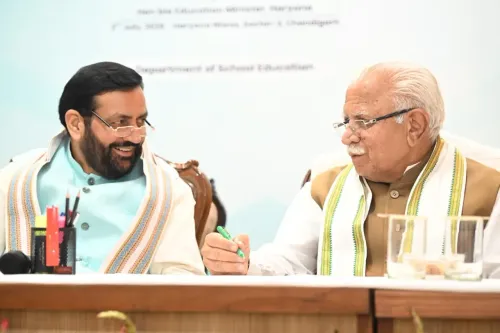
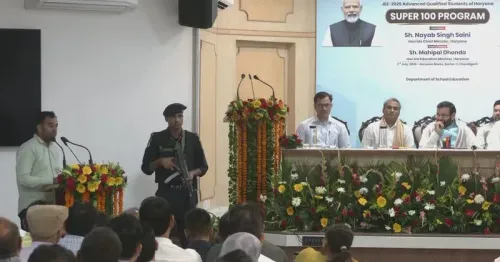
Haryana Chief Minister Nayab Singh Saini on Monday, 1 June 2026, announced that 91 students from the state government's Super-100 programme have cleared IIT-JEE Advanced 2026, calling the result a moment of pride for the state.
Posting on X in Hindi, CM Saini said: 'सरकार द्वारा चलाए जा रहे सुपर-100 कार्यक्रम के 91 नौनिहालों ने IIT-JEE Advanced 2026 में सफलता प्राप्त कर हरियाणा का गौरव बढ़ाया है' — ('91 young children of the Super-100 programme run by the government have brought glory to Haryana by succeeding in IIT-JEE Advanced 2026'). He addressed the announcement to the people of Haryana as his 'family members,' congratulating the talented students who cleared the examination.
Context
The Super-100 programme is a Haryana government initiative that selects meritorious students — primarily from government schools — and provides them intensive residential coaching for the IIT-JEE entrance examination. The scheme is designed to give students from rural areas and economically weaker sections access to the kind of structured preparation that is otherwise concentrated in expensive private coaching institutes.
IIT-JEE Advanced is the national-level entrance examination conducted by the Indian Institutes of Technology for admission to their undergraduate engineering programmes, and is widely regarded as one of the most competitive examinations in the country.
Policy Backdrop
Haryana has been building a framework of targeted educational interventions for over half a decade. Between 2019 and 2023, the previous state government introduced multiple scholarship and residential coaching schemes for JEE aspirants from government schools, laying the groundwork for the current Super-100 model.
The Super-100 initiative is part of a broader national pattern: states including Bihar, Rajasthan, and Uttar Pradesh have each launched Super-30 or Super-100 style residential programmes over the past decade to address structural inequities in access to quality JEE preparation. Haryana's programme reflects this state-level strategy applied to a predominantly rural student population.
Stakeholders and Impact
The 91 successful students from the 2026 Super-100 cohort now stand to secure admission to undergraduate engineering programmes at IITs across India, opening pathways that would otherwise be difficult for students from government-school backgrounds to access. Their success is also a data point for policymakers evaluating the return on state investment in such coaching schemes.
For the broader student community in Haryana, particularly those in rural districts, the result serves as a visible signal that government-backed preparation can be competitive at the national level. Parents, teachers, and school administrators in the state are among the direct stakeholders who stand to benefit from the programme's demonstrated outcomes.
What's Next
Attention will now turn to Haryana's next education budget cycle and whether the state government announces an expansion of the Super-100 cohort size or introduces parallel programmes targeting other national examinations such as NEET. CM Saini's public highlighting of the result suggests the programme will remain a visible plank of the government's education outreach.
If the state scales the programme, it could set a benchmark for other BJP-governed states seeking to demonstrate tangible outcomes in school education policy ahead of future electoral cycles.
Point of View
Where rural and first-generation aspirants form a politically significant constituency. The result, if sustained across cohorts, strengthens the case for state-funded coaching as a replicable model, and gives the Haryana government a concrete education outcome to cite in policy discourse. Nationally, it fits into a pattern where BJP-governed states have sought to demonstrate welfare-state credentials through targeted educational schemes. The next test will be whether the government scales the programme or allows it to remain a headline-friendly but limited intervention.
NationPress
16 Oct 2026
Frequently Asked Questions
What is the Super-100 programme in Haryana?
The Super-100 programme is a Haryana government initiative that selects meritorious students from government schools and provides them free, intensive residential coaching to prepare for the IIT-JEE entrance examination.
How many students from Haryana's Super-100 cleared IIT-JEE Advanced 2026?
According to CM Nayab Singh Saini's post on 1 June 2026, 91 students from the Super-100 programme cleared IIT-JEE Advanced 2026.
Who runs the Super-100 programme in Haryana?
The Super-100 programme is run by the Haryana state government. Chief Minister Nayab Singh Saini, who took office in March 2024, has publicly championed the scheme.
Is Super-100 only for IIT-JEE preparation?
The current Super-100 programme focuses on IIT-JEE preparation. Whether it will be extended to other national competitive exams such as NEET remains a question for future policy announcements.
Which other states have similar Super-100 or Super-30 coaching programmes?
States including Bihar, Rajasthan, and Uttar Pradesh have launched similar residential coaching programmes for competitive exam aspirants from government schools and economically weaker sections over the past decade.